A sofa cushion that smells faintly of damp, sags in the middle, has a ring where someone once put down a mug, or has simply gone grey at the front edge is not one problem. It is half a dozen, and the fix for one can ruin another. Water that rescues a foam block will shrink a cotton cover. Heat that dries a towel will wreck a cushion. So this guide works the way you would diagnose a fault: first what the cushion is showing you, then the label, then the fixes in order from easiest to hardest.
Everything here can be done at home with supermarket basics. Where the honest answer is to stop and call an upholsterer, we say so. If you only want the short version: vacuum, check the cleaning code on the label, wash removable covers at 30°C or cold on a gentle cycle and air-dry them, clean fixed covers with foam rather than liquid, and never tumble-dry a cover.
Disclosure: Cleaners Guide is a participant in the Amazon Associates programme, so if you buy through links on this page we may earn a small commission at no extra cost to you. It does not change what we recommend. Prices and availability change, so check the current listing before buying.
What your cushions are telling you
| What you see or smell | Likely cause | Where to go in this guide |
|---|---|---|
| Dull, grey, flat-looking fabric | Dust, body oils and crumbs worked into the pile | Vacuum, then the foam-only clean for fixed covers |
| A stale, slightly sour smell | Trapped body odour, or damp that never fully dried | Bicarbonate of soda, then a proper airing |
| A sharp or ammonia smell | Urine or other biological soiling that has reached the filling | Enzyme cleaner, then the foam bath if the insert is solid foam |
| Rings or tide marks | Too much liquid used, or a fabric that does not like water | Check the care code, then re-clean with foam only |
| A single dark or coloured mark | A spill that dried in | The stain-by-stain table |
| Cover is too tight after washing | Heat or a hot wash shrank the fabric | The shrunk-cover rescue |
| Green or black spots on garden cushions | Algae or mildew | The outdoor cushion section |
| Cushion collapses and does not spring back | The insert has worn out, not got dirty | The last section, where replacing is the real fix |
Read the cleaning code before anything gets wet
Find the care label first. It is usually stitched into a seam under a seat cushion or on the underside of the sofa. Upholstery uses a set of cleaning codes, and this one letter decides which methods here are safe for your sofa.
| Code | What it means | What you can use |
|---|---|---|
| W | Water-based cleaning is safe | Soapy water, upholstery shampoo, most methods in this guide |
| S | Solvent only, no water | Dry-cleaning solvent products only, because water leaves rings and marks |
| W/S (or SW) | Either water or solvent | Any method here, applied gently |
| X | No liquids at all | Vacuuming and professional cleaning only |
Machine-washing instructions, when a manufacturer allows them, appear separately on the label as the usual laundry symbols. Two rules save the most sofas. First, a zip does not mean washable. Plenty of covers have zips only so the foam could be inserted at the factory, and the label still says do not wash. Second, spot-test everything. Whatever you are about to use, try it on a hidden patch, such as the back corner of a cushion or fabric under the frame, and let it dry fully before judging. If the label is missing, as on many hand-me-downs, treat the sofa as S-code and use solvent products or a professional, because a wrong guess is permanent.
Fixes, from the easiest to the hardest
Work down this list and stop as soon as the problem is solved. The early steps cost nothing and rule out the cause that is most common: loose dirt and trapped odour.
1. Vacuum everything, including underneath
Take the cushions off and fit the upholstery attachment. Do both faces of every cushion, the piping seams where crumbs collect, and the base of the sofa you have just uncovered. A good handheld is handy here, and a handheld vacuum cleaner with a crevice tool and a soft brush head reaches the seams that a floor machine cannot. For pet hair the vacuum will not lift, drag a rubber glove across the fabric or use a lint roller. Vacuum before any wet cleaning, because water over loose dust turns it to mud.
2. Deodorise with bicarbonate of soda
Sprinkle a light, even layer of bicarbonate of soda over the fabric, leave it for 20 to 30 minutes (an hour for a musty second-hand sofa), then vacuum it off completely. It absorbs odours rather than perfuming over them, and on light soiling it lifts some grime with it. Repeating the step monthly helps a sofa stay neutral. If you are wondering whether to add vinegar to the mix, our piece on whether baking soda and vinegar really clean explains why the two are better used separately.
3. Treat stains before an overall clean
Cleaning a whole cushion over an untreated stain tends to set it. Work on individual marks first, and assume a W or W/S code. The golden rule is to blot from the outside of the stain inward and never rub, because rubbing spreads the mark and roughs up the pile. Use cold water for anything protein-based and washing-up liquid for anything greasy.
| Stain | What works |
|---|---|
| Tea and coffee | Blot fast, then dab with cool water and a drop of washing-up liquid. Repeat until the cloth stops picking up colour. |
| Red wine | Blot hard, cover the wet stain with a pile of bicarbonate of soda, leave 15 minutes, vacuum, then dab with soapy water. |
| Grease, butter and takeaway | Bicarbonate of soda on the fresh mark to absorb the oil, vacuum after 20 minutes, then work in neat washing-up liquid gently and blot it out. |
| Blood, milk and egg | Cold water only, because heat cooks protein stains in. A little salt in the water can help on fresh blood. |
| Ink (biro) | Dab, do not flood, with a cotton pad dampened with surgical spirit or alcohol hand gel. Spot-test first and work from the edge in. |
| Chocolate | Let it set hard (or hold an ice cube in a bag against it), scrape off the solids with a spoon, then use cold soapy water. |
| Mud | Let it dry fully, vacuum off the powder, then dab the leftover shadow with soapy water. |
| Urine and pet accidents | Blot everything you can, then treat with an enzyme cleaner as described below. Ordinary detergent will not remove the smell. |
Deeper stain chemistry, including what never to mix, lives in our carpet cleaning guide, and the same rules apply to upholstery fabric. Our list of cleaning products you should never mix is worth a read before you combine anything on fabric.
4. Smells that will not budge, including urine
General mustiness responds to the bicarbonate treatment above, repeated over a couple of weekends, plus a proper airing outdoors. Biological smells are different. Urine, vomit and pet accidents leave compounds that soap masks briefly and fresheners sit on top of. An enzyme cleaner, sold as a pet or biological stain remover, is designed to break those compounds down. Saturate the affected area, keep it damp for as long as the label says, then blot and air-dry. On a solid foam cushion where urine has soaked deep, enzyme-treat first and then use the foam bath below. That combination rescues cushions many people throw away.
5. Fixed covers: clean in place with foam, not liquid
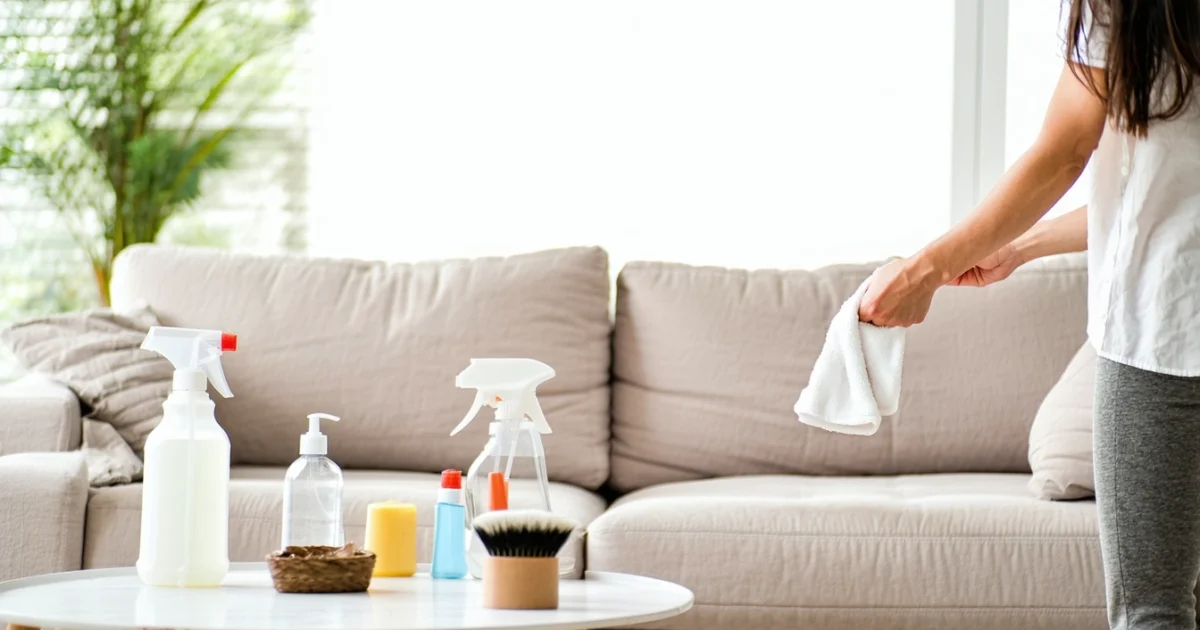
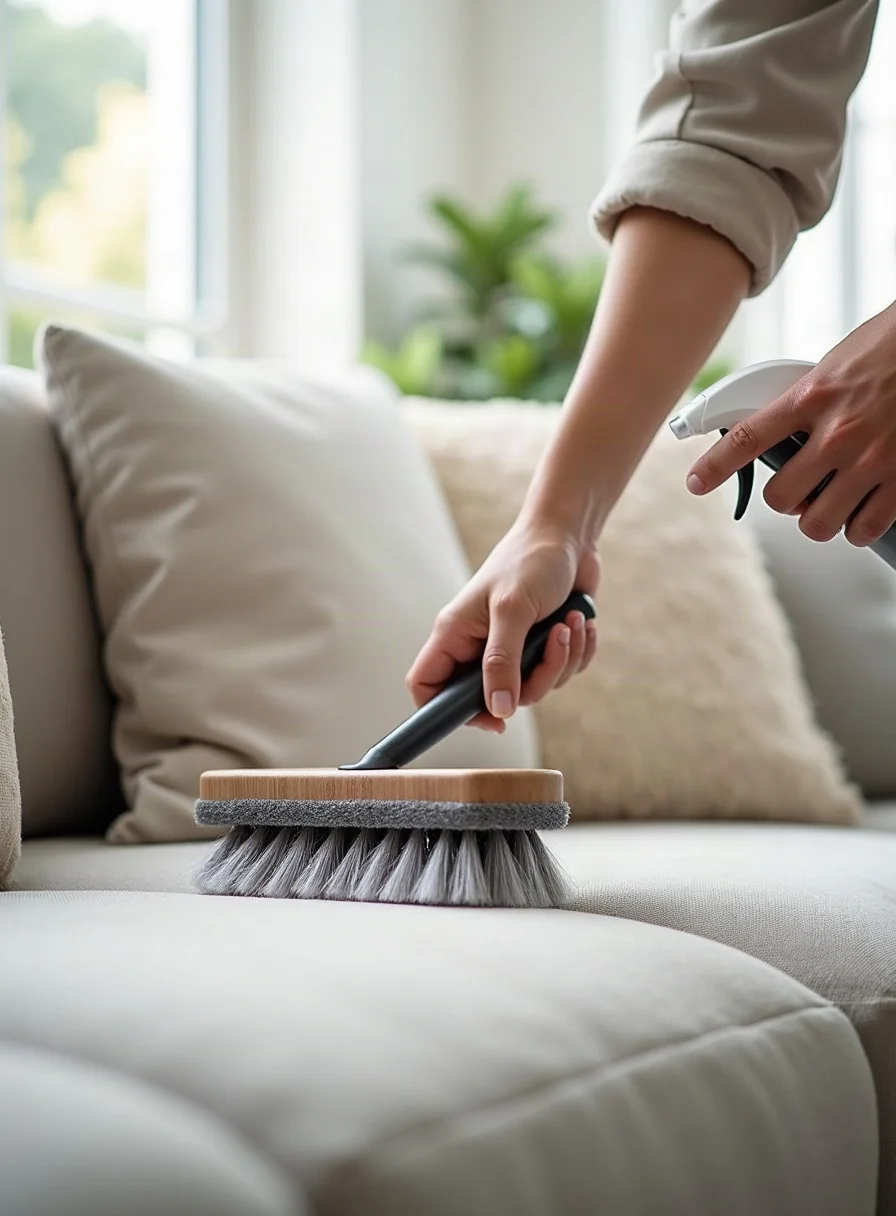
Covers that do not come off, and any W-code sofa you would rather not strip, are cleaned with foam, not water. Upholsterers use a “suds only” technique: make a bowl of washing-up liquid solution, whisk it, and clean with the froth off the top, not the water underneath. A ready-made upholstery cleaner is the alternative, and an upholstery fabric cleaner that names your weave on the label is the safer pick, and a soft upholstery brush helps work either one into the pile without scrubbing the weave. If you buy a ready-made product, check that the label names your fabric and follow its contact time.
- Mix a squirt of washing-up liquid into a bowl of warm water and whisk until you have a standing head of foam. For grimy fabric, add a tablespoon of white vinegar to the water first, because it helps cut body oils and film.
- Scoop just the foam onto a soft brush or white cloth and work it over the fabric in light, overlapping strokes, one cushion face at a time.
- Wipe the dirty foam away with a barely damp, well-wrung white cloth, rinsing the cloth as you go. The fabric should feel cool and slightly damp, never wet.
- Blot with a dry towel, then air-dry with a window open. A fan pointed at the sofa shortens drying time and helps stop water-marks forming on cottons and linens.
The foam-only rule exists because upholstery foam behaves like a sponge. Liquid that soaks in stays for days, smells musty, and can wick dissolved dirt back to the surface as tide marks when it finally dries. If your sofa is S-code, swap all of the above for a dry-cleaning solvent product used exactly as instructed, in a ventilated room and away from flames or heat, because many are flammable. With an X code, vacuum, use bicarbonate of soda and book a professional. Nothing wet, ever. The same technique works on an upholstered chair, and it is the approach our microfibre couch guide builds on for that specific fabric.
6. Removable covers: machine-wash, only if the label allows
Yes, if and only if the care label says so. When it does, machine-washing is the biggest single improvement you can make to a tired sofa, and it is also where most cushion disasters happen. Appliance maker Maytag’s guidance matches common upholstery advice: cold, gentle, mild detergent, and never the dryer. This routine keeps covers the right size and colour.
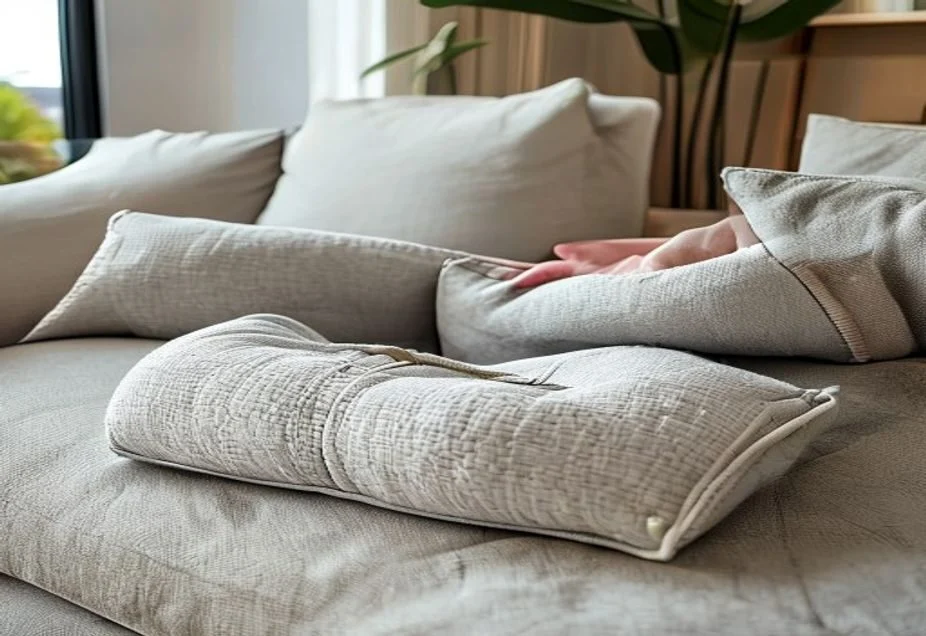
- Unzip fully, turn inside out, then zip closed again. Inside-out protects the fabric face, and a closed zip cannot snag other covers mid-cycle.
- Wash covers from the same sofa together, with nothing else in the load. If any fading happens, it happens evenly, and a slightly faded sofa looks better than one odd cushion.
- Use 30°C or cold, a gentle or delicates cycle, and a mild or non-bio detergent. Skip bleach and fabric softener, because softener coats upholstery fibres and can leave water-marks on some weaves.
- Choose a moderate spin, then take covers straight out of the drum. Sitting wet in a pile is how creases set.
- Air-dry only, and refit while the covers are still faintly damp. Some upholsterers do this because a barely damp cover eases over the foam, then finishes drying drum-tight and loses its wrinkles. Cotton and cotton blends are the ones that shrink, so this matters most for them.
Never tumble-dry cushion covers. Heat is how a cover comes out a size too small for its foam. If a cover has already shrunk, one rescue sometimes works: re-wet it thoroughly, then work it onto the foam while damp and let it dry stretched in place. If it still will not zip, an upholsterer can add a matching gusset.
Velvet, wool, silk-mix and anything with a “dry clean” symbol stay out of the machine regardless of zips. For those, use the in-place method, a solvent product, or the dry cleaner.
7. When the foam itself is the problem: the bath method
Sometimes the smell or the spill is in the foam, and no cover-washing fixes it. Solid foam inserts, and only solid foam, can be washed in the bath. Check first by unzipping the cover and making sure you are holding a plain foam block, not foam wrapped in a stitched fibre or feather jacket, which must not be soaked.
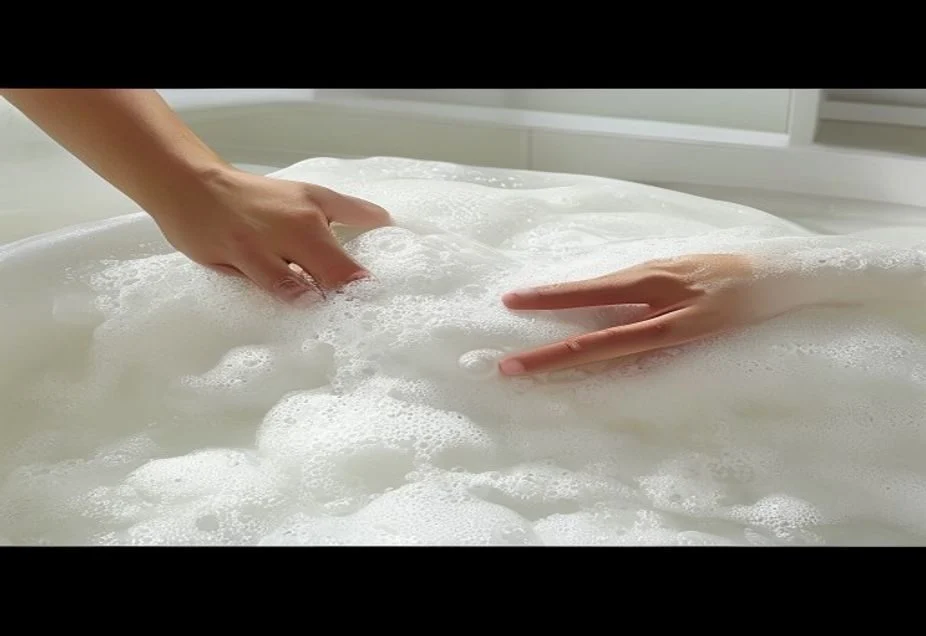
- Run a few inches of lukewarm water in the bath and dissolve a small squirt of mild detergent in it.
- Lay the foam in and press it repeatedly like a giant sponge: push down, let it expand, push again. Pressing pumps the solution through, and you will see the water discolour. Never twist or wring foam, because it tears internally and the cushion never sits right again.
- Drain, refill with clean water and press again until the foam stops releasing suds. Detergent left inside attracts dirt later, so rinse longer than feels necessary.
- Press out as much water as you can, using your body weight against the side of the bath, then stand the foam on edge on towels somewhere warm and airy, turning it daily.
Be realistic about drying time. Two to four days is common for a seat cushion, and longer in a cold house. A fan helps a great deal, while a radiator or tumble dryer can distort and crumble foam. Put foam back damp and you will grow mildew inside your newly clean cushion, which is the one genuinely bad outcome of this method. If you cannot give it the drying time, stick to surface cleaning.
8. Feather and fibre-filled cushions
Feather pads and polyester fibre fills do not get the bath. Soaked feathers clump and take a long time to dry, and a damp pad can smell unpleasant throughout. Instead, wash the covers as above, air the fill outdoors on a breezy dry day, plump it vigorously every day to redistribute the filling, and put bicarbonate of soda in the cover for smells. Check the insert’s own label, because some fibre-filled pads are machine-washable and others are not. A feather pad that has lost its loft or smells musty deep down is a job for a professional cleaner, and replacing it like-for-like is often the more practical option.
Garden cushions and tricky fabrics
Garden furniture cushions fight a different enemy: not crumbs and body oils but algae, mildew and bird mess. Most outdoor covers are polyester or acrylic and cope with water better, so you can be more generous with it, but still check the label. Many zip off and machine-wash at 30°C just like indoor ones.
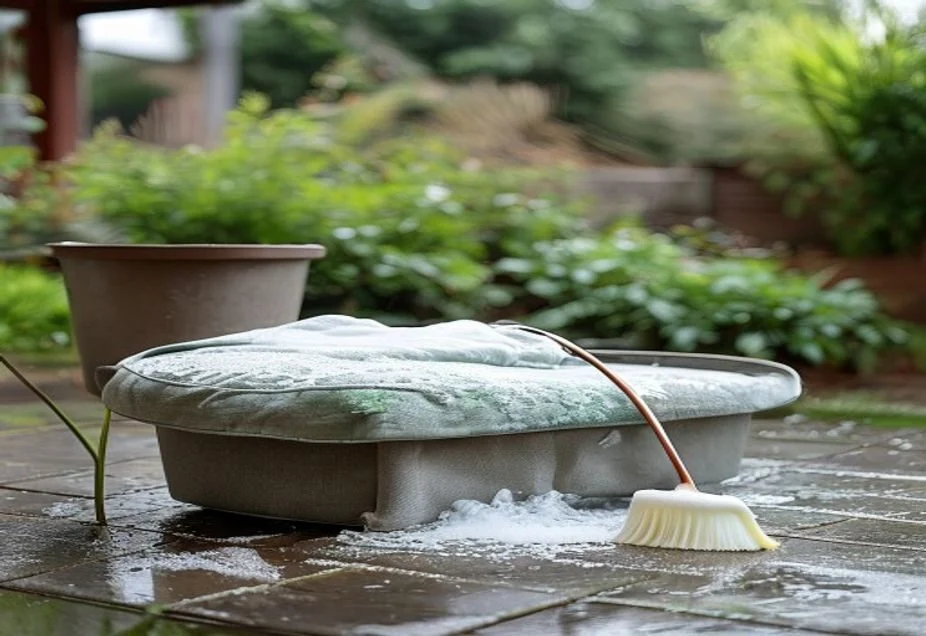
- Brush off dry debris, then wash with warm soapy water and a soft brush on a hard surface such as the patio.
- For green algae staining and mildew spots, scrub with a 50/50 white vinegar and water solution, leave it 10 minutes, then rinse. Avoid bleach, which can kill the growth but often takes the fabric’s colour with it.
- Rinse thoroughly with a watering can or gentle hose, press the water out, and dry the cushions standing on edge in the sun. Direct sunlight is rarely the right call for fabric, but for tough outdoor covers the UV helps finish off what the vinegar started.
Prevention beats all of it. Bring cushions in overnight or store them in a ventilated box, because a sealed bag with a hint of damp breeds mildew. Never put them away wet at the end of summer.
Three other fabrics need their own handling. Microfibre or microsuede often carries an S code despite feeling washable, and usually wants solvent or alcohol-based cleaning, covered in our microfibre couch guide. Real suede dislikes water: brush it, lift marks with a suede rubber, and keep liquids away. Leather cushions want wiping and conditioning rather than washing, and the full routine is in our leather couch guide. If a leather sofa has fabric seat cushions, which is common on mixed designs, clean each part by its own rules. Loose rugs under the sofa collect the same crumbs and spills, so if the floor needs attention too, see our DIY rug cleaning guide.
Keeping cushions clean once they are clean
- Weekly: a quick vacuum of the seat faces and a proper plump. Rotate cushions front to back.
- Monthly: flip every double-sided cushion, vacuum both faces and the seams, and use bicarbonate of soda on any cushion that has lost its freshness.
- Twice a year: the full routine, with covers washed, foam aired and the base vacuumed.
- Always: blot spills as soon as they happen. A prompt dab makes a far bigger difference than any product.
- Sun check: if one arm of the sofa sits in a south-facing window, swap cushions around through summer so fading spreads evenly.
Once cushions are clean and fully dry, a fabric protector spray can help liquids bead on the surface so you have longer to blot. Check the label for your fabric type, spot-test first, ventilate the room and let the sofa dry before sitting on it. It slows staining but does not make a fabric stain-proof.
A short list of what goes wrong most often: tumble-drying covers, washing covers the label says not to wash, soaking fixed upholstery, rubbing stains instead of blotting, using bleach or strong sprays on fabric, and reassembling before everything is bone dry. Trapped damp between foam and cover is where mildew starts, so wait the extra half-day.
When to call a professional, or just replace the insert
Go professional for X-code sofas, silk and antique fabrics, large-scale staining across fixed upholstery, or any smell that has survived enzyme treatment. Upholstery cleaners bring extraction machines that pull moisture straight back out of the foam, which solves the drying problem. Know, too, when the answer is neither cleaning nor a professional. A foam insert that has collapsed and sits flat is past reviving. Replacement cut-to-size foam from an upholstery supplier changes how the sofa sits, and your freshly washed covers go straight over it. Ask suppliers for a quote, because price depends on size and density. The same blot, bicarbonate and enzyme logic applies to bedroom kit, and our mattress cleaning guide follows it.
Ten quick answers
- Can I use a steam cleaner on sofa cushions? Only if the care label allows water-based cleaning and the steamer’s own instructions cover upholstery. Heat and moisture can shrink fabric, leave water-marks or soak the foam. Avoid it on velvet, silk and S or X codes, and test a hidden patch first.
- Can I use a carpet washer machine on a sofa? Some models come with an upholstery tool, but they put a lot of water into the foam. Use one only on W-code fabric, follow the maker’s instructions, and give the cushions plenty of airflow afterwards so they dry through.
- Can velvet cushion covers be washed? Usually not. Velvet and similar pile fabrics can lose their pile or mark in a wash. Follow the label, and if it says dry clean or solvent only, vacuum gently along the pile and use a suitable solvent product or the dry cleaner.
- Why does my cushion still smell after washing the cover? The smell is probably in the foam or filling, or the cushion went back damp. Air it thoroughly, use bicarbonate of soda in the cover, and treat any biological soiling with an enzyme cleaner. Solid foam can then be bathed.
- What causes tide marks after cleaning? Too much liquid, dirt carried to the surface as the fabric dried, or detergent left in the fibres. Re-clean the whole panel with foam only, from seam to seam, and blot it dry so the edge of the damp area does not dry in a ring.
- Can I clean cushions with no care label? Treat them as S-code. Vacuum, use bicarbonate of soda, and test a solvent product on a hidden patch. If the fabric is valuable or antique, ask a professional upholsterer before using anything wet.
- Can cushion inserts go in the washing machine? Foam inserts should not. Some polyester fibre pads are machine-washable, but only if the insert’s own label says so. Feather pads vary by maker. When in doubt, wash the cover and air the insert.
- How do I dry cushions faster? Move air, not heat. Stand them on edge in a breezy spot, point a fan at them, and turn them daily. Avoid radiators, hairdryers and tumble dryers, which can distort foam or shrink covers.
- How do I fluff up flat feather or fibre cushions? Air them outdoors, then plump hard from all sides several times a day. If the filling stays flat or lumpy, it has probably worn out, and a replacement insert is the realistic fix.
- Is it safe to use a fabric protector spray after cleaning? Yes, once the cushions are completely dry. Check the label suits your fabric, spot-test, spray in a ventilated room and let it dry before use. It helps liquids bead but will not stop stains setting if spills are ignored.