The short answer: yes and no. Household vinegar (about 5% acetic acid) genuinely kills or sharply reduces some bacteria, peer-reviewed studies show it can even kill tuberculosis bacteria in the lab and cut E. coli and Salmonella on salad leaves by 99% or more. But it is measurably weaker than bleach or commercial disinfectants, its effect on viruses is inconsistent, and it is not a registered disinfectant. So vinegar is a good everyday cleaner and an excellent descaler, but it is not a reliable germ-killer for the times that really matter, like illness in the house or raw-meat surfaces.
“Vinegar kills 99% of germs” is one of the most repeated claims in natural cleaning, and one of the most oversimplified. The truth, according to the actual laboratory research, is more interesting and more useful: vinegar’s power depends almost entirely on its concentration, how long it stays wet on the surface, and whether you’re up against a bacterium or a virus. This guide walks through what the published studies genuinely found, where vinegar works, where it quietly fails, and how to use it sensibly, with every claim linked to its source at the end.
How we researched this: the findings below are drawn from peer-reviewed studies in journals including mBio, Tropical Medicine and Health and Microorganisms, plus infection-control research. Full references, with links, are at the bottom of the article.
Disclosure: Cleaners Guide is a participant in the Amazon Associates programme, so if you buy through links on this page we may earn a small commission at no extra cost to you. It never changes our recommendations, we suggest products because they work and we point out cheaper options where they do the same job. Prices and availability change, so always check the current price before buying.
What “vinegar” actually is
The clear white vinegar in your cupboard is roughly 5% acetic acid and 95% water (some “cleaning vinegar” is 6%). That acetic acid is the active ingredient, a weak acid that lowers pH and disrupts the cell membranes of microbes. Two things follow from this, and they explain almost everything about vinegar’s performance:
- Concentration matters enormously. Neat 5% vinegar behaves very differently from a splash diluted in a bucket of water.
- Contact time matters just as much. Wiping vinegar straight off does little; leaving it wet on the surface for minutes is what lets the acid work.
Does vinegar kill bacteria? What the studies show
Here the evidence is genuinely positive. Acetic acid is a real antibacterial agent, with limits.
The most striking result comes from a 2014 study in mBio, the journal of the American Society for Microbiology. Researchers found that a 6% acetic acid solution killed Mycobacterium tuberculosis, including a drug-resistant strain, after 30 minutes of exposure, even in “dirty” conditions with added protein and blood. Tuberculosis bacteria are notoriously hard to kill, so this is a serious result [1].
On everyday surfaces, the picture is “good but not the best.” In a benchmarking comparison of household decontamination, 5% acetic acid achieved a 2.1–2.9 log reduction in environmental bacteria, that’s cutting the bacterial population by roughly 99% to 99.9%. Impressive on its own, but bleach and isopropyl alcohol did better, with reductions above 3.5–3.8 logs (99.97%+) [2]. A separate peer-reviewed study of three common home products reached the same broad conclusion: vinegar cleans and reduces bacteria like Staphylococcus aureus and E. coli, but is less potent than dedicated disinfectants [3].
Washing produce: one place vinegar clearly helps
Rinsing salad leaves with vinegar is better supported than most people realise. Studies show that treating lettuce with full-strength or half-strength white vinegar (5% or 2.5% acetic acid) for around 60 seconds cut Salmonella, E. coli and coliforms by 2–3 log units (99–99.9%), more than tap water or salt water alone [4]. But the same research carries a crucial caveat: heavily diluted vinegar (0.5% acetic acid or less) did essentially nothing. A weak splash in a big bowl of water won’t protect you.
Does vinegar kill viruses? Here it gets shaky
This is where vinegar’s reputation outruns the evidence. The honest summary: sometimes, under the right conditions, against some viruses, but not reliably.
On the positive side, a 2023 study in Tropical Medicine and Health found that acetic acid showed virucidal effects against influenza A virus at low pH, apparently by disrupting the virus’s envelope, and suggested vinegars could sanitise some enveloped viruses in the home [5]. Older work found 5% acetic acid could inactivate avian influenza virus on hard surfaces [6]. And one 2022–23 study reported that 6% acetic acid inactivated SARS-CoV-2 after about 15 minutes [5].
But, and this is the important part, other research directly contradicts that. A study of common household cleaning agents for SARS-CoV-2 control found vinegar and acetic acid were “completely ineffective” at inactivating the virus even at 90% concentration, while bleach worked fully in 30 seconds [7]. When peer-reviewed studies disagree this sharply, the sensible real-world conclusion is: don’t rely on vinegar as a virus killer.
Norovirus, the winter-vomiting bug, deserves a special warning. It is one of the toughest common viruses to kill, and public-health bodies specifically recommend bleach-based products for it. Vinegar is not a proven norovirus disinfectant, so if someone in your home has a diarrhoea-and-vomiting illness, vinegar is the wrong tool, reach for a proper disinfectant [7].
Vinegar vs bleach and commercial disinfectants
Putting the numbers side by side makes the trade-off clear.
| Cleaner | Against bacteria | Against viruses | Registered disinfectant? |
|---|---|---|---|
| White vinegar (5%) | Good, ~2–3 log reduction (99–99.9%) | Unreliable; conditional at best | No |
| Bleach (sodium hypochlorite) | Excellent, >5 log (99.999%) | Excellent, fast | Yes |
| Alcohol (70% IPA) | Excellent, >3.5 log | Good on enveloped viruses | Yes |
| Commercial (QAC) sprays | Very good | Good (check the label) | Yes |
The takeaway isn’t “vinegar is useless”, a 99% bacterial reduction is real and useful for everyday cleaning. It’s that vinegar is a cleaner that also has some sanitising power, not a disinfectant you should trust when it truly counts. For a full breakdown of when to use a purpose-made product, see our guide to the best washing machine cleaners and appliance care.
Why concentration and contact time decide everything
If there’s one thing the research agrees on, it’s this: the same vinegar can be effective or useless depending on how you use it. Across the studies, the pattern is consistent, neat 5–6% vinegar left in contact for several minutes gives real reductions, while diluted vinegar or a quick wipe-and-go does little [2][4]. So if you do use vinegar to sanitise, the rules are simple: use it neat, wet the surface thoroughly, and give it 5–10 minutes before wiping.
What vinegar is genuinely brilliant at
Disinfection is actually the wrong question for vinegar. Its real superpower is chemistry, not germ-killing: acetic acid dissolves the alkaline mineral deposits that defeat most other cleaners. That makes it outstanding for jobs where a disinfectant would be pointless:
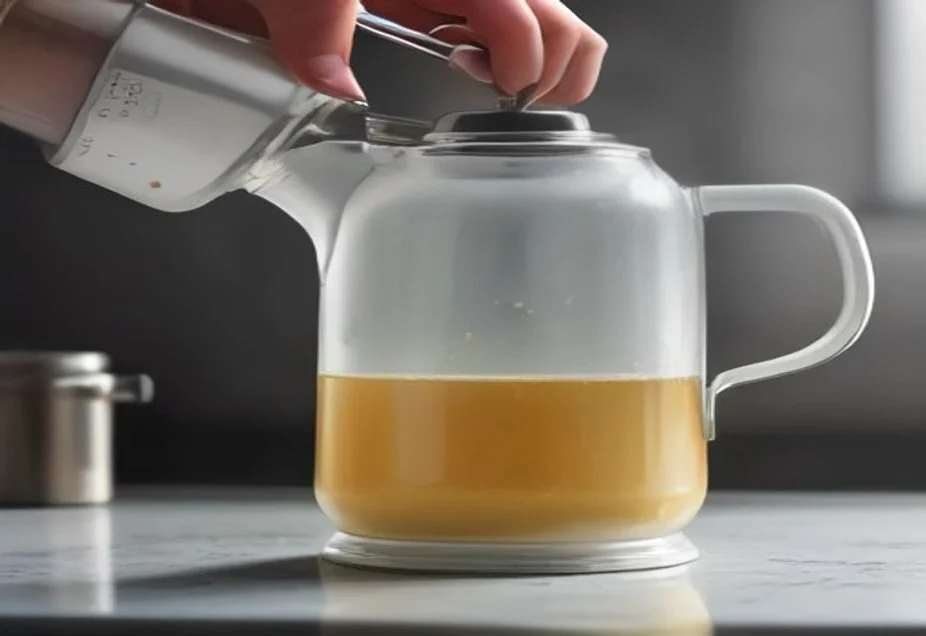
- Limescale and hard-water deposits. Acetic acid reacts with calcium carbonate and dissolves it, which is why vinegar descales kettles, shower heads and taps so well.
- Freshening the washing machine. It helps cut soap residue and odours, see our guide to cleaning a washing machine with vinegar and bicarb.
- Glass and mirrors. It cuts through filmy residue and dries streak-free.
- Grease and general grime, and neutralising some odours.
For these tasks, vinegar genuinely beats many purpose-made products, and that’s where it earns its place in your cupboard.
When to skip vinegar and use a real disinfectant
See disinfectant sprays on Amazon →
- Illness in the house, especially diarrhoea and vomiting bugs (norovirus). Use a bleach-based or registered disinfectant.
- Raw-meat and poultry surfaces and high-risk food-prep areas, where Salmonella and Campylobacter matter.
- Bathrooms and toilets during illness, and anything you need to be genuinely sure about.
In these situations, clean first (vinegar or soap is fine to remove visible dirt), then disinfect with the right product and give it the contact time on the label.
Two vinegar safety rules that matter
- Never mix vinegar with bleach. The acid reacts with sodium hypochlorite to release toxic chlorine gas. Use one or the other, never together.
- Don’t use vinegar on natural stone or other acid-sensitive surfaces. The acid etches and dulls marble, limestone, travertine and unsealed grout, and can damage waxed wood and some appliance seals. See our stone-care guides before reaching for it.
Use vinegar for what it is great at, and a proper disinfectant for germs.
The bottom line
Vinegar is a legitimately good, cheap, low-toxicity cleaner with real but limited sanitising power. The science says it can cut many bacteria by 99%+ and even kill tough organisms like TB in the right conditions, but it’s weaker than bleach, unreliable against viruses, useless when over-diluted, and not a registered disinfectant. Use it with confidence for descaling, grease, glass and everyday wiping; reach for a proper disinfectant when someone’s ill or you’re dealing with raw meat. Used for what it’s actually good at, vinegar earns its reputation, just not the “kills 99% of all germs” version of it.
Frequently asked questions
Does vinegar actually disinfect?
Partly. Household vinegar (5% acetic acid) reduces many bacteria by 99% or more and has killed tough bacteria like tuberculosis in laboratory studies, but it is weaker than bleach and unreliable against viruses, and it is not a registered disinfectant. It’s best described as a cleaner with some sanitising ability rather than a true disinfectant.
Does vinegar kill bacteria like E. coli and Salmonella?
Yes, to a useful degree. Studies show neat or half-strength white vinegar (5% or 2.5% acetic acid) applied for about a minute cut E. coli and Salmonella on lettuce by 2–3 log units (99–99.9%). The key is concentration, very dilute vinegar (0.5% or less) had almost no effect.
Does vinegar kill viruses like flu or COVID?
Inconsistently. Some studies found acetic acid can inactivate enveloped viruses such as influenza and, in one case, SARS-CoV-2 under specific conditions; other studies found vinegar completely ineffective against SARS-CoV-2. Because the evidence conflicts, you shouldn’t rely on vinegar to disinfect against viruses, use a proven product instead.
Does vinegar kill norovirus?
There’s no good evidence that it does, and norovirus is one of the hardest viruses to kill. Health authorities recommend bleach-based disinfectants for norovirus. If someone in your home has a vomiting-and-diarrhoea illness, use a proper disinfectant, not vinegar.
Is vinegar as good as bleach?
No. Head-to-head studies consistently show bleach achieves much higher microbial kill (often 99.999%+ and effective against viruses in seconds), while vinegar reaches around 99–99.9% on bacteria and is unreliable on viruses. Vinegar wins on safety, cost and descaling; bleach wins on disinfection power.
What should you never clean with vinegar?
Natural stone (marble, limestone, travertine), unsealed grout, waxed wood, and some appliance rubber seals, the acid etches or degrades them. And never mix vinegar with bleach, which produces toxic chlorine gas.
Related reading: and if you were about to reach for the bicarb too, does mixing baking soda and vinegar actually clean anything?
References
- Cortesia C. et al. “Acetic Acid, the Active Component of Vinegar, Is an Effective Tuberculocidal Disinfectant.” mBio, 2014. journals.asm.org
- “Quantitative Benchmarking of Household Surface Decontamination: Chemical Disinfectants, Natural Alternatives, and Physical Removal of Environmental Microbes.” 2025. researchsquare.com
- “The effectiveness of three home products in cleaning and disinfection of Staphylococcus aureus and Escherichia coli on home environmental surfaces.” PubMed, 2015. pubmed.ncbi.nlm.nih.gov
- “Impact of Various Washing Protocols on the Mitigation of Escherichia coli Contamination in Raw Salad Vegetables.” Microorganisms, 2024. ncbi.nlm.nih.gov
- “pH-dependent virucidal effects of weak acids against pathogenic viruses.” Tropical Medicine and Health, 2023. link.springer.com
- “Inactivation of avian influenza virus using common detergents and chemicals.” Avian Diseases, 2008. pubmed.ncbi.nlm.nih.gov
- “The Efficacy of Common Household Cleaning Agents for SARS-CoV-2 Infection Control.” PMC, 2022. ncbi.nlm.nih.gov
This article summarises published scientific research for general information. It isn’t medical or infection-control advice; for cleaning during illness, follow NHS or local public-health guidance.