The short answer: yes, steam cleaning genuinely kills dust mites, bacteria and bed bugs, because it’s hot enough to destroy them physically. Studies show a single steam treatment can eliminate 100% of live dust mites and cut allergen levels by around 87%, and high-temperature steam (about 100°C) kills common bacteria like E. coli and MRSA within seconds of contact. But there are two catches the adverts skip: the steam has to actually reach a lethal temperature on the surface for long enough, and steam kills but doesn’t remove, you still need to vacuum afterwards to clear away the dead mites and allergen.
Steam cleaners are marketed as a chemical-free way to “sanitise” everything from floors to mattresses, and for once the hype is largely justified, if you use them correctly. Get the technique wrong (too fast, or leaving surfaces soaking) and you’ll be disappointed, or worse, create a damp problem. This guide sets out exactly what the research shows steam can and can’t do, the temperatures and contact times that matter, what’s safe to steam and what isn’t, and how to get the most out of it. Sources are linked at the end.
How we researched this: the findings below draw on dust-mite and allergen research (including work involving NIEHS, the University of Washington and Harvard) and steam-disinfection studies published in Food Control and Scientific Reports. Full references are at the bottom.
Disclosure: Cleaners Guide is a participant in the Amazon Associates programme, so if you buy through links on this page we may earn a small commission at no extra cost to you. It never changes our recommendations, we suggest products because they work and we point out cheaper options where they do the same job. Prices and availability change, so always check the current price before buying.
How steam cleaning actually works
See steam cleaners on Amazon →
Steam cleaning is really just heat delivery. A steam cleaner heats water past boiling and fires it out as vapour at around 100°C (212°F) or hotter. That heat does the work in two ways: it denatures proteins, physically unravelling the molecules that living cells and allergens depend on, killing microbes and neutralising allergen structure, and it loosens grease and grime so they wipe away. There’s no poison involved; it’s the same principle as cooking or sterilising, applied to a surface.
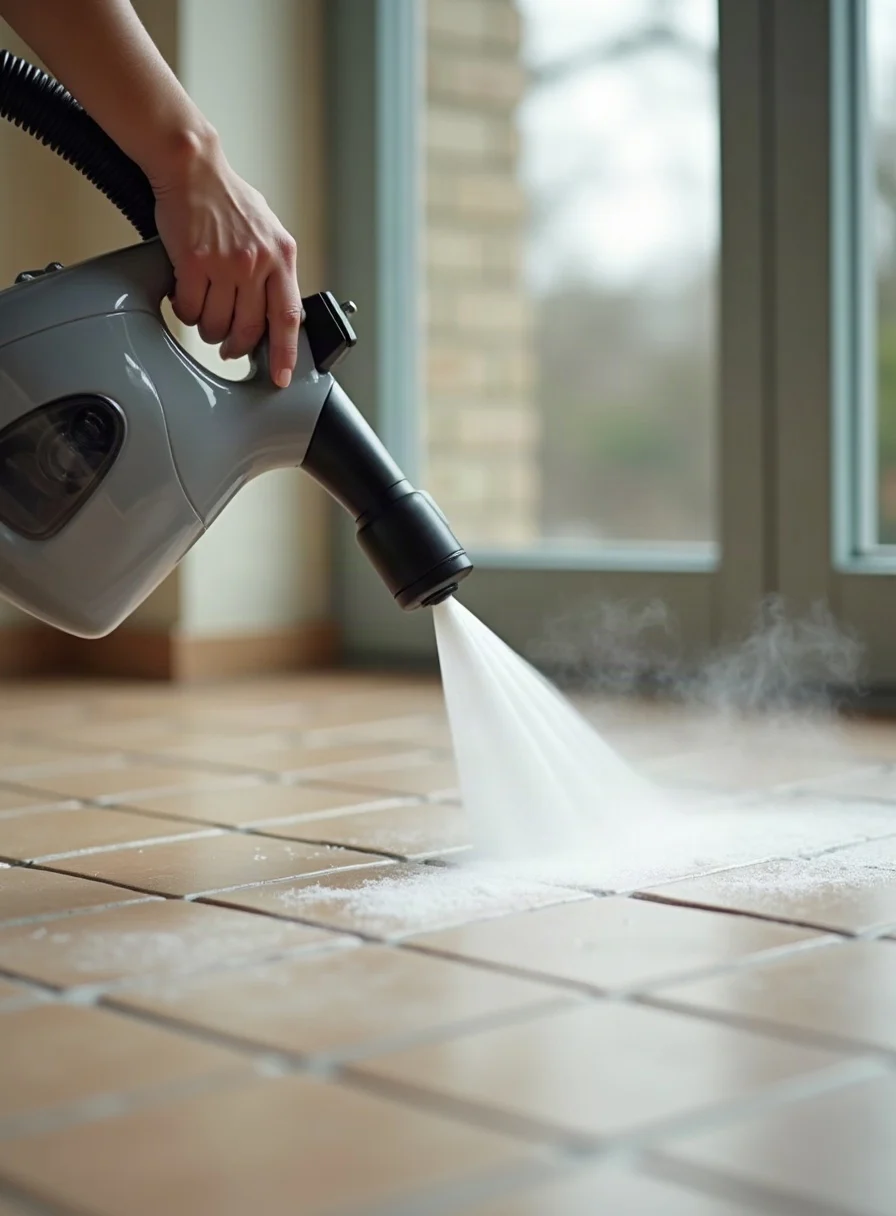
One distinction matters: “dry” steam vapour (low moisture content, very hot) versus a wet, sopping steam. Dry vapour cleaners leave surfaces only slightly damp, which is what you want, enough heat to kill, not so much water that things stay wet. The hotter the steam and the longer it’s in contact, the more it kills: killing power rises steeply with temperature, so a surface held at 100°C for several seconds is dramatically more effective than a quick wave-over that never lets the surface heat up.
Does steam cleaning kill dust mites?
Yes, and this is where steam genuinely shines. House dust mites, a leading trigger for allergies and asthma, live deep in carpets, mattresses and upholstery where washing can’t reach. Heat kills them, and steam delivers heat into those fibres:
- It kills the mites outright. A domestic steam-cleaning study found a single treatment eliminated all live mites from treated samples and reduced allergen protein concentration by about 86.7% [2].
- It denatures the allergen, not just the mite. The heat breaks down the allergen proteins (the actual cause of your symptoms), so they’re less able to provoke a reaction [1].
- The effect lasts longer than vacuuming. Research found dry steam cleaning plus vacuuming kept dust-mite allergen down for up to eight weeks, far longer than vacuuming alone [1].
For allergy and asthma sufferers, that’s a meaningful, evidence-backed benefit, steaming the mattress, carpets and soft furnishings periodically genuinely reduces the allergen load in the bedroom. It pairs perfectly with the hot-wash approach in our guide to what temperature kills dust mites in bedding.
Does steam kill bacteria and viruses?
Yes, provided the surface gets hot enough for long enough. At around 100°C, steam kills the great majority of common household bacteria within seconds of contact. The evidence is strong:
- It destroys tough biofilms. A study in Food Control showed steam inactivated E. coli O157:H7, Salmonella Typhimurium and Listeria monocytogenes biofilms on both plastic and stainless steel [3], biofilms being notoriously hard for sprays to penetrate.
- It works across a wide range of pathogens. A 2025 Scientific Reports study of an atmospheric-pressure steam device eradicated applied pathogens including S. aureus (and MRSA), E. coli, Pseudomonas, Klebsiella and Acinetobacter [4].
- The mechanism is physical, so, unlike some chemical disinfectants, bacteria don’t develop “resistance” to being cooked.
The essential caveat: these results depend on the surface actually reaching the killing temperature for the required contact time. Moving the steam head too quickly, or holding it too far from the surface, means the material never gets hot enough, and then you’re just adding moisture. Slow, deliberate passes are what make steam disinfect rather than merely dampen.
Bed bugs, fleas and mould
Bed bugs and their eggs are killed by direct contact with steam at around 100°C, which is why steam is a mainstay of chemical-free bed-bug treatment, it reaches into mattress seams and crevices where sprays struggle. The same lethal heat kills fleas and their larvae in carpets and pet bedding. As always, it only works where the steam actually touches, so slow, thorough coverage of seams and edges is essential.
Mould is more nuanced. Steam’s heat can kill surface mould and is a useful chemical-free option on hard, non-porous surfaces like tiles and grout. But mould on porous materials (plasterboard, wood) often has roots below the surface that steam won’t reach, and adding moisture to a damp-prone area can make things worse if you don’t dry it thoroughly. For anything beyond light surface mould, tackle the underlying damp first, see our guide to removing mould from walls.
The catch nobody mentions: killing isn’t removing
This is the single most important thing to understand about steam cleaning, and it’s why some people feel it “doesn’t work” for allergies. Steam kills dust mites, but it leaves their bodies and droppings, and the allergen proteins, behind in the carpet. Dead mite allergen still triggers allergies until it’s physically taken away. Steam denatures a lot of it, but not all.
So the winning routine is steam, then vacuum: steam to kill, then a vacuum (ideally with a HEPA filter, so the fine allergen isn’t blown straight back out) to remove the debris. This two-step approach is exactly why the studies pairing steam with vacuuming showed longer-lasting allergen reductions than either alone [1]. Vacuuming without steam removes but doesn’t kill; steam without vacuuming kills but doesn’t remove; together they do both.
Steam vs chemicals vs vacuuming
Each method has a job it does best:
| Method | Kills germs/mites? | Removes them? | Best for |
|---|---|---|---|
| Steam | Yes (with heat + contact time) | No, leaves debris behind | Chemical-free sanitising, allergies, grout, mattresses, sealed floors |
| Vacuum (HEPA) | No | Yes, lifts mites, dust, allergen | Everyday allergen removal; the essential partner to steam |
| Chemical disinfectant | Yes | Partly (with wiping) | Targeted disinfection where heat can’t be used |
| Soap/detergent | Removes, doesn’t kill | Yes | General cleaning of most surfaces |
Steam’s stand-out advantages are that it’s chemical-free, ideal around babies, pets, asthma and chemical sensitivities, and that it reaches into grout lines, seams and fabric where wiping can’t. Its weakness is that it only kills, doesn’t remove, and can’t be used on everything.
What you can and can’t steam clean
| Usually safe to steam | Avoid steaming |
|---|---|
| Sealed hard floors (tile, sealed stone) | Unsealed or waxed wood and laminate (warps/swells) |
| Grout, taps and bathroom fixtures | Delicate or unsealed natural stone (marble) |
| Mattresses and upholstery (then dry well) | Anything water-sensitive: silk, velvet, some leathers |
| Sealed worktops, hobs, oven interiors | Electricals and screens |
| Carpets (with a suitable steam cleaner) | Cold glass (thermal shock can crack it) |
Always check the manufacturer’s guidance for both your steam cleaner and the surface, and test an inconspicuous area first, especially on wood, laminate and anything you’re unsure is sealed.
How to steam clean effectively (and safely)
- Vacuum or wipe first to clear loose dirt, so the steam works on the surface rather than the debris on top.
- Let the cleaner reach full temperature before you start, the machine needs to be producing proper hot vapour, not lukewarm mist.
- Go slowly. Move the head in slow, overlapping passes and pause on high-touch or high-risk spots so the surface actually heats up. Speed is the enemy of disinfection.
- Use the right attachment, a fine nozzle for grout and seams, a fabric tool for mattresses and sofas, a floor head for hard floors.
- Don’t over-wet. Surfaces should be left barely damp and dry quickly; if something is soaking, you’re moving too slowly or the vapour is too wet.
- Vacuum again afterwards (for carpets, mattresses and upholstery) to remove the killed mites and loosened allergen, ideally with a HEPA vacuum.
- Ventilate and dry. Open a window and let everything dry fully, especially mattresses and upholstery, to avoid trapping moisture that could feed mould.
Myths vs facts
| Myth | What the evidence says |
|---|---|
| “Steam cleaning does nothing for allergies.” | It kills mites and cuts allergen ~87%; paired with vacuuming the benefit lasts weeks [1][2]. |
| “A quick wave of steam disinfects.” | Only if the surface reaches ~100°C for several seconds, go slow [3][4]. |
| “Steam removes dust mites.” | It kills them but leaves the debris, you must vacuum afterwards. |
| “You can steam any floor.” | Not unsealed/waxed wood or laminate, moisture and heat damage them. |
| “Steam needs strong chemicals to work.” | No, the disinfection is purely heat; that’s its main selling point. |
Chemical free heat, plus the pads that carry the residue away.
The bottom line
Steam cleaning is one of the few “natural” cleaning methods that genuinely lives up to the claims: the research shows it kills dust mites, slashes allergen levels, and destroys bacteria and biofilms, all with nothing but hot water. The two rules that separate results from disappointment are simple: give the steam enough heat and contact time to actually kill (slow passes, not a quick wave), and remember that steam kills but doesn’t remove, so vacuum afterwards. Use it on the right surfaces, dry things properly, and pair it with a HEPA vacuum, and steam is a genuinely powerful, chemical-free addition to your cleaning kit, especially if anyone in the home has allergies or asthma.
Frequently asked questions
Does steam cleaning really kill dust mites?
Yes. Studies show a single steam treatment can eliminate 100% of live dust mites in treated carpet or fabric and reduce allergen protein levels by around 87%. The heat both kills the mites and denatures the allergen. For lasting benefit, vacuum afterwards to remove the dead mites and debris, as steam kills them but doesn’t lift them out.
Does steam cleaning kill bacteria and germs?
Yes, when the surface reaches roughly 100°C for a few seconds. Research shows steam inactivates tough bacteria and biofilms such as E. coli, Salmonella and Listeria, and eradicates a wide range of pathogens including MRSA. The key is slow, deliberate passes so the surface actually gets hot, a quick wave of steam won’t disinfect.
Do you need to vacuum after steam cleaning?
For carpets, mattresses and upholstery, yes. Steam kills dust mites but leaves their remains and allergen behind, and those still trigger allergies until removed. Vacuuming afterwards, ideally with a HEPA filter, clears the debris, which is why steam-plus-vacuum outperforms either method on its own.
Is steam cleaning better than chemical disinfectants?
It depends on the job. Steam is excellent for chemical-free sanitising, reaching into grout and fabric, and homes with allergies, babies or pets. Chemical disinfectants are better where you can’t apply enough heat, or on heat-sensitive surfaces. Many people use both: steam for general sanitising, a targeted disinfectant for specific high-risk spots.
Can steam cleaning damage floors?
It can, on the wrong floors. Sealed tile and sealed stone are usually fine, but unsealed or waxed wood and laminate can warp, swell or lift because heat and moisture penetrate the seams. Delicate natural stone like marble can also be damaged. Always confirm the floor is sealed and steam-safe, and check the manufacturer’s advice first.
Does steam cleaning kill bed bugs?
Yes, direct steam at around 100°C kills bed bugs and their eggs on contact, which is why it’s used in chemical-free bed-bug treatment. Success depends on getting the steam right into mattress seams, bed frames and crevices where they hide, so slow, thorough coverage is essential.
Can you steam clean a mattress?
Yes, and it’s one of the best uses for steam if you have allergies, it kills dust mites living deep in the mattress. Use a fabric attachment, move slowly, avoid over-wetting, vacuum afterwards to remove the debris, and let the mattress dry completely (with good ventilation) before making the bed, so no moisture is trapped.
Does steam kill mould?
It can kill surface mould on hard, non-porous surfaces like tiles and grout. But mould on porous materials often has roots the steam can’t reach, and adding moisture to a damp area can worsen the problem if not dried. For anything more than light surface mould, address the underlying damp and follow a proper mould-removal method.
Is steam cleaning safe around children and pets?
That’s one of its biggest advantages, because it disinfects with heat alone, it leaves no chemical residue on floors and surfaces where children and pets crawl, walk and lick. Just keep them clear during cleaning (the steam and surfaces are very hot) and until treated areas have cooled and dried.
How often should you steam clean?
For allergy control, steaming carpets, mattresses and soft furnishings every couple of months (alongside regular vacuuming) keeps dust-mite allergen down, since studies show the benefit lasts several weeks. Hard floors and bathrooms can be steamed as part of your normal cleaning routine whenever they need sanitising.
Related reading: what temperature kills germs in your laundry? and does vinegar actually disinfect?
References
- “Study Shows Simple Steps Can Reduce Dust Mite Allergens In Bedrooms” (research involving NIEHS, University of Washington and Harvard). ScienceDaily, 2001. sciencedaily.com
- Study on domestic steam cleaning and house dust mite allergen (single treatment: all live mites eliminated; allergen reduced ~86.7%). Journal of Environmental Monitoring / Royal Society of Chemistry, 2009. pubs.rsc.org
- “A comparison of saturated steam and superheated steam for inactivation of Escherichia coli O157:H7, Salmonella Typhimurium and Listeria monocytogenes biofilms.” Food Control, 2013. sciencedirect.com
- “Disinfection of medical devices with a steam machine that operates at atmospheric pressure and is suitable for home usage.” Scientific Reports, 2025. nature.com
This article summarises published research for general information and isn’t medical advice; for allergy or asthma management, follow guidance from a qualified professional.