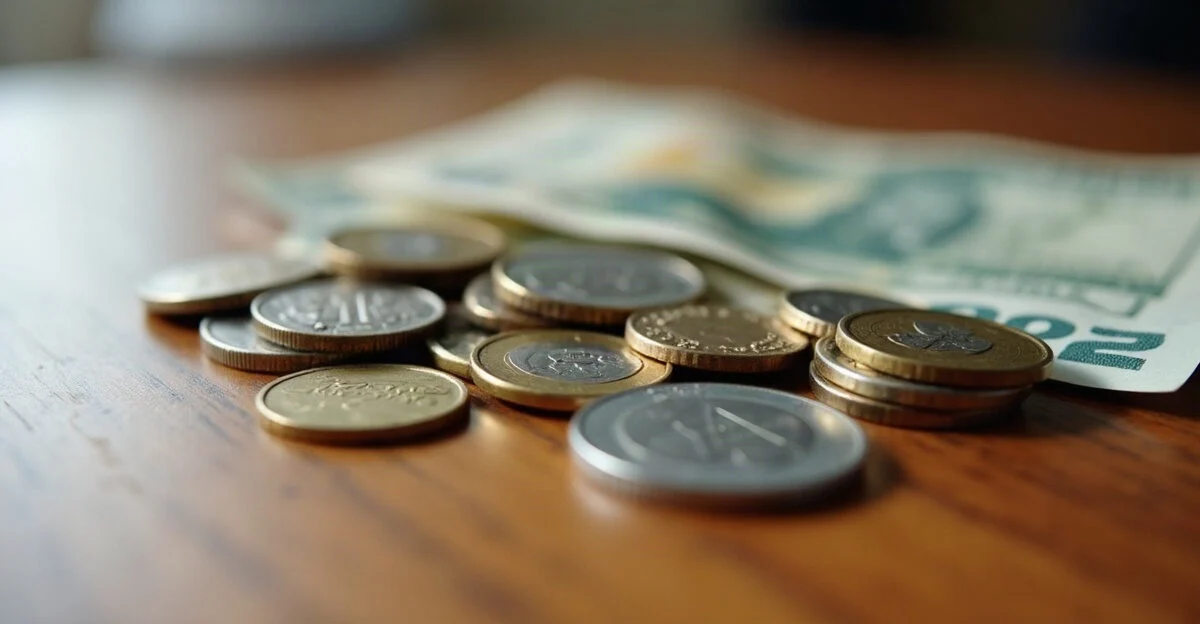
You pay for a coffee and get a few coins and a creased note back as change. The note goes in a back pocket, the coins in a coat, and two minutes later you are eating a croissant with the same hand. Nobody thinks twice about it, and then a headline about money being covered in bacteria makes you wonder whether you should.
The honest answer sits in the middle. Cash does carry germs, and some kinds of money carry more than others, but for a healthy person the risk is small and one habit takes care of most of it: wash your hands after handling cash and before you eat.
What is actually on that note?
Cash is handled constantly, passed from hand to hand, stuffed into pockets and tills, and almost never cleaned, so it is no surprise it picks up microbes. A 2013 study, widely quoted as coming from the University of Oxford, put the average European banknote at around 26,000 bacterial colonies. Separate testing of US dollar bills found Staphylococcus aureus, a bacterium that can cause food poisoning, and researchers have described notes carrying everything from skin bacteria to faecal microbes.
Those numbers sound alarming, so it helps to keep the same perspective you would use when asking whether your phone is dirtier than a toilet seat. Most of the bacteria are ordinary and harmless, and finding bacteria on a surface is not the same as catching something from it. Money is grubby and worth washing your hands after, not something to be afraid of.
Paper notes, polymer notes and copper coins
What the money is made of changes how well bacteria survive on it, and the pocket change you handle in the UK is better placed than most.
| Money type | Hygiene | Why |
|---|---|---|
| Old paper / cotton note | Worst | Absorbent fibres let bacteria cling and survive |
| Bank card and phone | Moderate to high | Touched constantly and rarely cleaned |
| Polymer note (UK) | Better | Smooth plastic, bacteria stick less and die faster |
| Copper coin | Best | Copper actively resists bacteria |
- Old paper (cotton) notes come off worst. Their fibrous, absorbent surface gives bacteria plenty to cling to.
- Polymer notes, which the UK now uses, were reported by Harper Adams University researchers to be roughly three times more hygienic. Bacteria stick less to the smooth plastic and die off faster.
- Copper-based coins do best. Copper has genuine antimicrobial properties, so bacteria survive far less well on coins than on notes, though they are not eliminated.
So the switch to polymer notes was a quiet hygiene upgrade, and loose change is cleaner than you might expect.
Cash, cards and phones all count
Cash is not uniquely dirty, it is just one of several things you touch all day. Your bank card, the card reader and PIN pad, and above all your phone carry their own microbes. Your phone, held against your face and rarely cleaned, often carries more than a coin does.
Contactless cuts the number of hands that touch a note, but you still tap a shared reader and then handle your phone or card, so no payment method removes the need for clean hands. The surface matters less than what you do next.
Can handling money make you ill, and for how long do germs last?
For a healthy person the risk is low. Most of the bacteria are harmless, and touching a note or coin will not usually make you sick. Trouble arises when contaminated hands then touch your mouth or your food without a wash in between, which is how germs such as E. coli actually reach you.
Survival time depends on the surface. Microbes linger longer on absorbent cotton-paper notes, which give them moisture and texture to hold. On smooth polymer they die off faster, and on copper faster still. Damp, warm conditions extend survival on any of them, so a note crumpled in a warm pocket is grubbier than loose change. The same rule applies around the house, as we cover in how long germs live on surfaces. Clean hands break the chain however long the germ would have lasted.
The group who need to be most careful are food handlers. Taking payment and then touching food without washing your hands, or changing gloves, is a genuine cross-contamination route, which is why good food businesses separate the two jobs.
⚠️ Warning: If you handle cash at work and then touch food, wash your hands in between every time, or keep one person on the till and another on the food.
A routine that takes thirty seconds
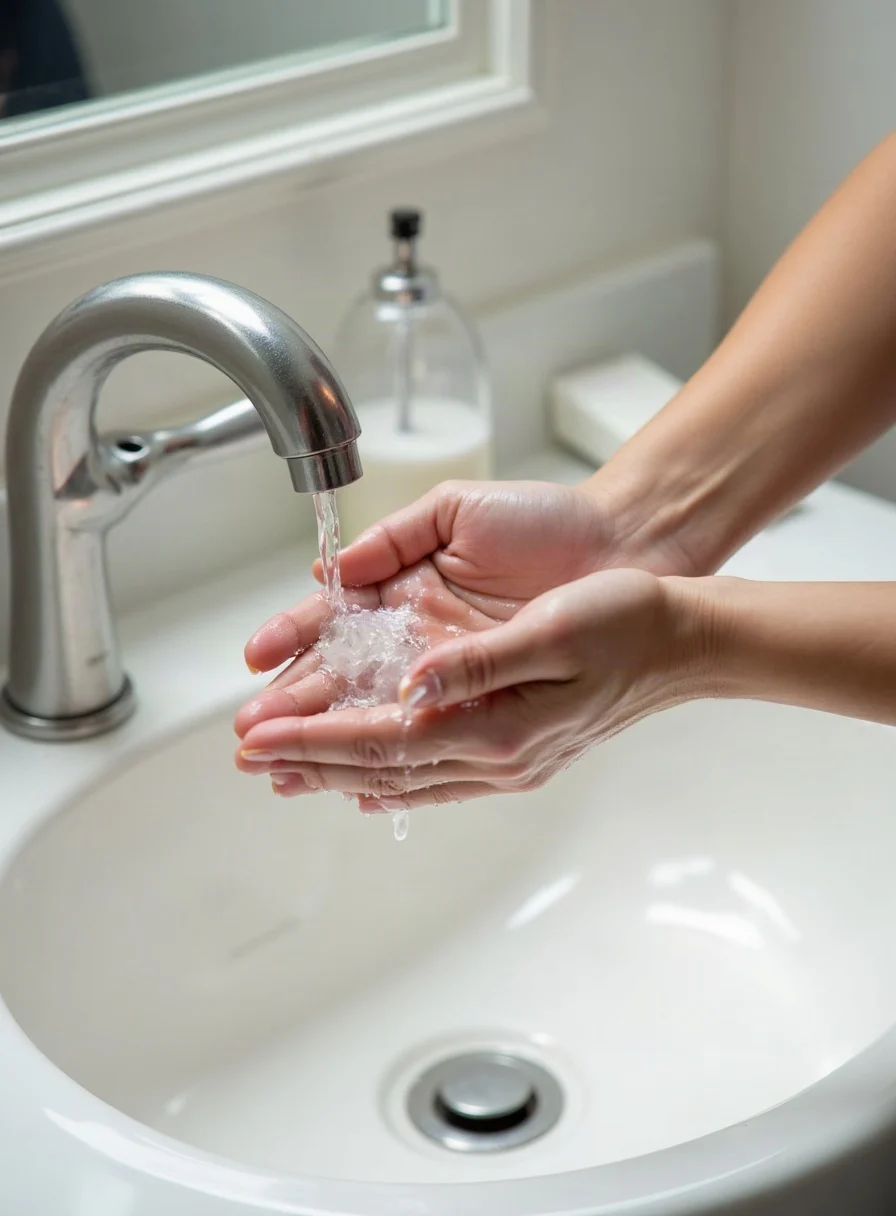
- Wet your hands, lather with soap for at least 20 seconds and rinse, after handling cash and always before eating. Our guide to hand sanitiser versus soap explains why soap wins when hands are visibly dirty.
- Dry them properly. Damp hands pick up and spread germs more easily, and we compare the options in hand dryers versus paper towels.
- Use a sanitiser when there is no sink, such as at a market stall or on public transport, and wash properly as soon as you can.
- Keep notes and coins out of your mouth and off food preparation surfaces.
- Moisturise if you handle lots of cash. Frequent washing dries the skin, and cracked skin is harder to keep clean.
- There is no need to launder polymer notes. If one is very grubby, wipe it with a damp cloth and let it dry. Do not put notes through a washing machine.
If you have already eaten without washing
Do not panic. One unwashed snack after touching a coin is very unlikely to cause problems. Wash your hands now, and use the routine above next time. If you develop vomiting or diarrhoea, drink fluids and follow NHS advice, and stay home from work or school until you have been clear for 48 hours if you handle food or care for others.
What to buy, if you want a hand-hygiene kit
As an Amazon Associate we earn from qualifying purchases. Three things cover most situations, and the links go to Amazon UK searches so you can compare for yourself.
A pocket-sized hand sanitiser gel is for moments with no sink. Look for one with at least 60 percent alcohol, use enough to wet all surfaces and rub until dry, and remember it does not replace washing when your hands are visibly dirty or greasy. At home, a pump bottle of hand wash is convenient, though plain soap works as well and you do not need the antibacterial label, as antibacterial versus plain soap explains. Finally, a fragrance-free, quick-absorbing hand cream is worth keeping by the sink if frequent washing leaves your skin sore, and a non-greasy formula will not mark your cards and notes.
Myths about dirty money
| Claim | The reality |
|---|---|
| Money is covered in dangerous germs | It carries plenty of bacteria, but most are harmless and the illness risk for a healthy person is low. |
| All banknotes are equally dirty | No. Old cotton-paper notes hold far more bacteria than the UK polymer notes, and coins less still. |
| Coins are the dirtiest form of money | The opposite. Copper in coins resists bacteria, so coins are generally cleaner than notes. |
| Using contactless keeps your hands germ free | You still tap a shared reader and handle your phone. Clean hands matter whatever you pay with. |
Hand hygiene myths are common. If you are curious how another one stacks up, see is the five-second rule real.
Questions people ask about dirty money
Are coins full of germs?
Not as many as notes. Copper-based coins have antimicrobial properties, so bacteria survive on them less well than on absorbent paper, though coins are not sterile. Handle them as you would any touched surface and wash your hands before eating.
Is it okay to wash your money?
There is no need to routinely wash it. A very grubby polymer note can be wiped with a damp cloth. Avoid soaking notes or running them through a washing machine, which can damage them. Washing your hands does far more good than washing the cash.
What does "dirty money" mean in slang?
It has nothing to do with hygiene. Dirty money means cash earned from illegal activity, such as fraud or drug dealing. Money laundering is the process of making it look legitimate. This article is about the germs, not the crime.
How dirty is a US dollar bill?
US notes are made from a cotton and linen blend, an absorbent material similar to the old paper notes, so they can hold bacteria well. Testing has found organisms such as Staphylococcus aureus on them. As with any cash, the risk is managed by washing your hands.
Did handling cash spread COVID?
Health bodies assessed the risk from banknotes as low and stressed that respiratory spread and unwashed hands mattered far more. The sensible advice then and now is the same: wash your hands after handling cash and before touching your face or food.
Should I clean my wallet?
An occasional clean is reasonable, since a wallet is carried in a warm pocket and handled daily. Check the material first. Wipe a plastic or synthetic one with a damp cloth, and treat leather gently with a slightly damp cloth, avoiding soaking.
Is it safe for toddlers to hold coins?
Coins are a choking hazard first and a germ risk second. Keep them out of reach of babies and toddlers who put things in their mouths, supervise any play with them, and wash little hands afterwards.
How often should I wash my hands if I handle cash all day?
After each customer is not realistic for most people, so aim for before and after breaks, before eating, and whenever you move from the till to food. Sanitise in between if you cannot get to a sink, and moisturise to protect your skin.