The short version: blot, do not rub, and do it within minutes. On clothes, rinse from the back with cold water and then treat with washing-up liquid, or with a little hydrogen peroxide on white and colourfast fabric. On carpet, blot, dilute, then blot again, with salt as a stop-gap for a fresh puddle. Dried-in wine is harder but often still comes out with patience and a repeat soak.
Red wine spreads the moment it touches fabric or carpet, which is why speed matters more than any particular product. Treated within the first few minutes, most stains lift almost completely. Left until the next morning, they become a different and much harder problem.
The first two minutes
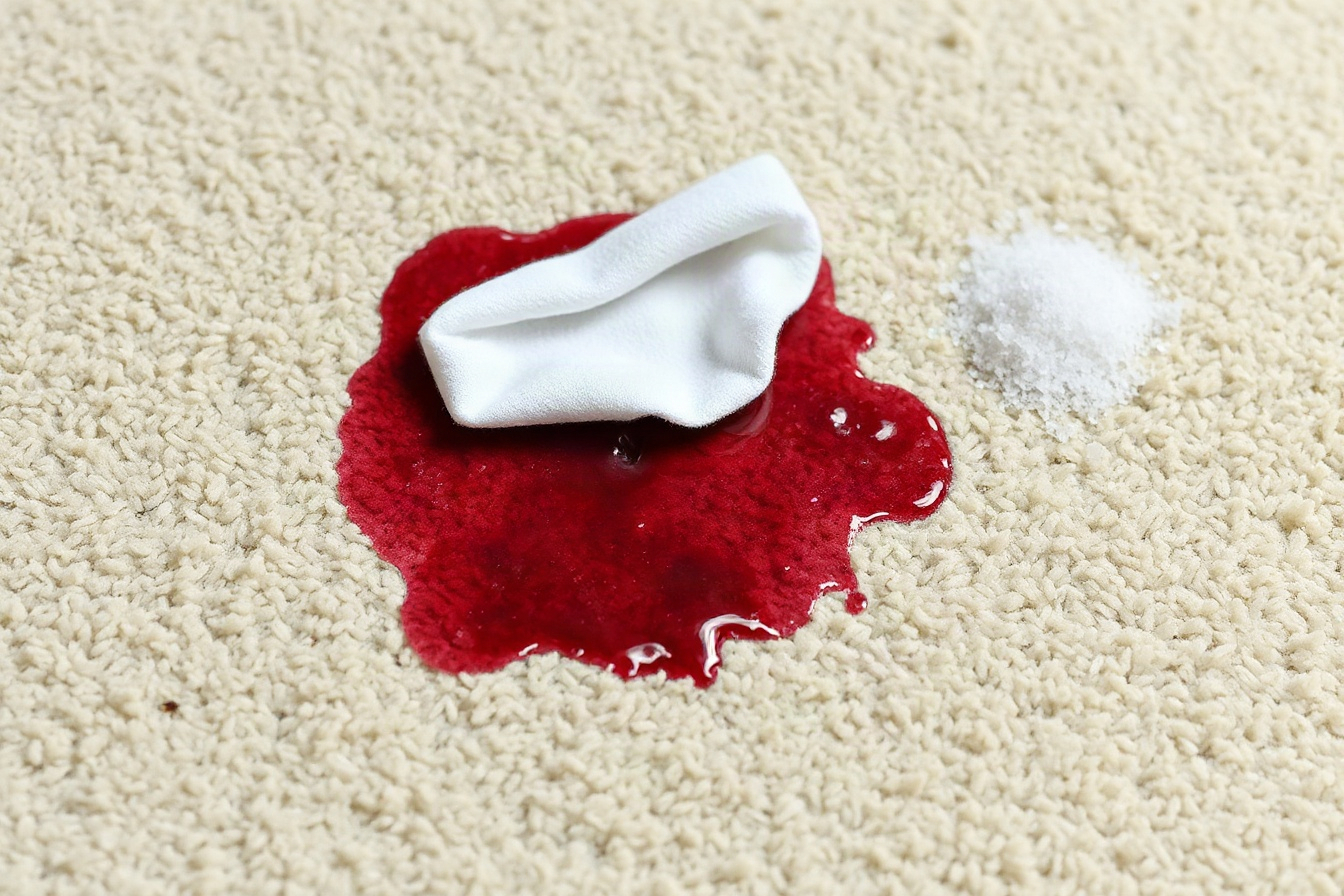
Before reaching for anything else, do this. It makes the biggest difference to the outcome.
- Blot the spill straight away with a clean cloth or paper towel, pressing down rather than wiping or rubbing.
- Work from the outside of the stain inwards, which stops it spreading any further than it already has.
- Soak up as much of the liquid as possible before applying any treatment. A wetter stain is a bigger problem.
- Keep changing to a clean part of the cloth, so you are lifting wine and not putting it back.
Rubbing a fresh wine stain is the single most common mistake. It pushes the wine deeper into the fibres and spreads it wider rather than lifting it out.
Clothes and table linen
Once the spill is blotted up, fabric responds well to either of two methods. Check the care label first, because heat and bleaching agents suit some fabrics and not others.
Rinse, then wash-up liquid
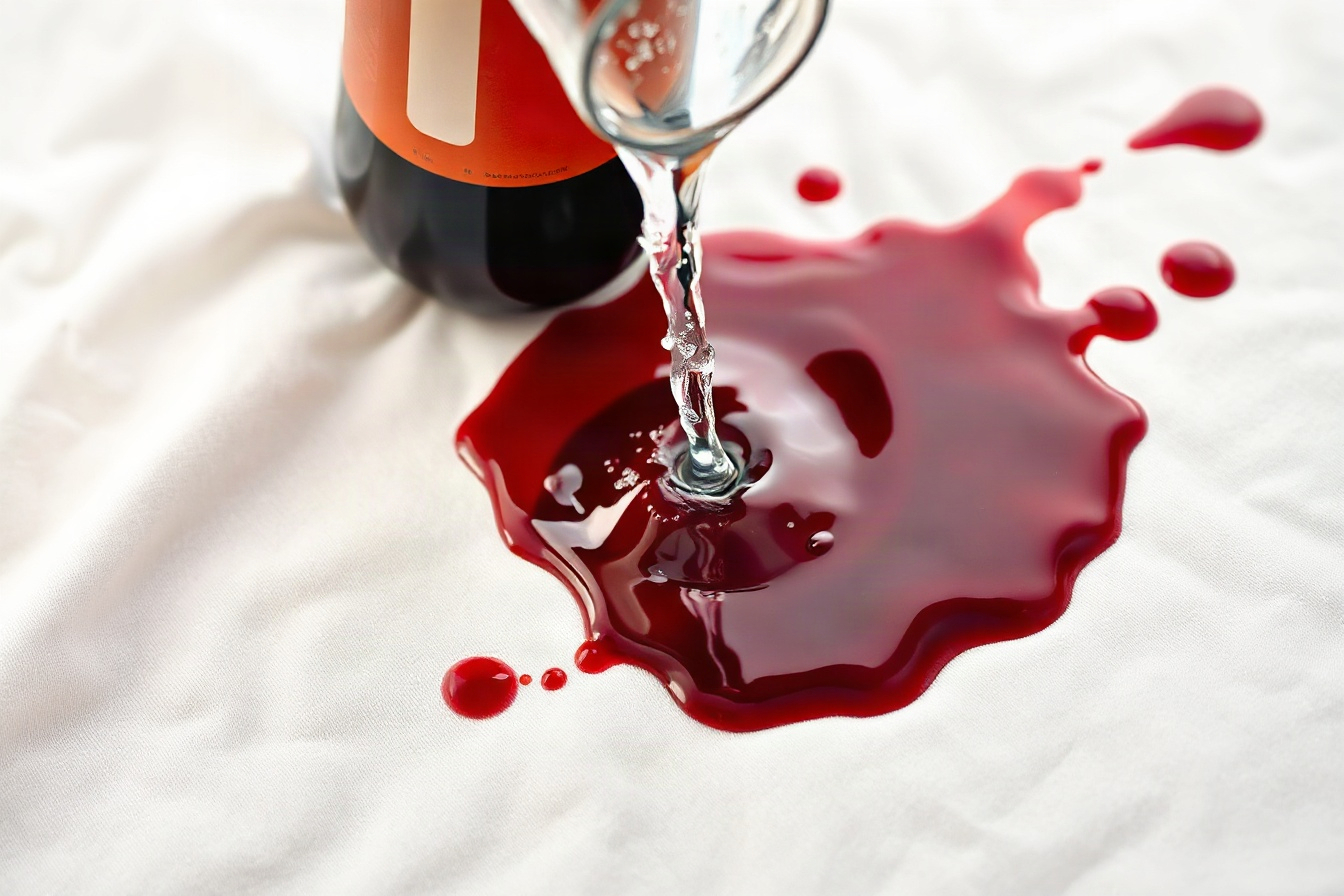
Turn the garment over and run cold water through the back of the stain so the wine is pushed out the way it came in. Work in a few drops of washing-up liquid, leave for several minutes, rinse and check. Many stains on cotton and polyester finish here.
Hot water through the fabric, for sturdy cotton and linen only
A well-known approach is to stretch the stained section tightly over a heatproof bowl, secure it with a rubber band and pour hot water through from a short height. Take real care. Boiling water causes scalds, so keep your hands and face well clear and do not hold the fabric while pouring. It is only suitable for fabrics whose care label allows a hot wash, so skip it for wool, silk, delicate synthetics and anything with a cold-wash label. Heat can also set stains that have already been treated with some products, so rinse in cold water first if in doubt.
Washing-up liquid with hydrogen peroxide
Mix a few drops of washing-up liquid with a tablespoon of hydrogen peroxide (the 3% type sold for first aid or stain use) and dab it onto the stain. Peroxide is a mild bleach, so use it on white and colourfast items only and test a hidden seam first. Leave it for a few minutes, rinse with cold water and check the stain before washing as normal. Never put peroxide in a closed bottle with other cleaners, and keep it away from eyes and skin.
Club soda helps as a first response when you are out and have nothing else. Pour it over the stain and blot again. It is mostly water and fizz, so think of it as buying time, not removing the stain.
Carpet and rugs
Carpet cannot be stretched over a bowl, so the approach is about lifting the liquid before it reaches the backing.
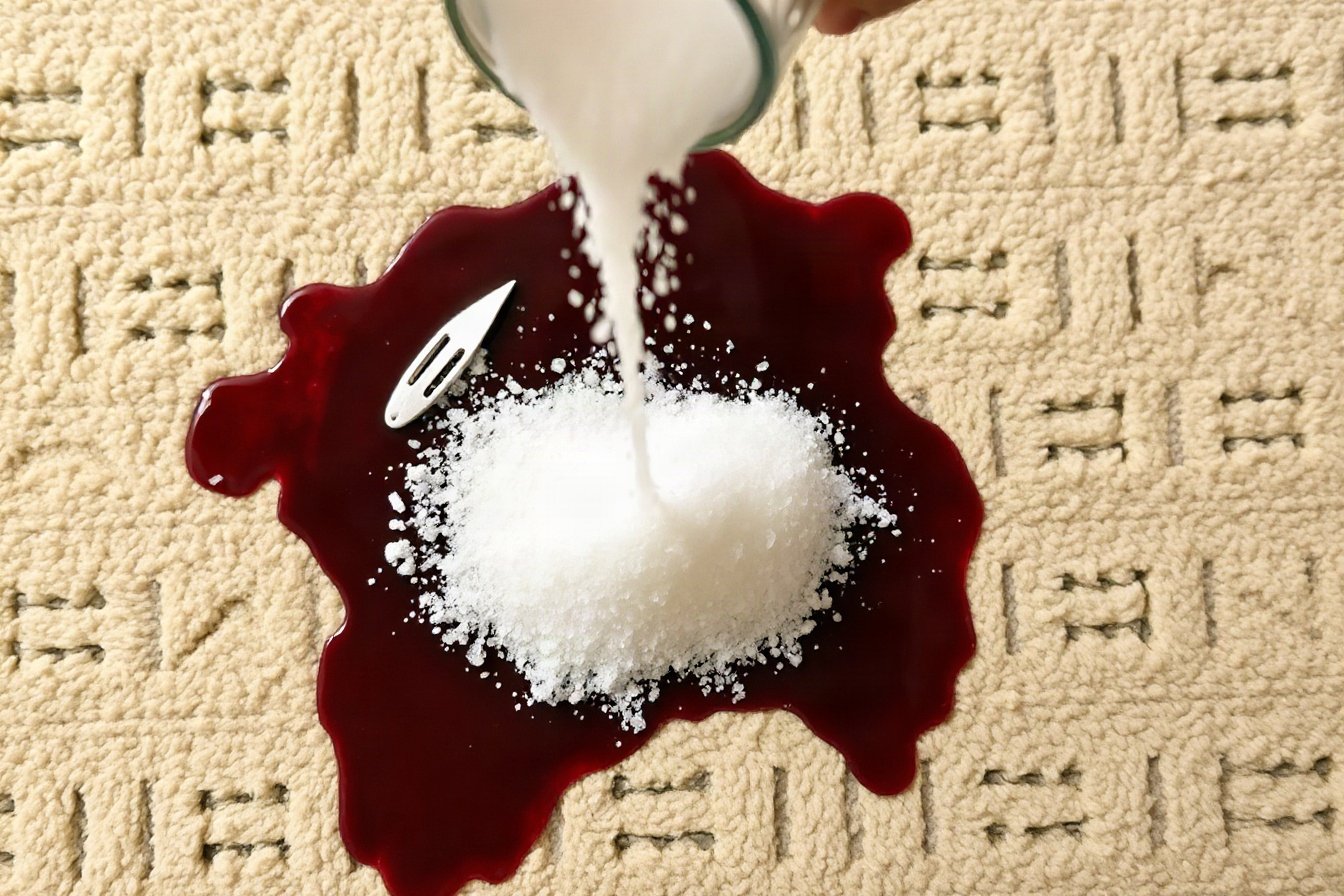
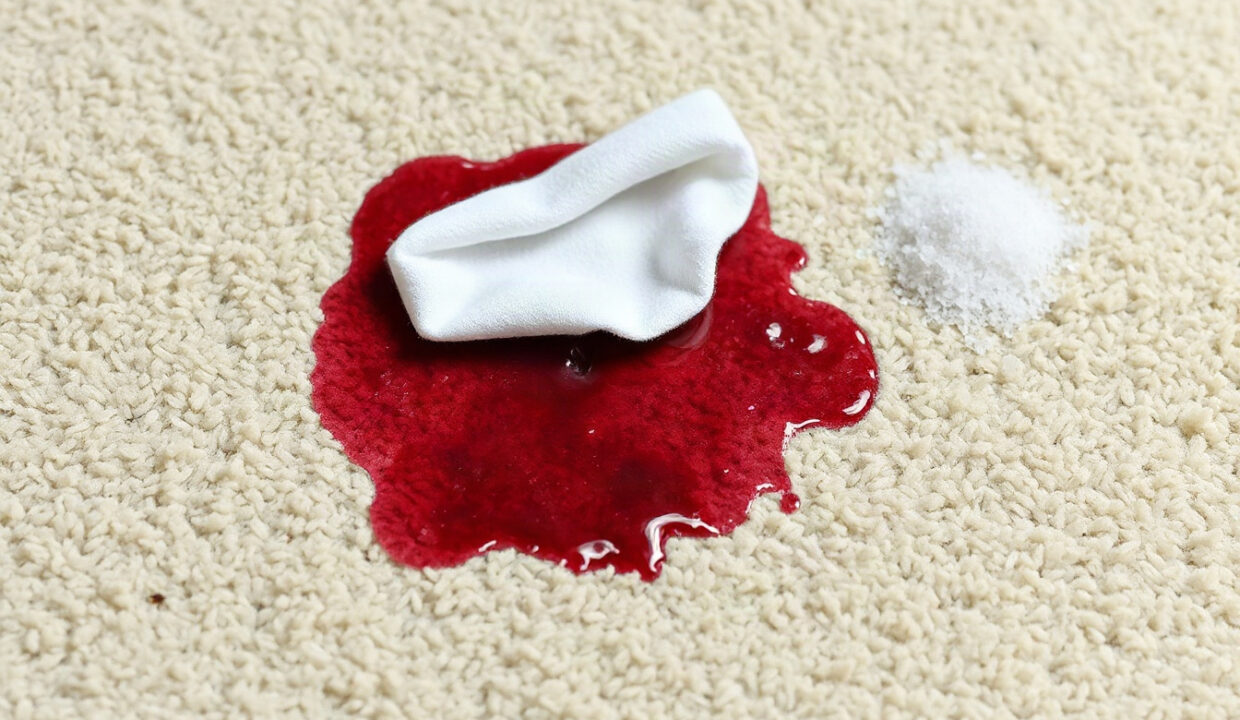
- Cover the stain thickly with ordinary table salt while it is still wet. This draws liquid up and out of the fibres.
- Leave the salt for 10 to 15 minutes. It will visibly take on some of the colour.
- Vacuum up the salt thoroughly.
- Mix a few drops of washing-up liquid with warm water and dab the remaining stain, working from the outside in.
- Blot with a clean, dry cloth to lift the moisture, repeating the soap solution if any colour remains.
Salt only helps on a fresh, wet spill. On a stain that has dried in, it does very little. Go easy with liquid on carpet generally, because soaking it can wet the underlay and leave a ring or a damp smell. Blot and lift, then dry the area with a towel and a little airflow.
| Surface | Best first step | Follow-up treatment |
|---|---|---|
| Fabric or clothing | Blot, then cold water through the back | Washing-up liquid, then peroxide on white or colourfast items |
| Carpet or rug | Blot, then cover thickly with salt | Washing-up liquid and warm water solution |
| Either, as a quick fix | Club soda poured over the stain | Blot and repeat as needed |
When the stain has already dried
A dried-in wine stain is harder but not hopeless. On white or colourfast fabric, soak the area in a mix of one part washing-up liquid to two parts hydrogen peroxide for 15 to 30 minutes, rinse and repeat as needed. Do not tumble dry until the mark has gone, since heat can fix whatever colour remains. On carpet, a specialist wine or pet stain remover made for set-in marks usually gives better results than a homemade mix.
Habits that make wine stains permanent
- Rubbing instead of blotting, which pushes the wine further into the fibres.
- Leaving salt on carpet for hours. Once it has absorbed what it can it just needs vacuuming up.
- Skipping a proper wash after treating fabric. Leftover product can attract dirt and look like a fresh mark later.
- Putting a half-treated garment in the dryer or ironing it, which locks in whatever colour is left.
What to keep in the cupboard
As an Amazon Associate we earn from qualifying purchases. If you host often, three things are worth having to hand. A dedicated wine stain remover for carpet is formulated for tannin-based stains. Check the label names carpet or upholstery and test it on a hidden patch first. Hydrogen peroxide suits white and colourfast fabric, but a bottle labelled 3% is plenty, and it should be stored in its original opaque bottle. For coloured clothes where peroxide is risky, an oxygen-based laundry stain remover is gentler than chlorine bleach on most colourfast fabrics, but follow the dilution on the pack and keep it away from wool and silk.
If the spot treatment does not fully lift the mark on carpet, our guide on using a Vax carpet cleaner covers a deeper clean, and the complete carpet cleaning guide explains what else is worth trying. For a similarly pigment-heavy stain on clothes, see removing curry stains from clothes or blood stains from clothes, and hot versus cold water cleaning for why the temperature you choose matters.
Three wine stain questions
What removes dried red wine stains?
On white or colourfast fabric, a soak in washing-up liquid and hydrogen peroxide for 15 to 30 minutes, rinsed and repeated if needed, is the most reliable homemade option. On carpet, a specialist stain remover made for set-in marks tends to work better than a homemade mix. Test on a hidden area first.
Does white wine, vinegar or baking soda remove red wine stains?
White wine is a common tip but it is not especially effective, because it just adds more liquid without breaking down the pigment. White vinegar may help as part of a pre-treatment soak on some fabrics, but washing-up liquid with peroxide is more reliable. Club soda or a proper stain treatment is the better choice.
Can you get red wine out of clothes after they have been through the dryer?
Sometimes, but it is harder because heat can fix the colour into the fibres. Try the washing-up liquid and peroxide soak on white or colourfast items, give it a full 30 minutes, and rinse before drying again. Dry it on a line between attempts so you can see how much is left.