A fridge that smells off is usually not dirty all over. It is one forgotten container, a spill under a shelf, a blocked drain hole, or a slow build-up of odours that the plastic interior has absorbed. Which smell you have tells you where to look, so start with the nose before reaching for a cloth.
Match the smell to the likely cause
| What it smells like | Most likely cause | Where to look first |
|---|---|---|
| Sour, milky or sweet-sour | Spilled milk, juice or sauce that has soured | Under shelves, door trays, bottom of the salad drawer |
| Rotten, eggy or meaty | Spoiled meat, fish, eggs or cooked leftovers | Back of the shelves, bottom shelf, anything in a bag |
| Musty or damp | Mould, a wet door seal or standing water | Door seal folds, drain hole, the drip tray if your model has one |
| Onion, garlic or fish in everything | Strong food in covered, not airtight, containers | Open bowls, cling-filmed plates, unsealed packs |
| Plastic, chemical or burning | Often a new fridge off-gassing, or a fault | Check the manual, and see the last section if it is a burning smell |
| Comes back a day after cleaning | Something was missed, or the interior has absorbed it | Re-check the drain hole and seals, then deodorise |
A smell that returns within a day or two of cleaning almost always means something was missed on the first check, not that the clean did not work.
Fix 1: Find and remove the source
This is the easiest fix and solves most cases. Take everything out and check it properly, because deodorising alone cannot fix a smell that comes from something still inside.
- Check dates on anything that has been sitting at the back for a while. Leftovers, sauces and opened packets are the usual culprits.
- Look underneath removable shelves and in the door trays. A small spill here can sour and smell far stronger than you would expect from its size.
- Smell strong foods like onions, garlic or fish separately. These can taint a whole fridge even when covered, if the container is not fully airtight.
- Check the drain hole at the back, or the drip tray underneath on models that have one. A blocked drain can let water pool and turn stagnant. Clear it gently with a cotton bud or a piece of flexible plastic.
Raw meat and fish leak. If something has dripped onto food or shelves below, the safest thing is to bin what it touched and wash the shelf. Our guide on whether you should wash raw chicken covers the splash risk in more detail. For the mould check, see whether mouldy food is safe to eat.
Fix 2: Wash the whole interior
Once anything spoiled is out, give the whole interior a proper wash rather than wiping the obvious spots. Switch the fridge off at the socket first if you want to do a proper job, and keep chilled food in a cool bag or box with ice packs while you work, so it stays cold. The Food Standards Agency advises keeping a fridge at 5°C or below, so put everything back promptly and let the fridge get back down to temperature.
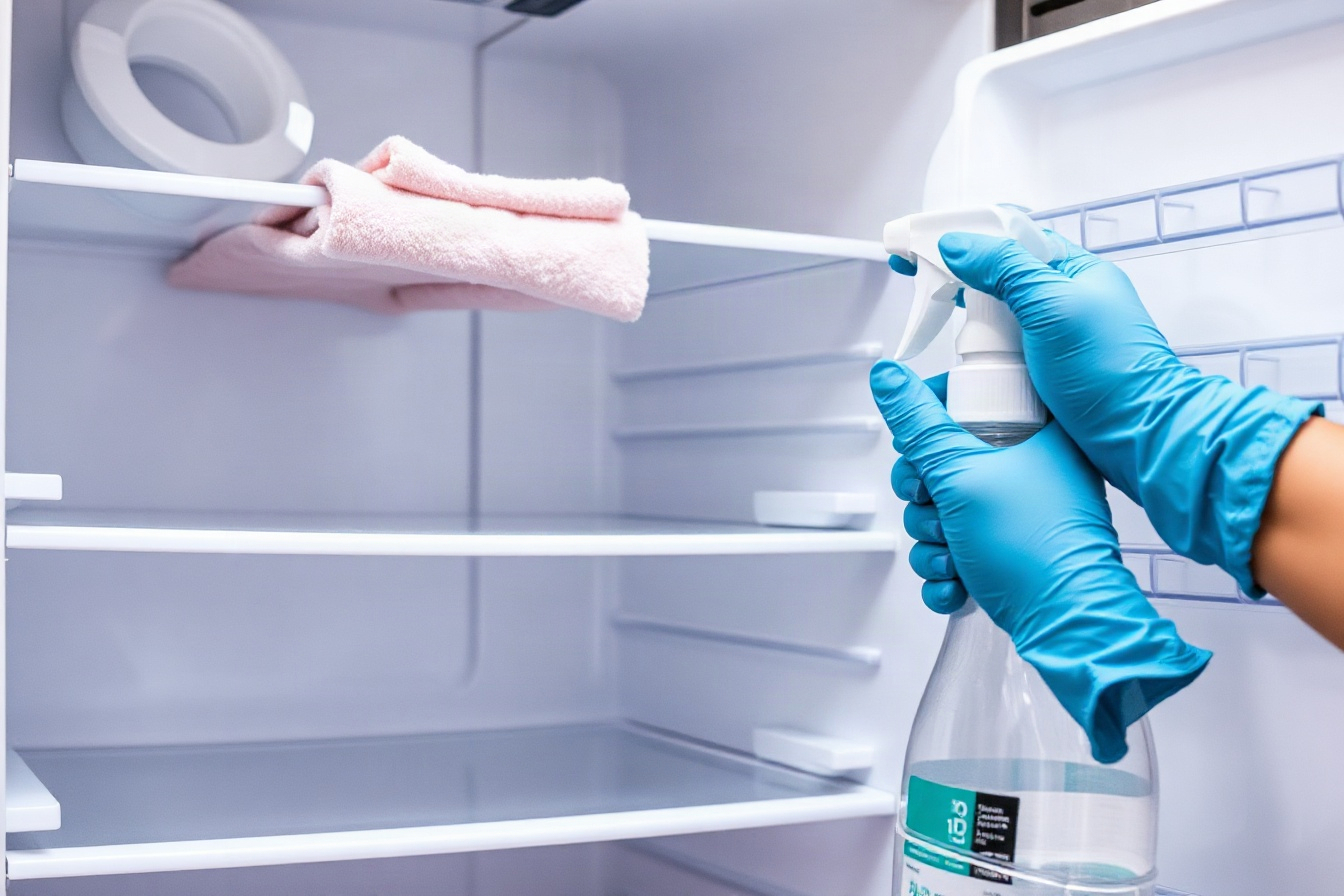
- Remove shelves and drawers where possible and wash them in warm soapy water, or with a diluted bicarbonate of soda solution for extra odour control. Let glass come up to room temperature before running it under hot water, or it can crack.
- Wipe down the walls, ceiling and door seals with warm water and a tablespoon of bicarbonate of soda dissolved per litre.
- Pay extra attention to the rubber door seal. It traps crumbs and moisture and is an easy spot to overlook, and a toothbrush gets into the folds.
- Dry everything thoroughly with a clean towel before putting food back. Leftover moisture encourages mould and new odours.
Avoid strong-smelling cleaning products like bleach, ammonia or scented sprays inside the fridge. The plastic interior can absorb the scent and transfer it onto food, and you do not want those fumes near what you eat. Plain bicarbonate of soda and water does the job without leaving anything behind. Skip the vinegar fizz here, as our piece on whether baking soda and vinegar clean explains why it adds little.
Fix 3: Absorb what is left
With the fridge clean, a few simple additions keep smells from building back up between cleans.
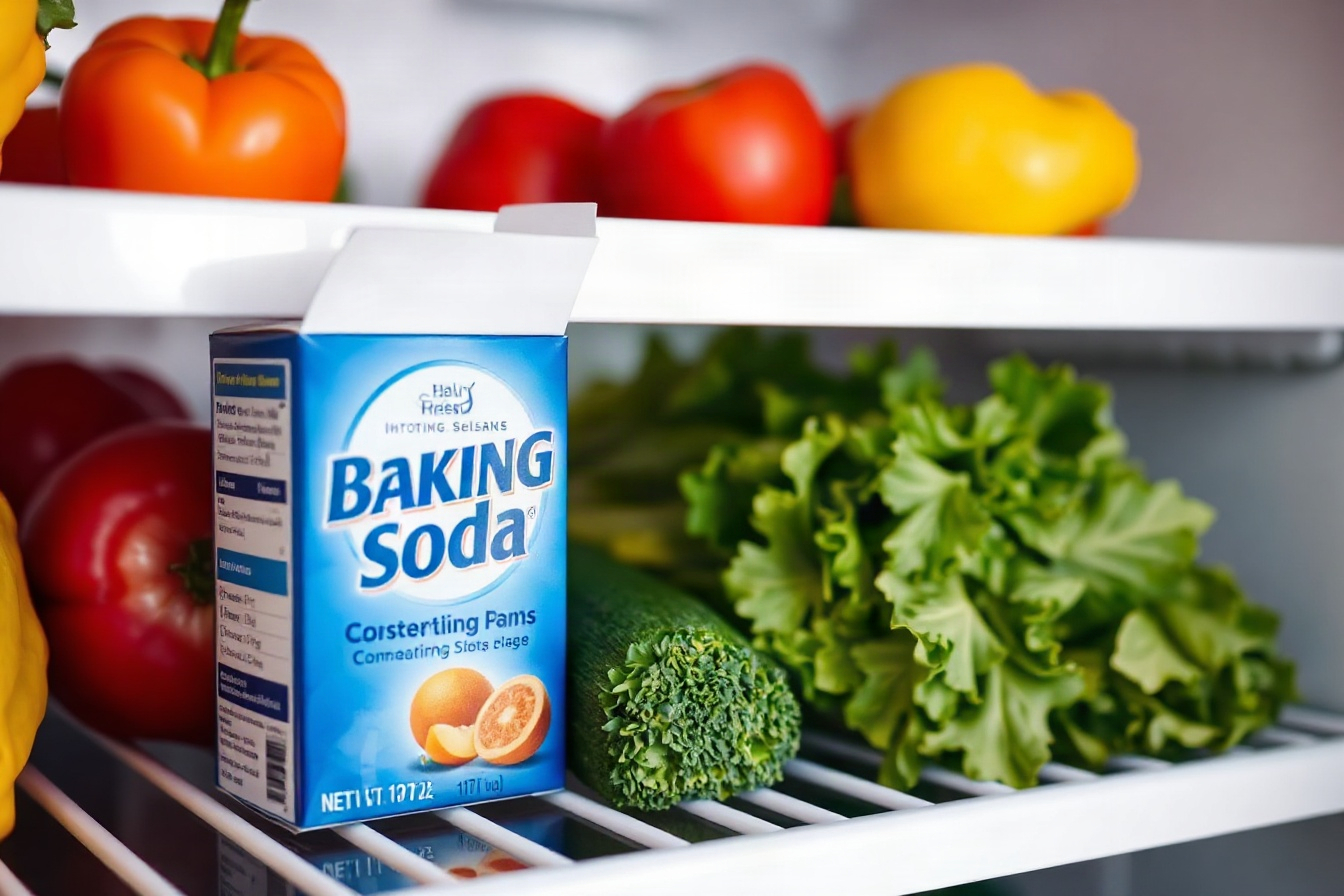
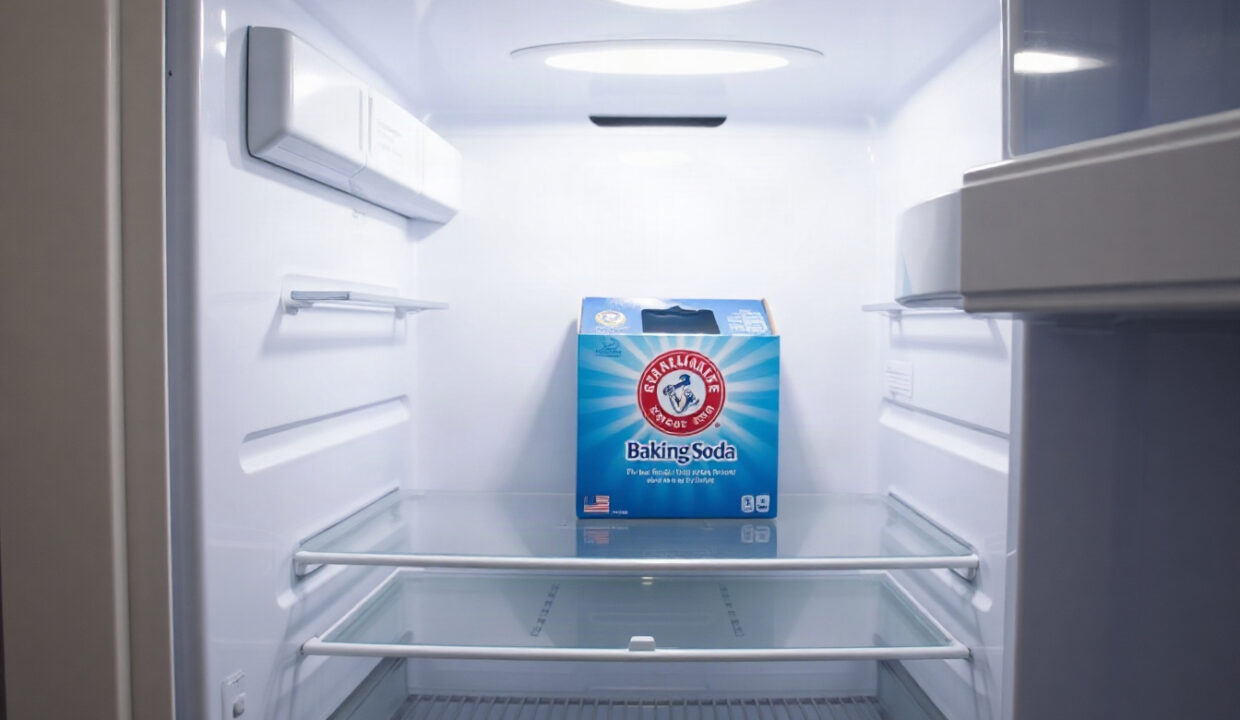
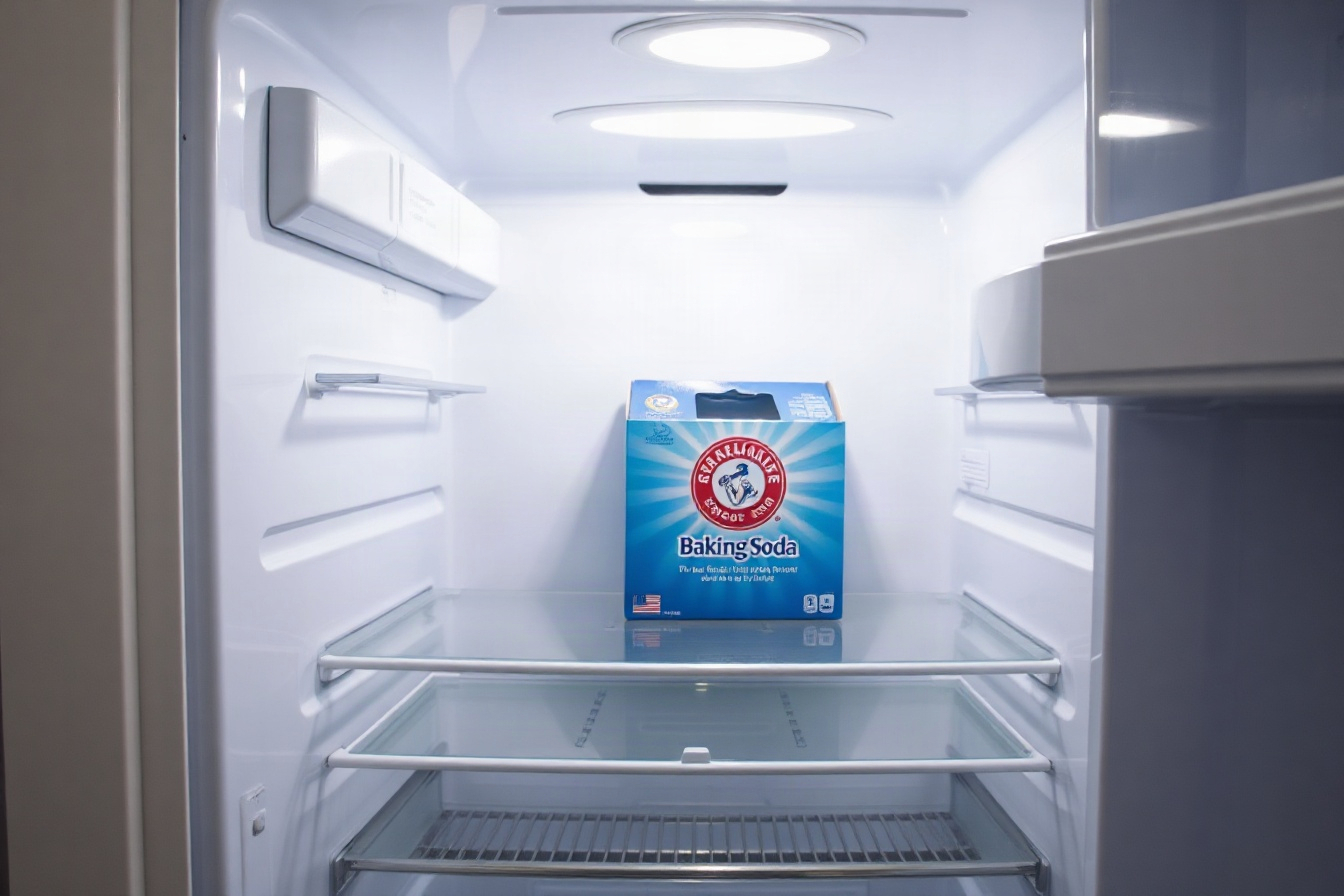
- Place an open box of bicarbonate of soda on a shelf. It absorbs odours in the background.
- Swap it for a fresh box every one to three months. Once it has absorbed enough, it stops working as well.
- A small bowl of activated charcoal works as an alternative, and some people find it copes better with stronger smells. Replace or refresh it as the pack says.
- Store strong-smelling food in airtight containers rather than just covered bowls, which stops the smell spreading before it starts.
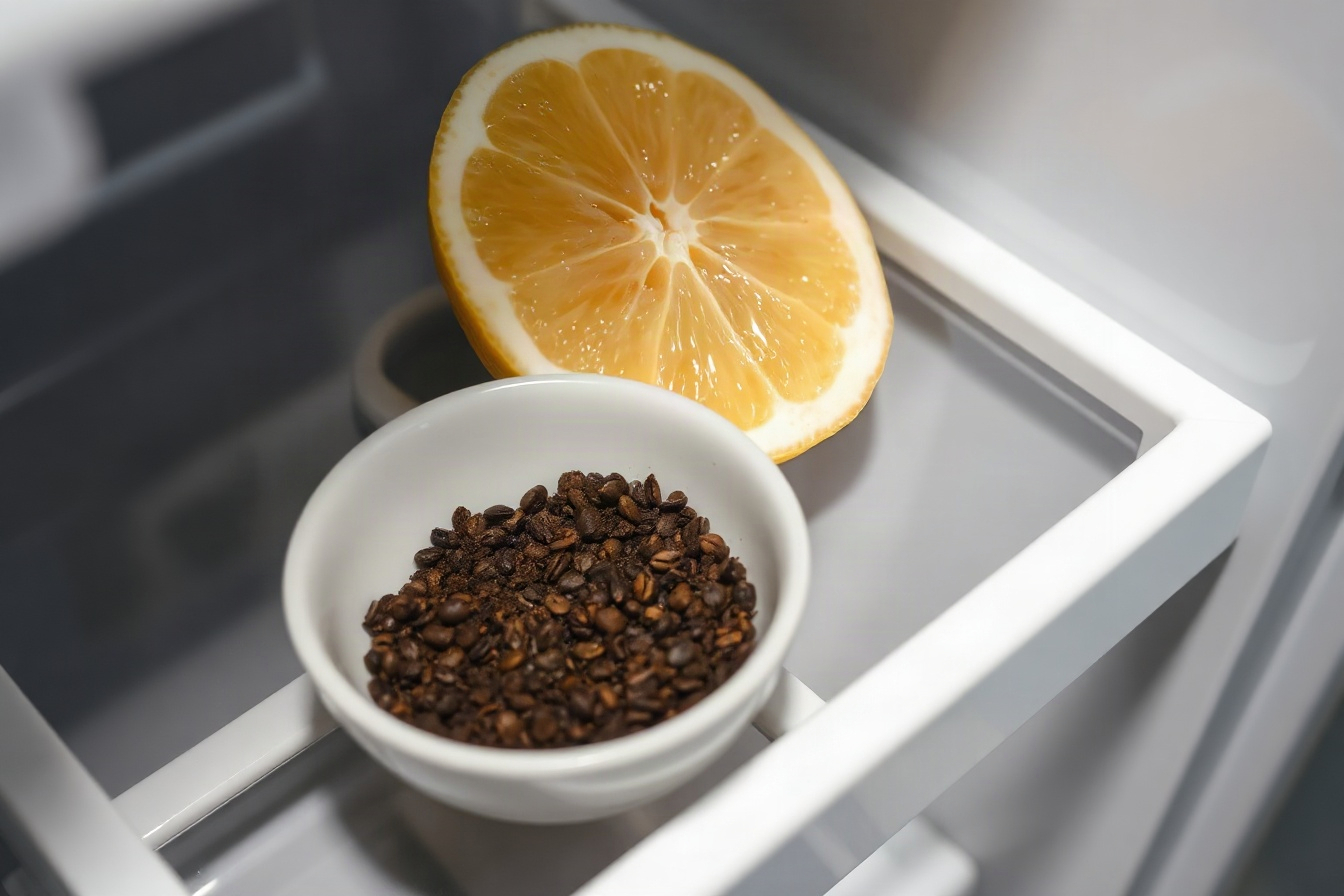
Coffee grounds and a halved lemon are both stop-gaps if you have nothing else. Leave either in an open bowl on a shelf and replace it every few days, because grounds and cut fruit will themselves go off.
| Odour absorber | How long it keeps working | Best for |
|---|---|---|
| Bicarbonate of soda (open box) | Roughly one to three months | General ongoing use |
| Activated charcoal | Follow the pack, often a few months | Stronger or more persistent odours |
| Coffee grounds or halved lemon | A few days at most | A quick fix while waiting on a proper absorber |
Does freezing kill the bacteria causing a fridge smell? No. Freezing slows bacterial growth rather than eliminating it, and a fridge runs well above freezing anyway. The smell needs removing at the source through cleaning. Our piece on whether freezing kills germs goes into the detail.
If you are dealing with the same kind of stale, trapped odour in footwear rather than the fridge, our guide on getting rid of a smell in shoes uses a similar absorb-and-air approach.
When it is not just a smell
- Burning, hot plastic or electrical smell. Switch off at the socket if it is safe to reach and do not use the fridge until it has been checked by a qualified engineer.
- Fridge is not staying cold. Warm, slightly rotten smells with food going off quickly often point to a fault, a failed seal or a blocked vent. If the temperature will not hold at 5°C or below, arrange a repair.
- Persistent smell, no source, and a clean drain. The seal may be perished or the interior lining damaged, which a repair engineer can assess.
- Power cut or fridge off for a long time with food inside. Throw away perishable food that has been warm for too long, and do not rely on the sniff test.
What is worth buying
As an Amazon Associate we earn from qualifying purchases. You mainly need three things. A fridge deodoriser based on activated charcoal lasts longer between swaps than a box of bicarbonate, and suits stronger odours. Pick one that sits flat on a shelf and does not need to touch food. Airtight food storage containers prevent smells spreading in the first place, and clear, stackable ones with clip lids and a silicone seal are easiest to check at a glance. And a tub of bicarbonate of soda covers the cleaning and the absorbing, so look for a plain food-grade tub rather than a scented product.
Three questions about fridge smells
What should you not clean a fridge with?
Avoid bleach, ammonia-based cleaners and strongly scented sprays inside the fridge. The plastic interior can absorb these smells and pass them to food. Use warm soapy water, or warm water with bicarbonate of soda, then wipe with clean water and dry.
Will a bad smell eventually go away on its own?
Not reliably. If the source is still inside, such as a spoiled item or a spill, the smell tends to get worse rather than fade. Odours that have soaked into plastic shelving can linger for weeks without a proper clean, so removing the source is the quickest cure.
How do I get rid of a rotten meat or maggot smell in the fridge?
Bin the affected food at once, tied in a bag, then wash the area with hot soapy water and bicarbonate of soda, paying attention to crevices and shelf edges where residue can collect. Wear gloves, wash your hands, and wash the shelves and seals afterwards. A full interior clean is usually needed because the smell spreads.