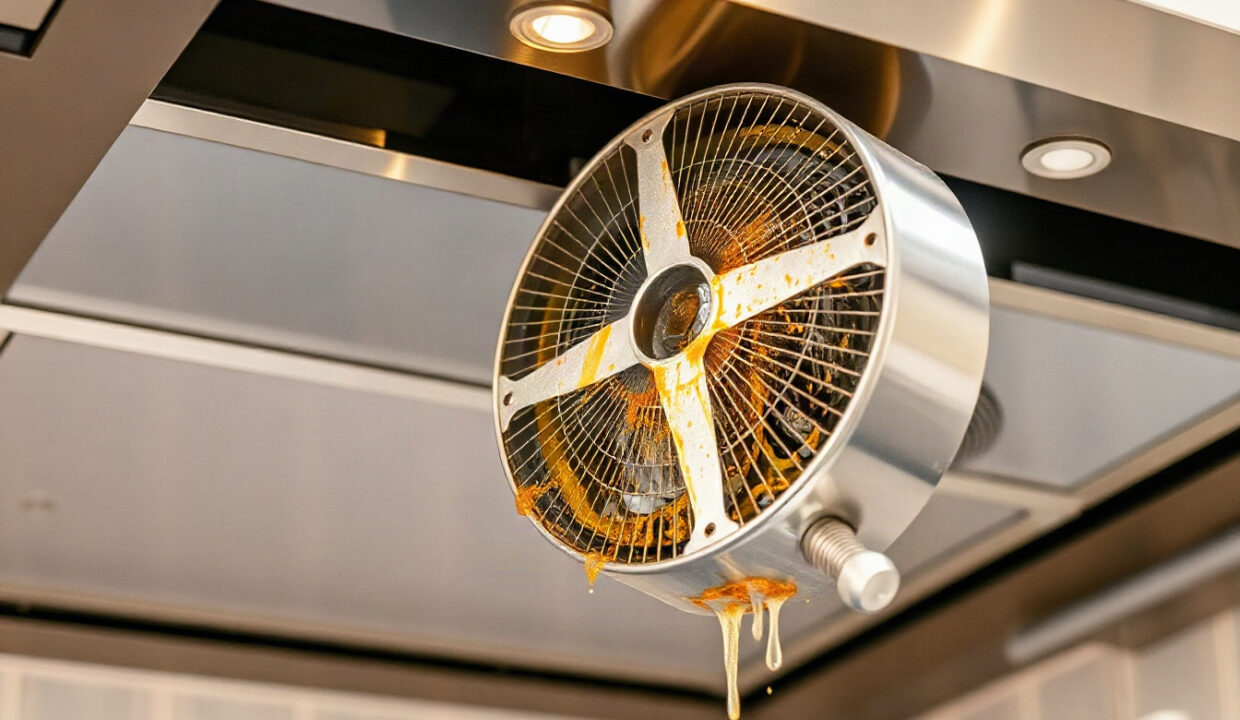
A cooker hood filter catches cooking grease before it reaches the fan motor and ductwork, which is exactly its job, right up to the point where it is coated thick enough to stop the hood pulling air properly. Built-up grease is also flammable, so cleaning the filter regularly is a safety job as well as a performance one. Getting it clean is easy. Getting it clean safely means a few checks first.
Before you touch the filter
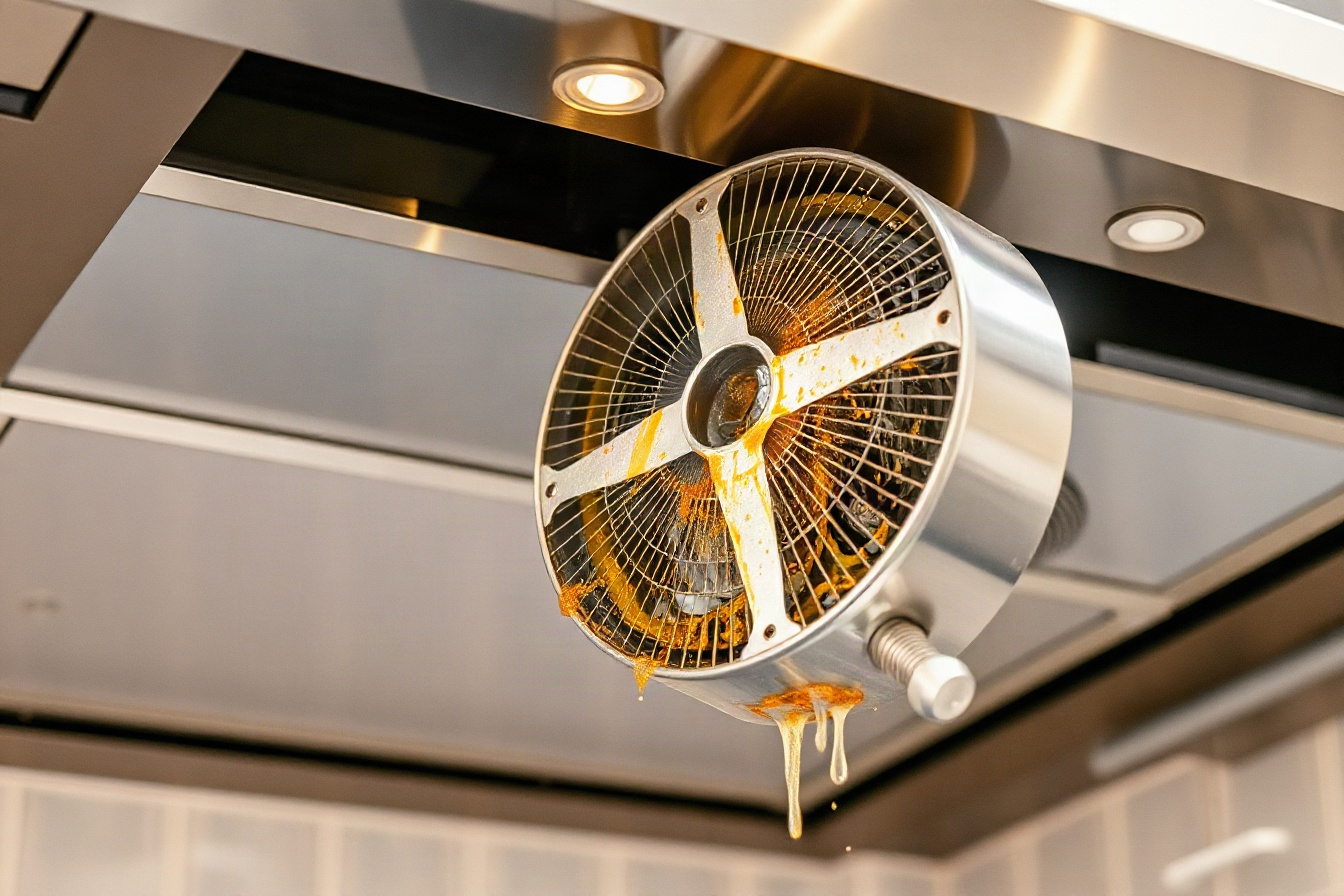
- Switch the hood off and isolate it. Turn the fan and lights off, and unplug the hood if it has a plug. If it is hard-wired, switch it off at its isolator or fused spur, or at the consumer unit if you are not sure which. Never poke around inside a hood that is still connected.
- Let the hob cool. Filters sit directly above the cooking surface and can be hot, and the metal edges can be sharp. Wear gloves.
- Use a stable footing. If you need to reach up, use a proper step stool, not a chair or worktop.
- Support the filter as it comes out. Grease can drip as you lift it, so hold a tray or newspaper underneath,; follow the manual’s release method so the clips do not snap.
Metal or carbon: check what you have first
Look at the manual or the manufacturer’s website, because the right method depends on the filter type. Most hoods have a reusable metal mesh filter, usually aluminium or stainless steel, which is the type this guide covers. Hoods that recirculate air, rather than venting outside, also use a carbon filter, often a thick pad or cassette behind the metal one. Carbon filters cannot be washed and need replacing at the interval your manual gives, generally every few months depending on use. Washing one will not restore it and can ruin it.
If you cannot work out how a filter releases, check the manual before forcing anything. Most slide or clip out, but the exact mechanism varies between brands, and metal mesh can flex but should not need much force.
The safest clean: a hot soak and a soft brush
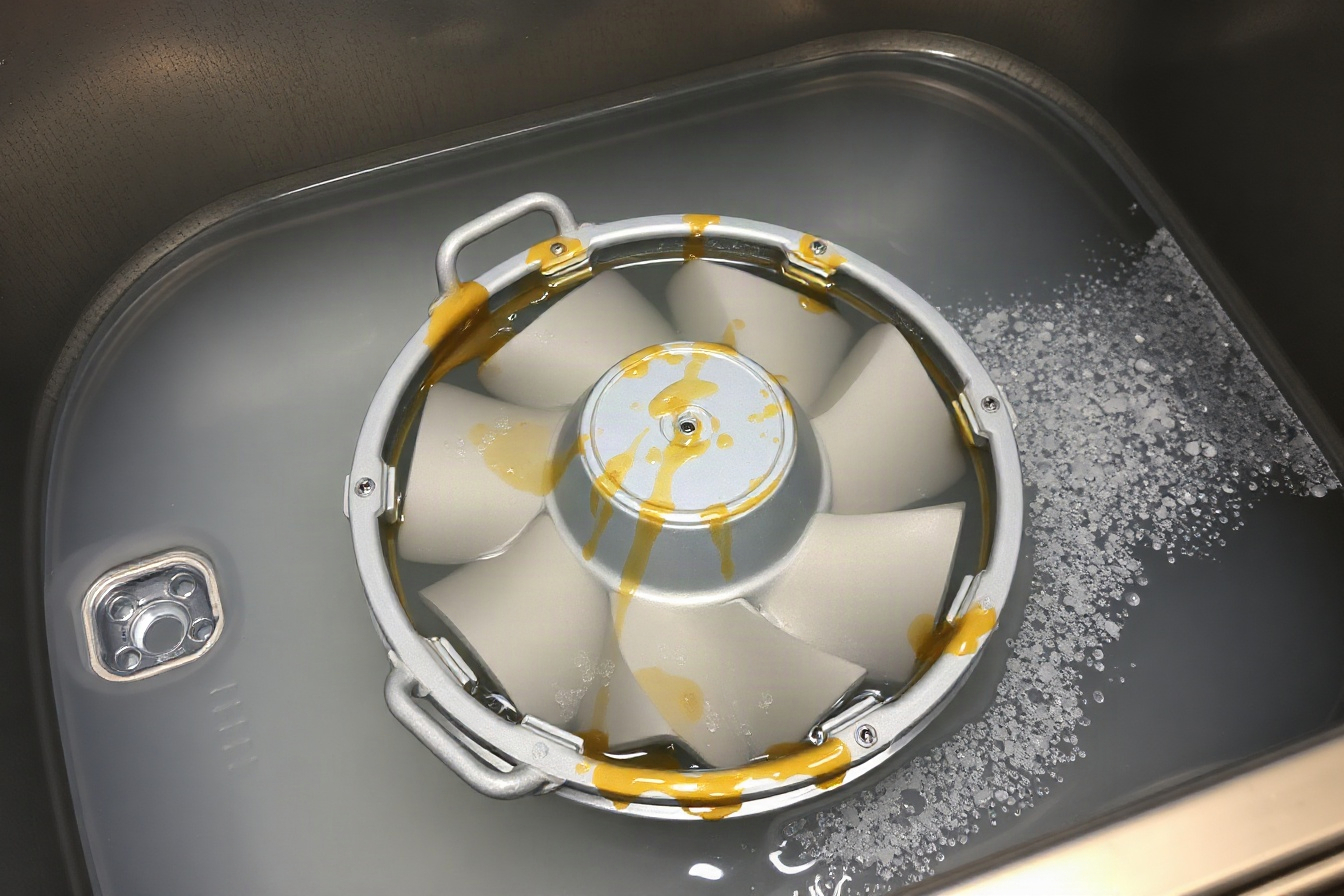
- Fill a sink or large basin with the hottest water your tap provides.
- Add a generous squeeze of a degreasing washing-up liquid, enough to make a strong, bubbly solution.
- Submerge the filter completely and soak it for 15 to 30 minutes, longer if it has not been cleaned in a while.
- Scrub both sides with a soft brush or old toothbrush, working into the mesh where grease hides.
- Rinse under hot running water, check for greasy patches, and repeat if needed.
- Shake off excess water and let the filter air dry completely, standing on a towel or rack.
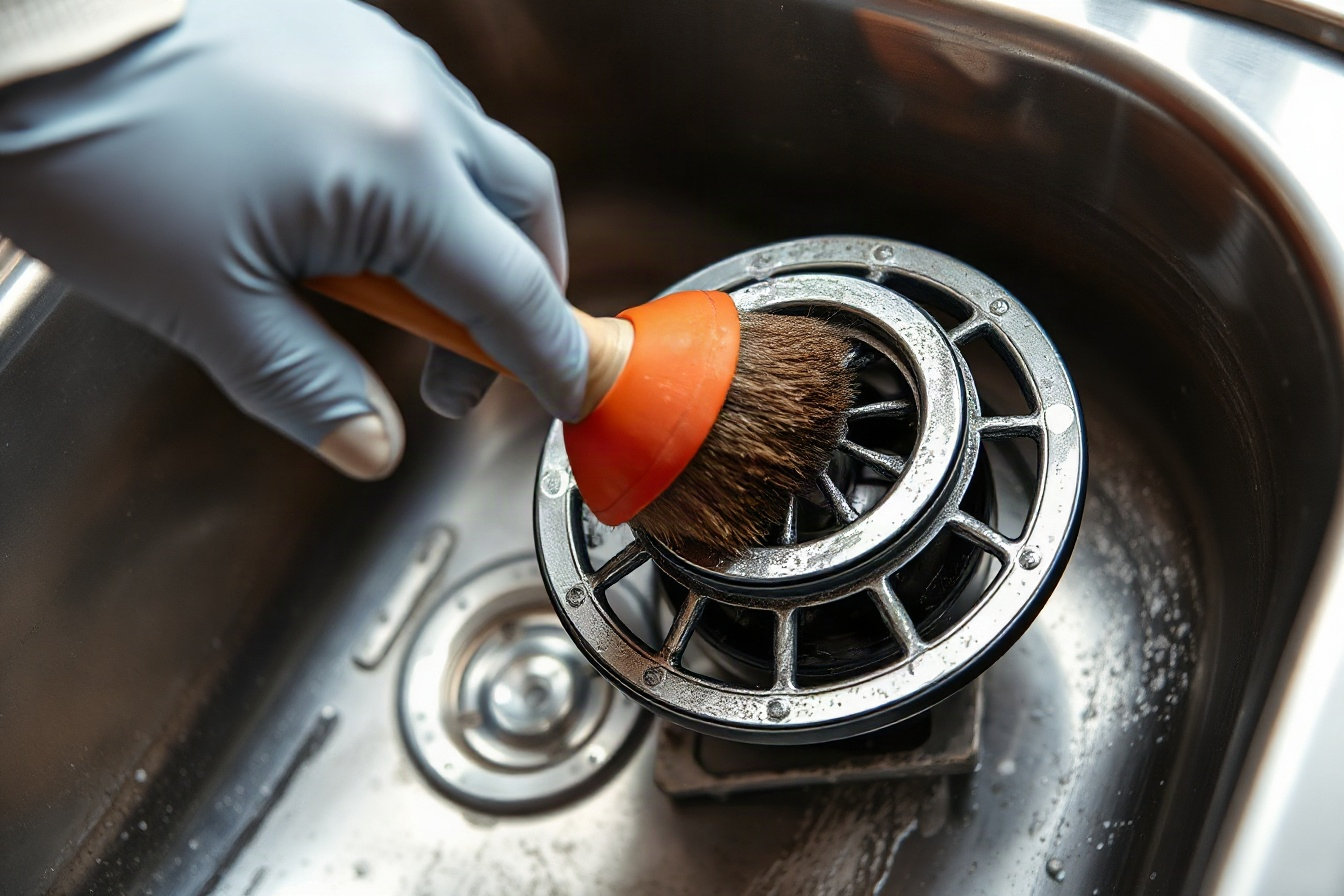
A baking tray or roasting dish lined with foil makes a good makeshift tub if the filter is too large to fit in the sink comfortably.
Refit the filter only once it is fully dry, because trapped moisture sits against the metal and encourages grime to build up faster. While it is out, wipe the underside of the hood and any grease tray with the same soapy water.
Can it go in the dishwasher?
Some can, and some should not. Many manufacturers, Bosch among them, make metal filters that are dishwasher safe, but it depends on the model and the finish, so check your manual first. Aluminium filters in particular can darken or lose their finish in a dishwasher because of the alkaline detergent. If the manual allows it, wash the filter on its own, use a hot cycle, and check the dishwasher’s own filter afterwards for grease, as our dishwasher cleaning guide covers.
| Filter Condition | Approach | Time Needed |
|---|---|---|
| Light, regular grease | Hot water soak + light scrub | 15 to 20 minutes |
| Heavy, infrequent cleaning | Soak with baking soda added, longer soak | 30+ minutes |
| Dishwasher-safe metal filter | Hot cycle on its own, only if the manual allows it | One dishwasher cycle |
Stronger options, with cautions
For a filter with heavy, baked-on grease, you can add a tablespoon of bicarbonate of soda to the hot soak for extra cutting power. This suits stainless steel well. On aluminium, strongly alkaline solutions can leave a dull or darkened finish, so keep the soak short, rinse well and stop if the colour changes. If the grease will not shift, repeat the soak rather than reaching for harsher products.
- Avoid oven cleaner unless the filter’s maker says it is suitable. Caustic oven cleaners can damage aluminium, strip coatings and are hazardous to handle.
- Avoid steel wool and abrasive scourers on painted or coated filters. They strip the finish and are not needed after a proper soak.
- Never mix cleaning products. See cleaning products you should never mix before combining anything.
- Do not leave it for months. A heavily clogged filter reduces how well the whole hood performs and is a greater fire risk.
The same degreasing soak helps elsewhere in a greasy kitchen. For the surfaces around the hood, see removing grease from kitchen cabinets and cleaning kitchen worktops. If the oven is next on the list, try the homemade oven cleaner post, and for a second take on the filter itself, our extractor fan filters guide.
How often to clean it
Roughly once a month if you cook regularly, particularly if you fry often, because frying puts far more airborne grease into the air than boiling or steaming. Households that cook less can usually stretch this to every six to eight weeks. A filter that is visibly coated in grease is overdue whatever the schedule says.
Kit for the job
None of this is essential, and washing-up liquid and an old toothbrush will do most jobs. If you are buying, here is how the options compare. The links go to Amazon UK searches. As an Amazon Associate we earn from qualifying purchases.
| Product type | Best for | What to look for | Caution |
|---|---|---|---|
| Degreasing washing-up liquid | The main soak | A label that mentions grease and works in hot water | Rinse thoroughly, keep it out of the hood’s motor and controls |
| Soft scrub brush set | Working grease out of the mesh | Soft nylon bristles and a small head for the mesh | Avoid wire bristles on coated filters |
| Grip rubber gloves | Hot water and sharp metal edges | Snug fit, good grip, long cuff | Wash them afterwards, and replace them if the lining wears through |
| Replacement carbon filter | Recirculating hoods | The hood’s model number and the filter’s size and shape in the listing | Universal ones may need trimming to fit, so measure first |
Three more questions
Why is my extractor fan not working as well as before?
A clogged filter is one of the most common causes, because grease restricts airflow through the mesh. Cleaning a metal filter, or replacing a carbon one, often restores performance. If it is still weak, there may be a blocked duct, a failing motor or a closed external vent, which needs a qualified electrician or engineer.
Can I use oven cleaner on a cooker hood filter?
Not unless the manufacturer says so. Caustic oven cleaners can damage aluminium and some coatings, and they need careful handling with gloves and ventilation. A longer, hotter soak in degreasing washing-up liquid is slower but far safer.
Why does the hood still smell after I cleaned the filter?
Grease also collects on the underside of the hood, in any grease tray and on a carbon filter, which cannot be washed. Wipe the inside surfaces with soapy water, and if the hood recirculates air, replace an old carbon filter at the interval your manual gives.