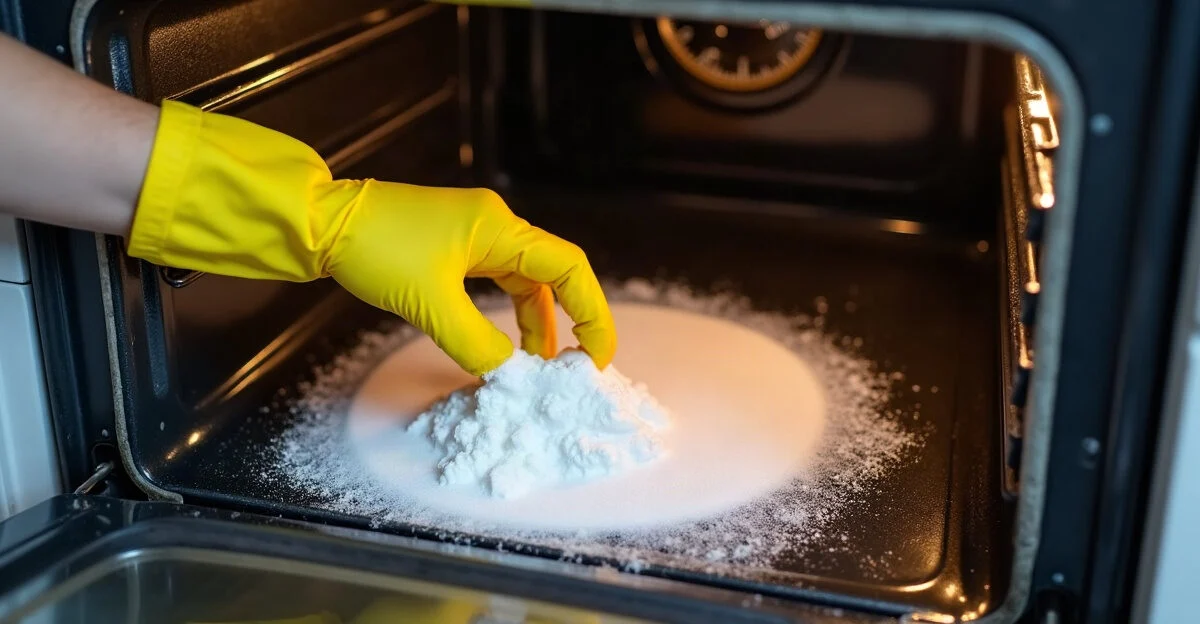
For everyday grease, a paste of bicarbonate of soda and water, left overnight and followed by a spray of white vinegar, is the best homemade oven cleaner. It is cheap, has few fumes and needs little scrubbing, but it works slowly and may need repeating on thick, burnt-on carbon. Keep it off the heating element, fan and any special oven coating.
Some links in this guide are Amazon affiliate links. If you buy through them we may earn a small commission at no extra cost to you. Product mentions are generic types, so you can compare makes and prices yourself.
Homemade oven cleaning methods, compared
Here are the options at a glance. The first is the main recipe in this guide, and the rest are covered in the sections that follow.
| Method | Best for | Effort | Risk |
|---|---|---|---|
| Bicarb paste overnight, then vinegar | Everyday grease and regular upkeep | Low. Mix, wait, wipe | Low. Keep off the element, fan and coated liners |
| Lemon steam | Light grease and a quick refresh | Low | Low. Hot steam and a hot oven, so be careful opening the door |
| Bicarb paste on the racks | Racks with moderate grease | Medium. About 4 hours, then scrub | Low |
| Biological powder soak | Heavily greasy racks | Medium. Overnight in a bath or bin bag | Low to medium. Protect the bath, wear gloves |
| Shop-bought caustic cleaner | Neglected ovens with thick burnt-on carbon | Medium. Follow the label closely | Higher. Strong fumes, skin and eye hazard, not for every surface |
The bicarb paste recipe
You need two cupboard items and some water: bicarbonate of soda and white vinegar. The bicarb paste softens and lifts baked-on grease over several hours, and the vinegar reacts with the leftover residue so it wipes off more easily. Bicarb is a mild alkali and a gentle abrasive, which is why it suits regular upkeep better than a very neglected oven.
What you will need
- About 150g (roughly half a cup) of bicarbonate of soda
- A few tablespoons of water, to make a paste
- White vinegar in a spray bottle, or a ready-made white vinegar spray
- Rubber gloves and a non-scratch pad or cloth
- A plastic scraper for stubborn bits
Step by step
- Make sure the oven is off and fully cool, then take the racks out. Clean those separately, see below.
- Mix the bicarbonate of soda with a little water to a spreadable paste, about the consistency of pancake batter.
- Wearing gloves, smear the paste over the inside of the oven: the back, sides, floor and door glass. Keep it off the heating element, the fan and any gas openings.
- Leave it overnight, or for around 12 hours. The paste will turn brown as it lifts the grease.
- Wipe out as much paste as you can with a damp cloth. A plastic scraper helps on stubborn bits without scratching.
- Spray white vinegar over any remaining paste. It will foam gently, loosening the last residue.
- Wipe everything clean with a damp cloth, then dry. Refit the racks once the oven is clean and dry.
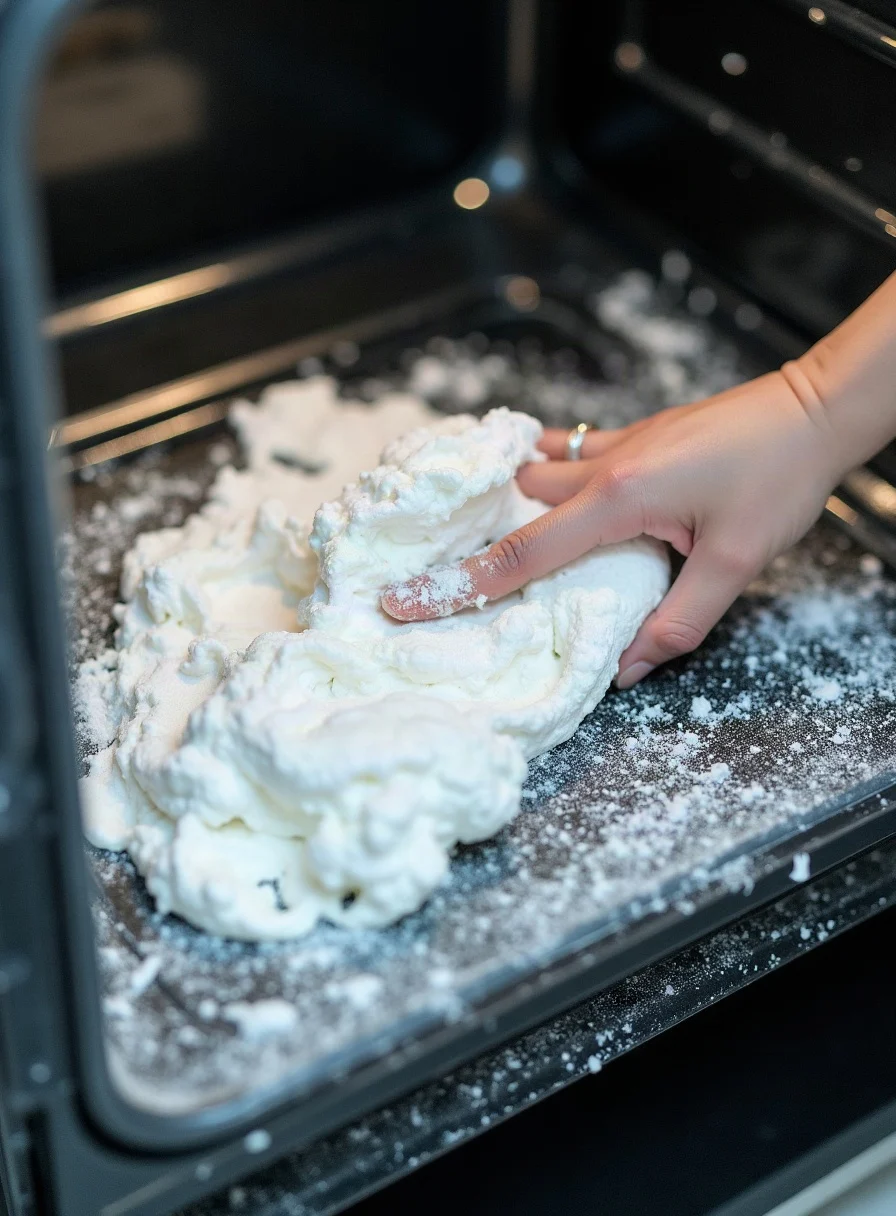
For the door in particular, our guide to cleaning oven glass without scratching has more detail, and the fuller walkthrough is in our main how to clean an oven guide. For why this pairing works the way it does, and where it falls short, see does baking soda and vinegar really clean.
Oven racks, and the lighter options
Racks are easier to do out of the oven. Two homemade routes work well.
- Paste method: coat the racks in the same bicarb paste, leave for about 4 hours, then scrub and rinse.
- Soak method: lay the racks in a bath or a large bin bag with hot water and a scoop of biological washing powder, leave overnight, then rinse. Line the bath with old towels to protect it, and wear gloves.
Our dedicated guide to cleaning oven racks compares five methods, including the dishwasher-tablet trick. Baking trays have their own tricks, set out in how to clean baking trays.
If you only need a quick refresh, cleaning an oven with lemon is another low-fume option. It suits light grease, not carbon. And a liner on the base stops spills baking on in the first place, as explained in our guide to using an oven liner.
When shop-bought is the better tool
Homemade is not always the right choice. Here is how the two compare, so you can pick per job.
| Homemade (bicarb and vinegar) | Shop-bought (caustic) | |
|---|---|---|
| Cost | Very low | Higher per clean |
| Fumes | Low odour | Strong. Ventilate well |
| Speed | Overnight | Check the label, usually a few hours |
| Heavy burnt carbon | May need repeating | Fastest and most powerful |
| Best for | Everyday grease, regular upkeep | Neglected, heavily baked-on ovens |
If your oven is badly neglected, a dedicated oven cleaner such as a caustic paste or bag kit will shift thick carbon faster than bicarb can. Follow the label exactly, wear gloves and eye protection, and check which surfaces it must not touch. Many oven cleaners are not meant for aluminium, non-stick or coated liners. Never mix a caustic cleaner with vinegar, bleach or anything else. Our list of cleaning products you should never mix explains why.
What to keep the paste away from
Warning: never smear paste or spray cleaner onto the heating element, the fan, or gas burner openings. Do not use bicarb paste or any cleaner on a self-cleaning (pyrolytic) or catalytic-lined oven unless the manual says you can, because it can damage the special coating. Our piece on self-cleaning oven risks covers that type of oven.
- Keep the paste off the element, fan and gas openings.
- Wipe self-clean and catalytic liners with a damp cloth only.
- Ventilate the room and wear gloves, whichever method you use.
- Rinse and wipe thoroughly, so no residue smokes the next time you cook.
A small kit for the job
Most of this is already in the cupboard. The links go to Amazon UK searches so you can compare sizes and current prices. As an Amazon Associate we earn from qualifying purchases.
Which should you choose?
For regular upkeep and everyday grease, use the bicarb paste. It needs patience but little effort. For racks, use the paste or a soak. For a badly neglected oven with thick carbon, a caustic cleaner will be faster, but use it as directed and keep it for the job that needs it. Wiping up spills as they happen and keeping a liner on the base will reduce how often you need either.
A couple of beliefs are worth dropping. Bicarb and vinegar do not make a stronger cleaner when mixed, because they largely neutralise each other, so use the paste first and the vinegar only to help lift what remains. And the paste does not work instantly, because it needs time to soften the grease.
Common questions on homemade oven cleaning
How long do you leave baking soda paste in the oven?
Ideally overnight, around 12 hours, for baked-on grease. For lighter grime, a few hours may be enough, and for racks about 4 hours with the paste. A thicker layer of paste keeps working longer, but dry paste is harder to wipe off, so do not let it set completely hard.
Why is there white residue after cleaning?
It is usually dried bicarb that was not fully wiped out. Spray a little white vinegar on it, which will foam, then wipe with a clean damp cloth until the surface is clear. Always rinse the cloth and repeat, so nothing is left to smoke when the oven heats up.
Will bicarb damage my oven?
On enamel and glass, bicarb paste is generally mild, though it is still an abrasive, so use a soft cloth and plastic scraper. Keep it off coatings that the maker says to avoid, such as catalytic liners, and check your manual for the surfaces in your oven.
Does homemade oven cleaner work on burnt-on carbon?
Slowly. Thick carbon may need a second or third application, with a plastic scraper between rounds. If it is still not shifting after that, a shop-bought oven cleaner used exactly as directed is the next step.
How often should I clean my oven?
Wipe up spills when the oven has cooled, and give it a proper clean every one to three months depending on how often you cook. A light bicarb clean at that interval keeps grease from turning into thick carbon.
Can I use the oven straight after cleaning it?
Once the oven is wiped clean and dry, yes. A short empty heat on a moderate setting with a window open helps burn off any trace of vinegar or residue. Follow your oven’s manual, and never heat it with paste or cleaner still inside.