The best homemade aluminium cleaner (spelled aluminum in the US) is not one recipe. It depends on what the aluminium is and what is on it. Greyed pans, chalky garden chairs, dull window frames and wheels streaked with brake dust all need slightly different treatment, and the wrong one can leave the metal worse than you found it.
Aluminium is soft, and it protects itself with a very thin, tough layer of oxide that forms in seconds in air. A good home cleaner removes dirt and stains, leaves that layer alone, and rinses away completely. This guide goes through what to look for in a recipe, five mixes you can make from the kitchen cupboard, how to match them to the item in front of you, and what to keep well away from the metal. It also covers the few cloths and pads that make the job easier. Our furniture and utensils sections have more on looking after the things aluminium is usually made into.
Disclosure: Cleaners Guide is a participant in the Amazon Associates programme, so if you buy through links on this page we may earn a small commission at no extra cost to you. It never changes our recommendations, we suggest products because they work and we point out cheaper options where they do the same job. Prices and availability change, so always check the current price before buying.
First, work out which kind of aluminium you have
Most cleaning damage happens because the finish was not identified first. Bare aluminium and coated aluminium look similar from across a room, but they react very differently to acids, alkalis and scrubbing.
| Finish | How to recognise it | What suits it | What to avoid |
|---|---|---|---|
| Bare or mill finish (older pans, some ladders and trims) | Dull silver-grey, can mark grey on a cloth | Washing-up liquid, then a mild acid for stains | Soaking in alkaline products, steel wool |
| Anodised (many modern pans, window and conservatory frames) | Slightly harder, often matt grey or dark, even colour | Warm water and a little washing-up liquid, soft cloth | Strong acids and alkalis, abrasive pads, dishwasher tablets |
| Painted or powder-coated (garden furniture, frames, gutters) | Colour is a coating, may chalk or fade | Mild soapy water and a soft brush | Solvents, acid pastes, scrubbing through the coating |
| Polished or lacquered (decorative items, some trims) | Mirror-like, may have a clear coat | Damp microfibre and a drop of soap | Any paste, any abrasive, long contact with acid |
| Non-stick coated pans | Dark coating on the cooking surface | Soft sponge and soapy water | Metal utensils, scouring, harsh pastes |
If you cannot tell, treat it as coated and start with the gentlest option, warm water with a little washing-up liquid. Always try any recipe on a hidden spot first, such as the underside of a pan or the back of a chair leg, leave it for the time you plan to use, then rinse and look in daylight.
What to look for in a homemade aluminium cleaner
Five questions separate a sensible recipe from one that is likely to cause damage.
- Is it mild? Aluminium tolerates weak acids such as vinegar, lemon juice and cream of tartar for short periods, and mild alkalis such as baking soda briefly. Strong alkalis (oven cleaner, drain cleaner, dishwasher tablets) and chloride-heavy products (bleach, salt left on for long) are the ones that darken or pit it.
- Does it rinse off fully? Residue left to dry keeps working on the metal and leaves marks. Pastes that can be wiped and rinsed are better than anything you have to soak in.
- Is the contact time short? Minutes, not hours. Home acids are weak, but even weak acids etch bare aluminium if they sit and dry.
- Is it safe for food contact? For pans and utensils, only use ingredients you would be comfortable having in the kitchen, and rinse several times afterwards.
- Is the scrubbing tool softer than the metal? A recipe that needs steel wool to work is a bad recipe. Soft cloths, non-scratch pads and old toothbrushes are enough.
It is also worth knowing what you are actually removing. The thin oxide layer on aluminium is invisible and is what protects it, so you do not want to strip it. The things you can see are different: a chalky white powder is thicker corrosion that tends to build up on outdoor pieces in damp air, and the grey or dark staining inside a pan usually comes from minerals in hard water or from alkaline washing, such as the dishwasher. Acids like cream of tartar, lemon and vinegar are the traditional fix for the pan staining, while soap and a soft brush deal with ordinary grime and the light chalking on outdoor items.
Five recipes that are worth making
1. Mild soapy water, for everyday cleaning
Warm water with a few drops of washing-up liquid is the starting point for every item. It lifts grease, pollen and road film without touching the finish. Work with a soft cloth, rinse with clean water and dry straight away. If the dirt is only on the surface, you may not need anything stronger, and you will not have to worry about the finish. Cloths with a fine, soft weave do this best, and a pack of Spontex microfibre cloths is cheap enough to keep one set for the metal alone.
2. Baking soda paste, for light grime and greasy films
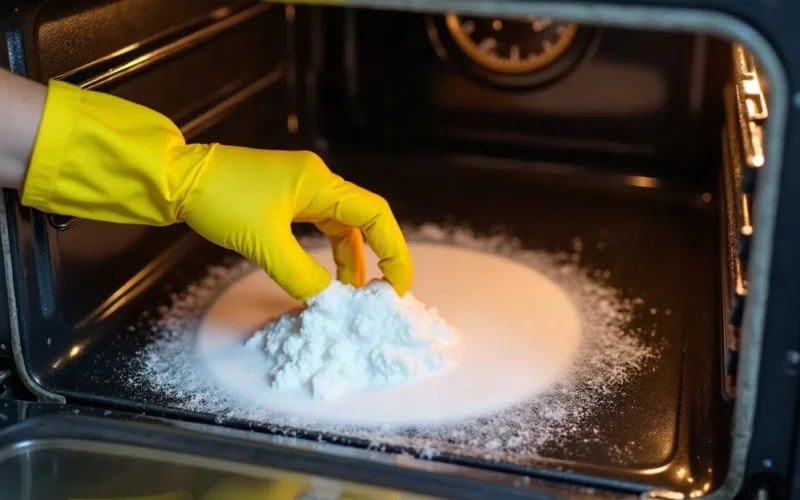
Mix three tablespoons of baking soda with one tablespoon of water, adding the water slowly until you have a thick, toothpaste-like paste that holds its shape. Rub it on with a soft cloth or a soft brush in small circles, leave it for a few minutes at most, then rinse well and dry. The grains are a very mild abrasive, which is why it helps with greasy films and stuck-on food on cookware.
Keep it brief. Baking soda is a mild alkali, and a long soak or a paste left to dry on bare aluminium can dull or darken it. It is also not the answer for grey staining, which responds better to an acid. This is a change from the common advice that a baking soda paste is the single best cleaner for everything. For many jobs it is a decent gentle option, but it is one tool among several. If you want to know when pairing it with vinegar helps and when it just cancels itself out, see our piece on whether baking soda and vinegar actually clean.
3. White vinegar spray, for water spots and light dullness
Mix equal parts white vinegar and water in a spray bottle for pans and outdoor pieces, or one part vinegar to three parts water for window frames and anything coated. Spray or wipe on, leave for five minutes, wipe with a soft cloth and rinse. Plain white vinegar is the right type; malt vinegar leaves a brown residue. Do not let it dry on the metal and do not use it on polished or lacquered pieces, where it can leave dull patches. Open a window, as the smell is strong.
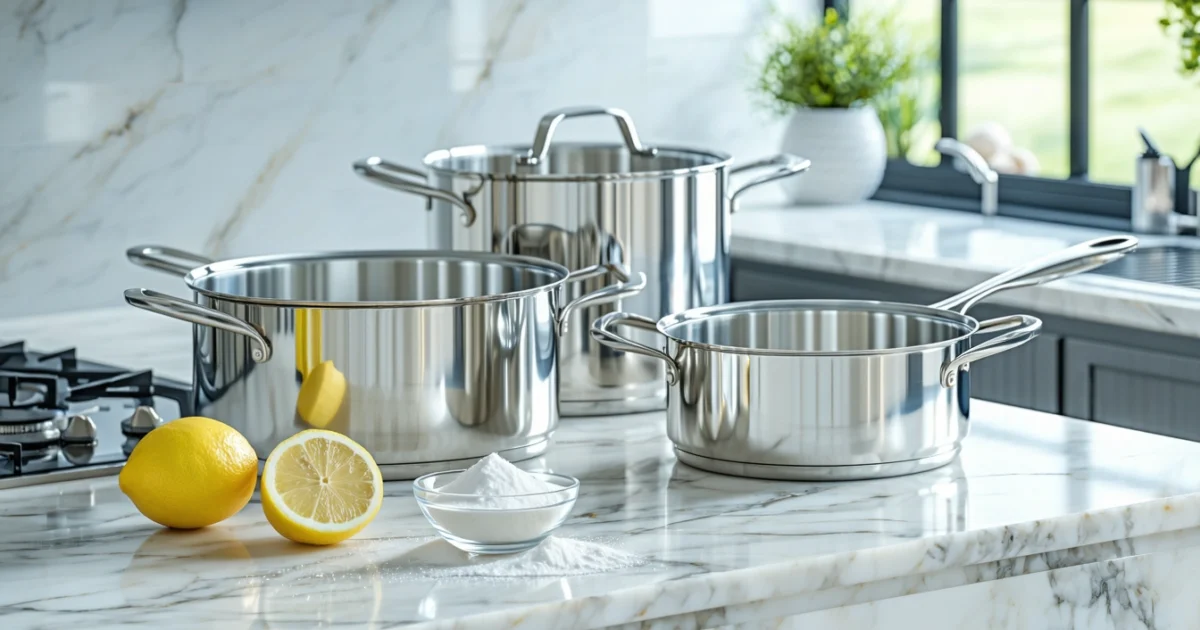
4. Lemon and salt, for stubborn marks on bare pans
Squeeze half a lemon onto a little coarse salt to make a loose paste, rub it over the stain with a soft cloth, leave for about ten minutes and rinse thoroughly. The citric acid does the lifting and the salt adds slight grip. Use this only on bare, uncoated aluminium and only briefly. Salt is a chloride, and chloride is one of the things that can pit aluminium if it is left damp on the surface, so rinse until you can no longer feel any grit and dry the item completely.
5. Cream of tartar, for dark or greyed pans
For aluminium pans that have gone dull and grey, mix two tablespoons of cream of tartar with a litre of water in the pan. Bring it to a gentle simmer for ten to fifteen minutes, let it cool, then pour away and wash as normal. The mild acid brightens the surface without scrubbing. For flat items that will not hold liquid, make a thicker paste with a few drops of water, spread it on, leave for up to 30 minutes, then rinse. A lemon cut into pieces simmered in water does a similar job if you have no cream of tartar.
| Recipe | Best for | Contact time | Effort | Main caution |
|---|---|---|---|---|
| Soapy water | Everything, first step | As needed | Low | None, rinse and dry |
| Baking soda paste | Greasy films, light food residue | A few minutes | Low | Do not leave to dry or soak |
| Vinegar and water | Water spots, dull outdoor pieces | About 5 minutes | Low | Not on polished or lacquered finishes |
| Lemon and salt | Stained bare pans | About 10 minutes | Medium | Rinse all salt, dry fully |
| Cream of tartar | Dark, greyed pans | 10 to 30 minutes | Medium | Bare aluminium only |
Matching the recipe to the item
Pans, trays and utensils
Bare aluminium pans respond to cream of tartar or lemon, with baking soda for grease. Check the base for a mark or description first. Anodised and non-stick pans should only get soapy water and a soft sponge. Rinse repeatedly after any recipe, and let the pan air dry before you store it. Never put aluminium cookware in the dishwasher unless the maker says it is dishwasher safe, as detergent can leave it dark and chalky. For baking sheets, our guide to cleaning baking trays covers the burnt-on grease problem, and how to clean a burnt pan covers the worst cases.
Garden furniture
Most aluminium garden furniture is powder-coated, so the aim is to remove algae and grime without wearing through the coating. Use warm soapy water and a soft brush first. If a chalky film remains, wipe over with the diluted vinegar spray, rinse thoroughly with a hose, and dry. Do not use a pressure washer close to joints, because water forced behind the coating can cause bubbling later. A coat of car wax afterwards helps water bead off. Where there is rust on steel fittings nearby, see how to clean rust off metal, because rust and aluminium should be treated separately.
Window frames, conservatories and gutters
Frames and gutters are normally anodised or coated, so stick to the 1:3 vinegar mix or soapy water, working from the top down so dirty runoff does not streak the clean part. Keep acids off rubber seals and wipe the glass separately. For gutters you can reach, a long-handled soft brush is enough, and our guide to cleaning gutters without a ladder explains the safer options.
Alloy wheels and car parts
Wheels carry brake dust and road salt, and most are lacquered, so the usual recipes are of limited use. Cool wheels fully, rinse off loose grit first, and use a very dilute mix with a soft brush. Strong acids are a poor choice on lacquered alloys. Our guides to making your own wheel cleaner and cleaning alloy wheels with household products go into the detail and the risks.
A safe routine, and what the marks usually mean
Steps that work with any recipe
- Clear loose dirt first with a dry brush or a rinse. Grit trapped under a cloth is what scratches soft metal.
- Wash with warm soapy water and rinse. Many marks vanish at this stage and you can stop.
- Test your chosen recipe on a hidden spot for the contact time you plan to use, rinse and check in daylight.
- Apply to a small section only, so nothing dries on the surface before you reach it.
- Agitate gently with a soft cloth, soft brush or non-scratch pad, following the grain of the metal if it has one.
- Rinse thoroughly with clean water, then rinse again. Run your finger over the surface, as any gritty or slippery feel means residue is left.
- Dry at once with a clean microfibre cloth, then buff lightly. Standing water leaves spots on aluminium faster than almost anything else.
- If the mark is still there, repeat the same recipe rather than increasing pressure or switching to something stronger.
Reading the marks
| What you see | Likely cause | What to try |
|---|---|---|
| White chalky powder on outdoor furniture or frames | Corrosion products from damp air, often with road film or salt | Soapy water and a soft brush, then dilute vinegar spray if needed, rinse well |
| Grey or dark patches inside a pan | Hard water minerals or alkaline washing | Simmer with cream of tartar or lemon, then wash by hand |
| Dull, streaky look after cleaning | Residue left to dry, or a hard water rinse | Rinse again with fresh water, dry immediately, buff |
| Small pits or rough spots | Chloride or strong chemical damage, or long contact with salt or bleach | Cleaning will not reverse it, so smooth only if safe and consider replacing a pan |
| Bubbling or peeling colour | Coating failure | Do not scrub or use acids. Recoat or replace |
| Black smudges transferring to the cloth | Loose oxide on bare aluminium | Normal. Wash and rinse, and do not take it as a sign of heavy damage |
Cookware has a few extra points. Cooking very acidic or salty foods for a long time in bare aluminium, such as tomato sauce simmered for hours, can pit and dull the pan, and storing food in it overnight makes this worse. If your pans darken quickly, using a different material for long, acidic dishes will save you more cleaning than any recipe.
Tools that are kinder to the metal
A recipe is only as gentle as whatever you apply it with. A short list is plenty:
- Soft microfibre cloths for applying, wiping and buffing. Look for a pack that is clearly marked as scratch-free and keep a separate dry one for the final buff.
- Non-scratch pads for baked-on residue on cookware. Choose ones marked safe for non-stick or delicate surfaces, such as Scotch-Brite Delicate Non-Scratch Scrub Sponge, and test on a hidden area before you commit.
- A soft brush or old toothbrush for seams, handles and textured surfaces. Check the bristles bend easily.
- Rubber gloves if you will be handling vinegar or lemon for long, since acids can irritate skin.
- A plain bottle of white vinegar and a spray bottle you label clearly, so it does not end up used for something else.
If you want one answer, start with microfibre cloths and gentle methods. Autosol is for when they have not worked. Named products that UK maker and retailer pages cover.
As an Amazon Associate we earn from qualifying purchases.
A note on water: in hard water areas, tap water left to dry on aluminium leaves limescale spots that look like staining. Drying promptly with a microfibre cloth matters more than the choice of recipe, and for dark pans a final rinse with a little white vinegar in water, followed by plain water, stops the spots coming back so quickly. If limescale is the main issue around taps and fittings, our guide to removing limescale has more.
What damages aluminium
These are the products and habits that cause the permanent damage people usually blame on dirt.
- Bleach. Chlorine bleach can pit and stain bare aluminium. Never mix bleach with vinegar or ammonia, either, as the fumes are dangerous. Our guide to cleaning products lists the combinations to avoid.
- Strong alkalis. Oven cleaner, drain cleaner and many ammonia-based sprays darken aluminium quickly. The same goes for dishwasher tablets, so wash cookware by hand unless the maker says otherwise.
- Strong acids. Hydrochloric (sometimes sold as brick or patio cleaner) and some rust removers etch aluminium aggressively. Check the label before using any rust product near it.
- Hydrogen peroxide with vinegar. Together they form peracetic acid, which is corrosive and irritating. Use one or the other, never both.
- Steel wool, wire brushes and coarse scourers. They leave scratches that trap dirt and make the metal look dull.
- Letting solutions dry on the surface. Evaporation concentrates the acid or alkali and leaves marks. Work in small sections, in shade, and rinse as you go.
- Cleaning hot metal. Let it cool first so the cleaner does not dry in seconds, and so thin pans do not warp.
When a shop-bought product makes sense
Homemade mixes are good for routine care, but they are not always the right call. For heavy oxidation on large pieces, or if you cannot identify the finish, a product that states on the label that it is safe for aluminium, used exactly as directed, takes out the guesswork. Read the label for what it is not safe on, wear the gloves it asks for, and never combine it with a home recipe. Do not assume natural means harmless either: vinegar, lemon and baking soda all need rinsing off and all have limits.
Keeping aluminium clean for longer
Light, regular cleaning beats occasional heavy treatment. A quick wipe of garden furniture every few weeks in the growing season, and a wash of cookware by hand after each use, keeps most of the problems above from starting. After cleaning outdoor pieces, a thin coat of car wax or a manufacturer-recommended protector helps water run off. Store cookware dry, and keep aluminium away from direct wet contact with steel or copper, since two different metals in damp conditions can set up galvanic corrosion that eats the aluminium.
For outdoor pieces, a simple seasonal rhythm works well: a proper clean and wax in spring before the furniture comes out, a quick wash through summer when pollen, bird droppings and algae land on it, and a final clean and dry before it goes under a cover or into a shed for winter. Breathable covers beat plastic sheeting, which traps damp against the metal. Wipe off bird droppings and tree sap as soon as you see them, because both are acidic enough to mark coatings if left.
Know when to stop. Deep pitting, flaking, corrosion that has made a hole, or damage on a structural part such as a ladder, a frame or a load-bearing furniture joint is beyond a home recipe. Heavily pitted pans are best replaced, and for valuable or antique pieces it is worth asking a restorer before you try anything. If a coated item is peeling or bubbling, cleaning will not fix it, and it needs recoating.
More everyday guides are on the Cleaners Guide homepage, including the rest of our metal and kitchen cleaning advice.
Quick answers
- Is baking soda safe on aluminium? For a short rub with a soft cloth followed by a thorough rinse, usually yes. Prolonged contact, soaking or letting it dry on can darken bare aluminium, so do not leave it on.
- Why has my aluminium pan gone dark? Minerals in hard water and alkaline washing, especially in the dishwasher, are the usual causes. A simmer with cream of tartar or lemon often lightens it, though the finish may not fully return.
- Can I use Coke or other fizzy drinks? The acid is weak and the sugar leaves a sticky film, so a lemon or cream of tartar mix works better and rinses cleaner.
- How often should I clean aluminium? Cookware after each use, outdoor furniture and frames every few weeks while they are exposed to weather, and decorative pieces whenever dust shows. Little and often means you rarely need stronger recipes.