Our short answer: for most UK drivers the safest single choice is an acid-free, pH-neutral spray-on cleaner that reacts with brake dust, and the one that most often comes top in UK road-test round-ups is Bilt Hamber Auto-Wheel. If your wheels are bare polished or anodised, or you simply want the gentlest option, use a cleaner whose maker lists that finish as safe, and skip acid products altogether.
This guide is compiled from published UK reviews and maker information, not our own lab tests. We explain how we chose below, and every source is listed at the end.
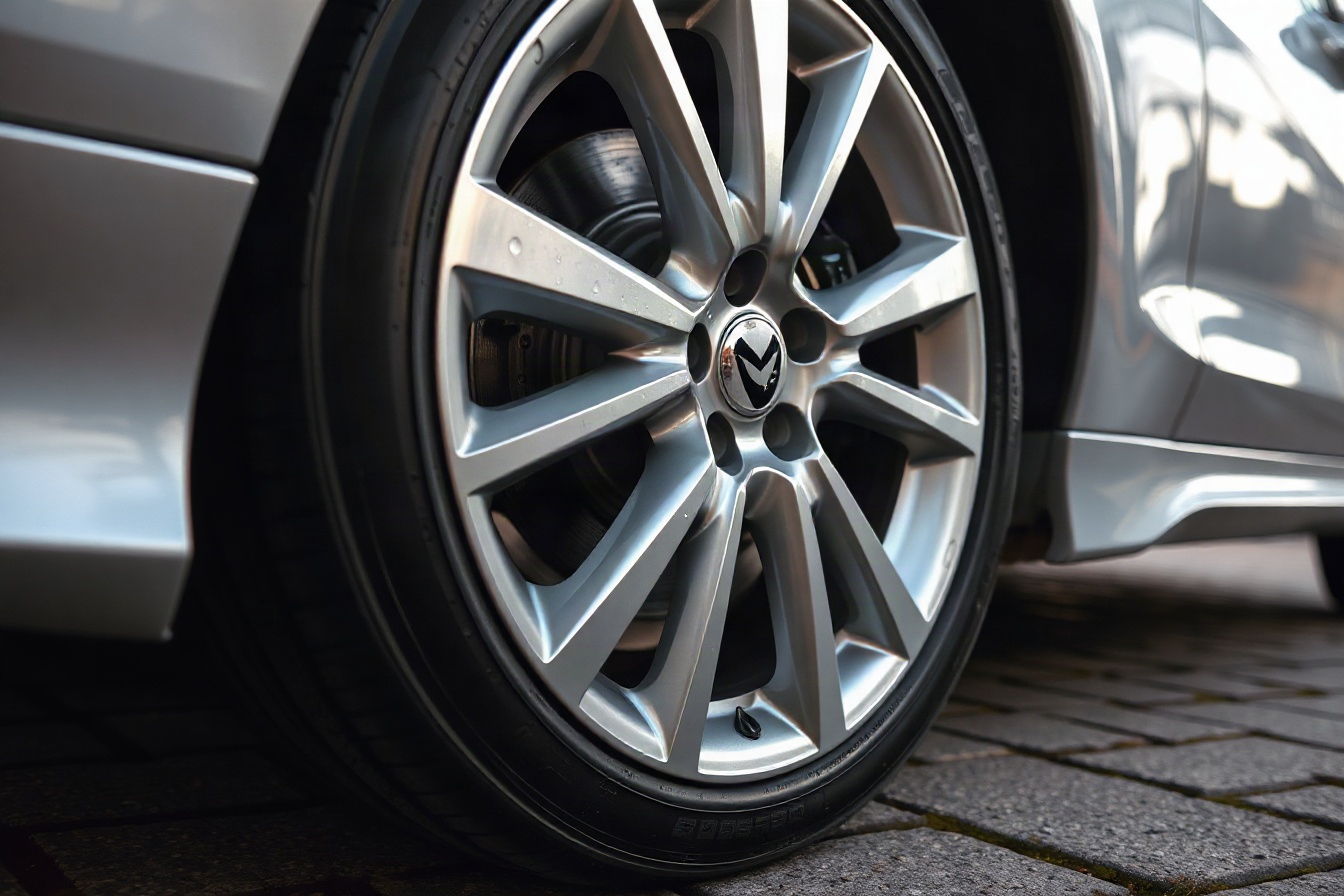
Our short answer: one default pick and two alternatives
- Default pick: Bilt Hamber Auto-Wheel. It won the Auto Express wheel cleaner group test and topped the Parkers, What Car and Fast Car round-ups we read. It is described as pH neutral and as safe on alloy, aluminium and steel wheels.
- If you have unusual finishes: Autoglym Custom Wheel Cleaner Complete Kit. UK retailer listings describe it as acid-free and suitable for alloy, lacquered alloy, anodised, chrome and painted wheels, and it comes with two brushes.
- If you want a spray-and-rinse with no pre-wetting: Meguiar’s Ultimate All Wheel Cleaner. The maker says it is acid-free, pH balanced and safe on all wheel finishes.
If you have heavy, baked-on iron contamination that a normal cleaner will not shift, an iron-fallout remover is the second step, covered below. A soft brush is the third piece of kit.
As an Amazon Associate we earn from qualifying purchases. The links in this guide are search links to the named products, and we have left out prices because they change daily.
How we chose
We do not test products. We read UK road tests and round-ups from Auto Express, Parkers, What Car and Fast Car, then checked maker and UK retailer pages for what each product is and which finishes it is meant for. A product made the list only if at least two independent UK sources describe it. Where a source did not say something (for example whether a product is acid-free), we say so rather than guess. Manufacturer instructions change, so always read the label on the bottle you buy.
- Safety on finishes first. A cleaner that is slightly less powerful but safe beats a strong one that etches a wheel.
- Evidence from several sources. Repeat appearances in UK tests counted for more than one glowing review.
- Clear maker statements. Acid-free, pH-neutral or finish-safe claims had to appear on a maker or UK retailer page we could read.
- Honest limits. Every product below has a caution, because none of them suits every wheel.
Acid-free or acid-based: what the difference means for your wheels
Most everyday wheel cleaners are pH neutral or slightly alkaline, which makes them non-acidic. Parkers says a pH-neutral cleaner is the safer default because it suits a wider range of wheel materials. Acid-based cleaners exist for one job: dissolving heavy baked-on brake dust and mineral deposits quickly.
The risk is the finish. Auto Finesse calls acid cleaners unforgiving and says they can attack bare aluminium, polished metal and damaged lacquer, and that once acid reaches exposed metal it can quickly cause permanent staining or etching. A German detailing retailer’s guide, Detailing1, puts numbers on it: acidic products below about pH 5 can dissolve the oxide layer on bare metal, and it recommends a pH band of roughly 5.5 to 7.5 when in doubt.
Our view from those sources: for a home driver, an acid-based wheel cleaner is rarely worth the risk. If you do use one, read the label for the finishes it excludes, work on a cool wheel, and rinse thoroughly. If you are unsure of your finish, choose acid-free.
Painted or lacquered alloys versus polished alloys
Most modern alloys are painted and covered in clear lacquer, which is a tough barrier. Bare polished and anodised wheels have no such top coat, so they are the most fragile. The Detailing1 guide describes how to tell them apart and suggests checking the oldest kerb scrape: a light matt primer underneath usually means a painted wheel, while bare silvery metal points to diamond-cut or polished.
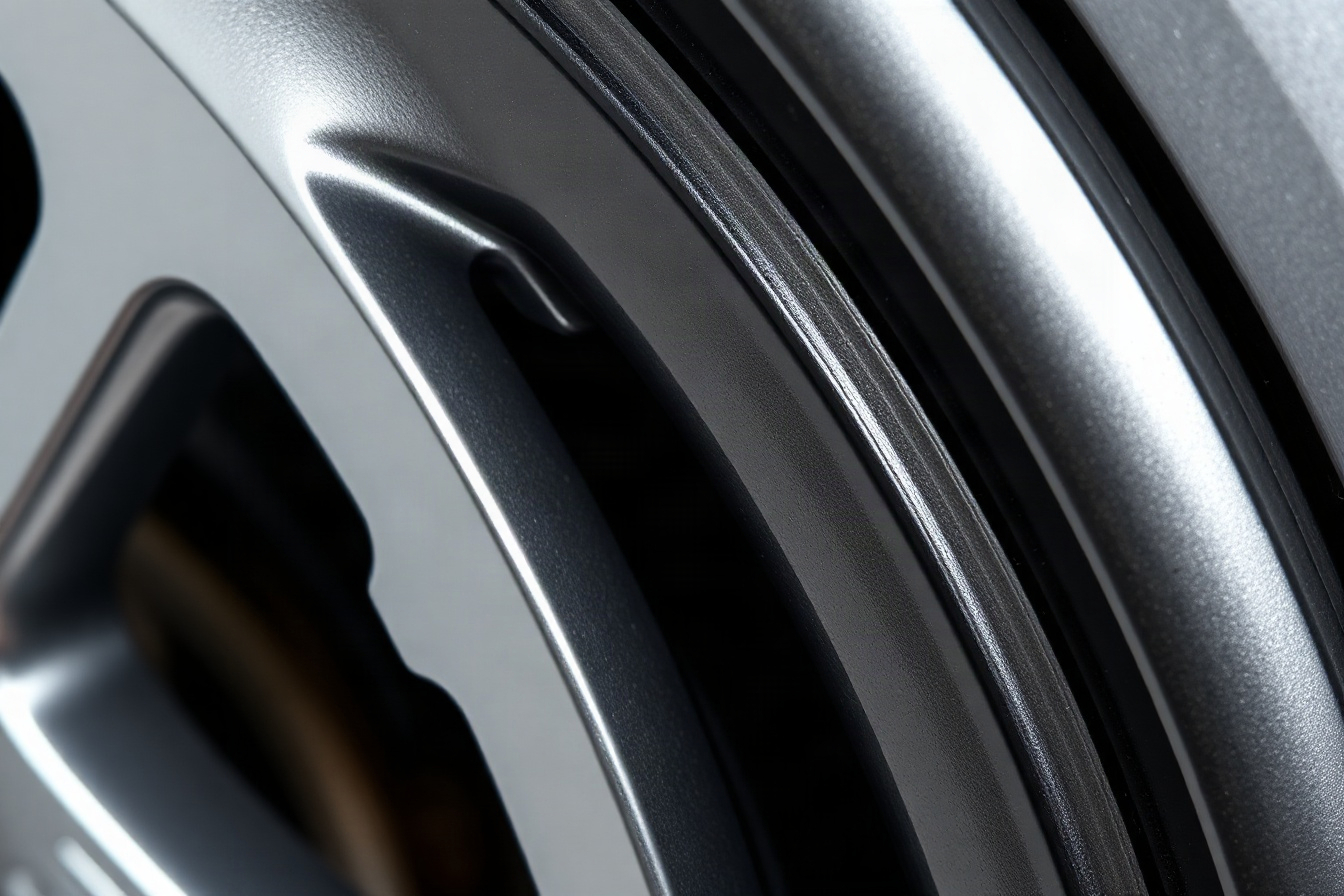
| Finish | How to spot it (per Detailing1) | Caution |
|---|---|---|
| Painted and clear-coated | Even, smooth, reflects like the body paint | Chips or damaged lacquer expose metal, so avoid acid cleaners |
| Powder-coated | Thicker, slightly padded feel | Check the label, most pH-neutral cleaners are fine |
| Diamond-cut | Two-tone, fine grooves on the mirrored face under clear coat | Auto Finesse lists diamond-cut among finishes where non-acid cleaners are considerably safer |
| Chrome | Deep blue-white shine, cold to touch | Detailing1 says acid can get into micro-cracks and lift chrome |
| Polished or anodised (bare) | No top coat; Detailing1 calls it rare and the most fragile | Avoid acid. Choose a cleaner whose maker names polished or anodised wheels |
Lacquered alloys can usually take a pH-neutral cleaner, according to the sources above, but that is general guidance, not a promise for your wheels. If you have a vehicle handbook or wheel maker advice, follow that first. If you need a household stop-gap while you decide, see our posts on cleaning alloy wheels with household products and making your own wheel cleaner.
Comparison table: the five picks at a glance
| Product | Best for | Key detail from maker or reviews | Caution |
|---|---|---|---|
| Bilt Hamber Auto-Wheel | Default pick for most painted or lacquered alloys | Described as pH adjusted and reactive; colour changes as it works | What Car says not for chrome-effect plastic |
| Autoglym Custom Wheel Cleaner Complete Kit | Mixed finishes, including anodised and polished | UK listings say acid-free; includes two soft brushes | Not for split rims, per the listing |
| Meguiar’s Ultimate All Wheel Cleaner | Spray-and-rinse with minimal effort | Maker says acid-free and safe on all finishes | What Car: hard-packed dirt may need agitation |
| Gtechniq W6 Iron & Fallout Remover | Stubborn iron contamination | Marketed as an iron and fallout remover; Parkers lists it at pH 8 | Slightly alkaline, so check the label for bare finishes |
| CarPlan Demon Micro Noodle Wheel Brush | A soft brush for delicate finishes | Auto Express top-rated wheel brush; microfibre and mesh faces | Mesh face is for tougher dust, so go lightly on bare metal |
Bilt Hamber Auto-Wheel: the default pick
Bilt Hamber Auto-Wheel took first place in the Auto Express wheel cleaner test, which gave it five stars and noted that the brake dust instantly turns purple. It also came first in Fast Car and What Car round-ups. Parkers lists it as pH 7 and in gel form.
A UK retailer page describes it as a pH-adjusted reactive cleaner for alloy, aluminium and steel wheels, which changes from clear to deep red as it works, and says agitation is not needed in the great majority of cases. It does not give a dwell time, so follow the bottle. We could not find an explicit “acid-free” statement on the pages we read, only the pH-adjusted description, so check the label if that is critical for your wheels.
Caution: What Car says it should not be used on chrome-effect plastic. Check Bilt Hamber Auto-Wheel on Amazon UK.
Autoglym Custom Wheel Cleaner Complete Kit: for mixed or delicate finishes
UK retailer listings describe this as an acid-free formula safe on alloy, lacquered alloy, steel, chrome, painted, anodised and plastic-covered wheels, and the headline mentions polished aluminium. That makes it a sensible option if you are not sure of your finish or if you own bare or anodised wheels. Parkers also names Autoglym among cleaners it describes as safe on almost any wheel, and the What Car and Fast Car tests rated Autoglym’s wheel cleaners highly, although those tests used Autoglym’s Advanced All Wheel Cleaner and Clean Wheels rather than this kit.
The kit comes with a small and a medium soft brush, which suits tight spots such as around the wheel nuts. The listing advises letting wheels cool first, cleaning one wheel at a time and rinsing thoroughly, including the tyre walls.
Caution: the listing says not to use it on split rims, because cleaner can dry between the bonded surfaces. Check Autoglym Custom Wheel Cleaner Complete Kit on Amazon UK.
Meguiar’s Ultimate All Wheel Cleaner: spray and rinse
Meguiar’s UK says in its how-to guide that the cleaner is acid-free, pH balanced and “entirely safe” on all wheel finishes and sizes, including custom paint. The method is unusual: do not pre-wet the wheel, spray it evenly, wait for the colour to turn purple or pink (one to two minutes, per the guide), then rinse.
What Car gave it four stars, calling it a very good spray-and-go performer but the most expensive in its test, and noting hard-packed debris may need agitation. Meguiar’s own dos and don’ts page says not to leave it on for more than a few minutes, because extended dwell can cause light staining, and not to use it on a baking hot wheel.
Caution: because it relies on not drying out, it is best on a cool wheel in the shade. Check Meguiar’s Ultimate All Wheel Cleaner on Amazon UK.
Iron-fallout removers: when you need one and how they differ
Iron fallout is tiny hot particles from brake pads that embed in the wheel surface. Auto Finesse explains that iron removers are decontamination products rather than general wheel cleaners: they react with embedded iron and turn purple as they dissolve it, but the colour change shows the reaction, not extra cleaning power. They do not remove grease, tyre dressing, road film or general grime, so use them occasionally and after a normal wheel clean, for example before waxing or sealing.
Many wheel cleaners, including Bilt Hamber Auto-Wheel and Meguiar’s, are themselves colour-changing, so you may not need a separate remover. Auto Express found the VP Decon-It needed the full five minutes to react, while Liquid Tech’s cleaner dissolved brake dust without turning red, so colour alone is not a performance guide.
Our pick: Gtechniq W6 Iron & Fallout Remover. Fast Car placed it fourth, calling it very strong with good value in the larger size, and noting it can also be used on bodywork as a pre-wash. Parkers lists it as pH 8, strong on brake dust and safe for sealants and waxes. At pH 8 it is slightly alkaline, so check the label if your wheels are bare or anodised, since Detailing1 says anodised layers can dissolve above about pH 8 to 9.
Caution: keep it off hot wheels, rinse promptly, and avoid spraying brake components more than needed, a problem What Car’s testers noted with Simoniz Iron Active. Check Gtechniq W6 on Amazon UK.
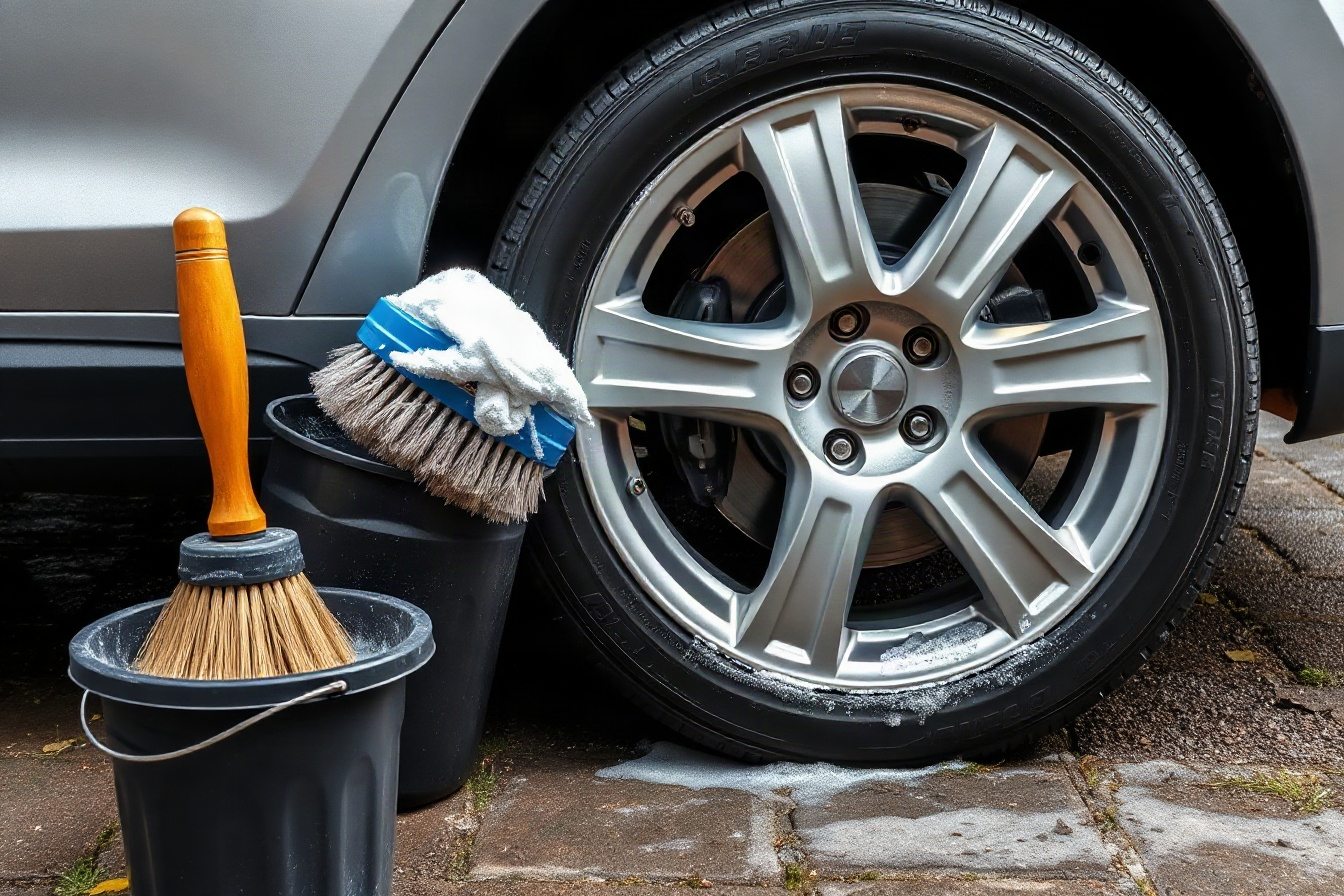
Brushes: what to use and what to avoid
Parkers says most alloy wheel cleaners work better with a brush, especially on wheels that have not been cleaned for a while, and recommends a wheel brush for stubborn grime plus barrel brushes for the face and barrel. The Auto Express wheel brush test gives the practical detail on scratching risk.
- Soft microfibre or foam heads are the safe choice for delicate finishes. Auto Express called the CarPlan Demon Micro Noodle the best overall and soft enough for delicate finishes.
- Bristle barrel brushes such as the Simply Barrel brush reach the back of the rim and have a soft cap on the wire core to protect wheels.
- Exposed metal cores are a scratch risk. Auto Express noted that one short bristle brush has a visible metal core, which may increase the risk of scratching.
Our pick: CarPlan Demon Micro Noodle Wheel Brush. Auto Express describes microfibre noodles on three sides and a mesh face for tougher brake dust. Use the noodle sides on bare or lacquered finishes, and keep the mesh face for tough dirt on well-protected wheels. Caution: that review does not give a size comparison with long barrel brushes, so you may still want a separate long-reach brush for the inner barrel. Check CarPlan Demon Micro Noodle Wheel Brush on Amazon UK.
What to avoid
- Acid wheel cleaners on unknown finishes. If you cannot confirm the lacquer is intact, do not use them.
- Oven cleaner and brake cleaner. Detailing1 says to avoid both: one is strongly alkaline, the other a solvent.
- Cleaning hot wheels. Parkers and the maker pages we read all say to let wheels cool and keep them out of direct sunlight.
- Letting product dry on the wheel. Parkers warns this can stain alloys and brakes.
- Mixing products. Rinse between a wheel cleaner and an iron remover rather than layering them.
- Kitchen products as a regular routine. They have a place for light dirt, as we explain in will vinegar remove brake dust from rims and does WD-40 clean aluminium wheels.
How to use a wheel cleaner safely
- Read the label and confirm your wheel finish is listed.
- Park in the shade and let the wheels cool. Clean one wheel at a time.
- Apply as directed. Some, such as Meguiar’s, say not to pre-wet; others use a wet wheel.
- Wait for the stated dwell time and no longer. Use a soft brush only if the dirt does not release.
- Rinse thoroughly with a hose or pressure washer, including the tyre wall and the back of the spokes.
- Dry with a clean microfibre towel, and consider a wheel sealant afterwards, as Parkers suggests.
- Use an iron remover only occasionally and after the main clean.
Wear gloves and eye protection, keep products away from children, and follow the safety wording on the bottle. Do not mix products.
Questions people ask
Is acid-free wheel cleaner better than acid-based?
For most drivers, yes. Sources including Auto Finesse and Parkers say pH-neutral or non-acid cleaners are safer across painted, lacquered, diamond-cut and powder-coated wheels. Acid products can dissolve baked-on dirt faster but can etch bare aluminium and damaged lacquer, so they suit only intact, protected finishes and careful use.
What is the safest wheel cleaner for polished alloys?
Choose a cleaner whose maker explicitly lists polished, bare or anodised alloy as safe, and avoid acid products. UK listings describe Autoglym’s Custom Wheel Cleaner as suitable for polished aluminium and anodised wheels. Test on a hidden spot first and rinse quickly, as Detailing1 recommends for high-gloss polished wheels.
Do I need an iron-fallout remover as well as a wheel cleaner?
Not always. Iron removers are decontamination products that dissolve embedded brake-dust iron, but they do not remove general grime. Many colour-changing wheel cleaners already react with iron. Use a remover occasionally, after a normal clean, if the wheel still feels rough or before sealing.
Why does my wheel cleaner turn purple?
The colour change is a reaction with iron particles from brake pads. Auto Finesse says it shows the reaction, not extra cleaning power. Auto Express noted that some effective cleaners do not change colour, so use it as a visual cue to rinse, not as proof a product is better.
Can I use wheel cleaner on hot wheels?
No. Meguiar’s says its cleaner works best on cooler wheels and can dry too quickly on a hot one, and Parkers advises cleaning wheels cool and out of direct sunlight. Wait until the wheels have cooled after driving, and never let product dry on the surface.
Should I use a brush on alloy wheels?
Usually yes, for stubborn dirt. Parkers says most cleaners work better with a brush. Choose soft microfibre or foam heads for delicate finishes, and avoid brushes with exposed metal cores. Reactive cleaners like Bilt Hamber’s may need little or no agitation, according to a UK retailer page.
Is it safe to use household products instead?
For light dirt, sometimes, but results vary and acids can harm some finishes. Our household guide covers the options and limits, including cleaning alloy wheels with household products. For heavy brake dust, a proper wheel cleaner is more predictable.
Sources
- Auto Express, best car wheel cleaners: Bilt Hamber verdict, colour-change notes, other products
- Auto Express, best wheel brushes: brush types and scratch cautions
- Fast Car, best alloy wheel cleaners: rankings and Gtechniq W6
- Parkers, alloy wheel cleaner advice: pH, safety tips, brushes
- What Car, alloy wheel cleaners test: verdicts and cautions
- Meguiar’s UK how-to guide: acid-free, finish and usage claims
- Meguiar’s UK dos and don’ts: dwell and heat cautions
- UK retailer page for Bilt Hamber Auto-Wheel: finishes and colour change
- UK retailer page for Autoglym Custom Wheel Cleaner kit: acid-free claim, finishes, brushes, split-rim caution
- Auto Finesse, wheel cleaner explained: acid risks and iron removers
- Detailing1, identifying wheel finishes and pH ranges
Last checked: 14 November 2026. Maker guidance and product formulations can change, so check the label on the product you buy.