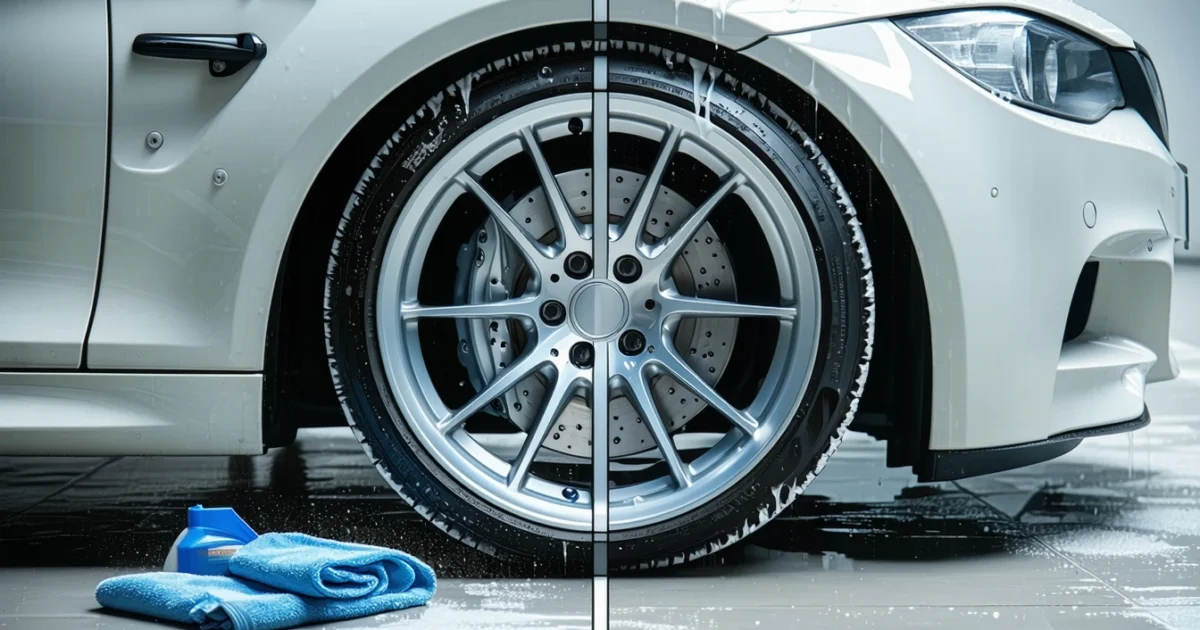
Short answer: only a little, and it is rarely the right tool. WD-40 is a water-displacing oil, not a wheel cleaner. It can loosen tar, sticky residue and light road film on aluminium alloy wheels, but it does not dissolve brake dust, and it leaves an oily film that holds new dust and can get in the way of wheel sealants. Use car shampoo or a proper wheel cleaner for the dust, and keep the WD-40 for the odd spot of tar.
The rest of this guide covers what it does well, how to use it safely if you decide to, which finishes to keep it away from, and what to use for brake dust instead.
Disclosure: Cleaners Guide is a participant in the Amazon Associates programme, so if you buy through links on this page we may earn a small commission at no extra cost to you. It never changes our recommendations, we suggest products because they work and we point out cheaper options where they do the same job. Prices and availability change, so always check the current price before buying.
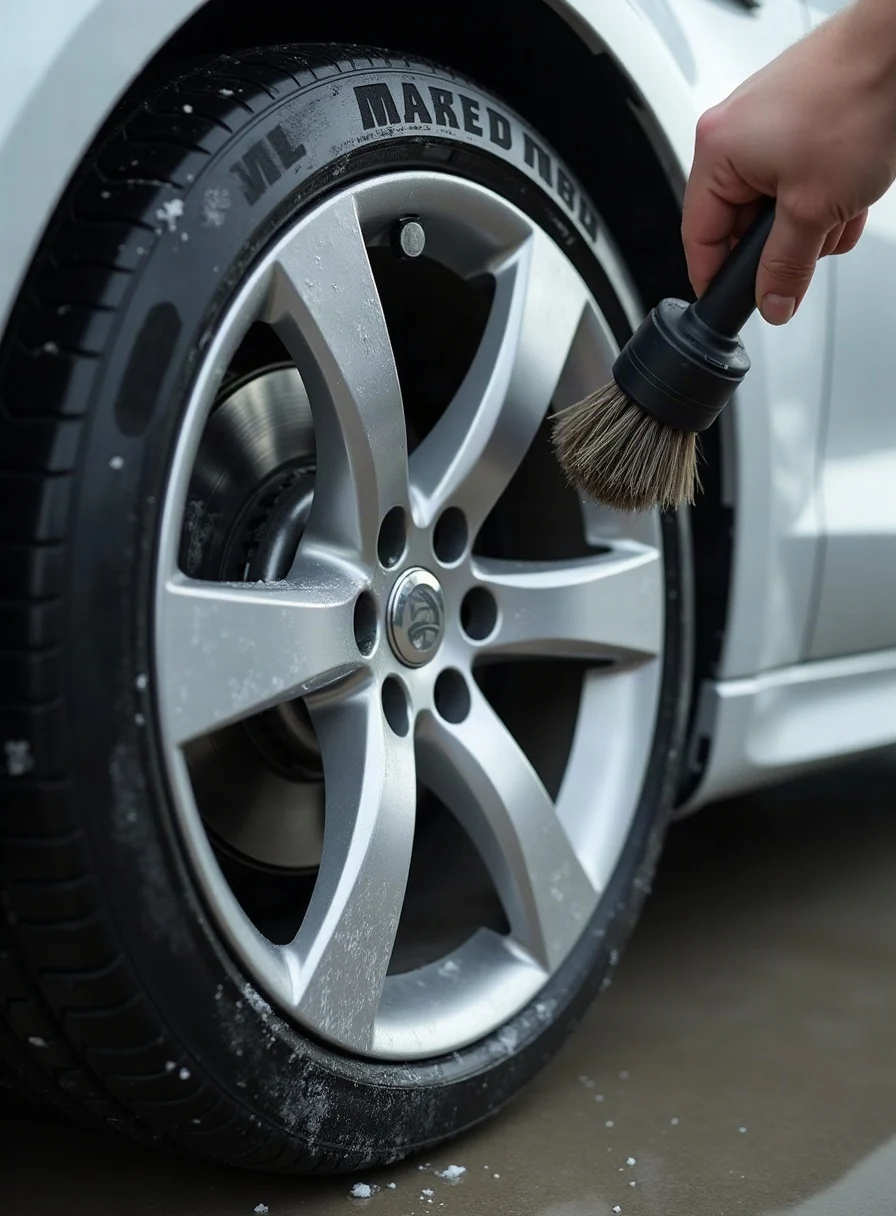
What WD-40 will and will not shift
| Contaminant on the wheel | Does WD-40 help? | Better option |
|---|---|---|
| Light road grime | Loosens it, but leaves oil behind | Car shampoo and a soft brush |
| Fresh brake dust | Only partly, and it smears | A wheel cleaner made for brake dust |
| Baked-on brake dust | No | A pH-balanced or iron-fallout style wheel cleaner, following the label |
| Tar spots and sticky residue | Yes, this is its strong point | WD-40 on a cloth, or a dedicated tar remover |
| Old sticker or adhesive residue | Often yes, with patience | WD-40 on a cloth, then wash the area |
| Road salt and white corrosion | No, it only displaces moisture | Rinse, wash, and treat corrosion with a suitable product |
| Pitting, lacquer damage or dull patches | No | A wheel refurbisher |
The pattern is simple. WD-40 works on things that dissolve in oil or solvents (tar, adhesive, grease) and does very little on things that need an acid or detergent to break them down (the iron particles and resins in brake dust). If you want to understand why, read on.
Which problem do you actually have?
Most people reach for WD-40 because a wheel looks grubby and it is on the shelf. A quick diagnosis saves you from using the wrong product, and from adding oil to a surface that did not need it.
A grey-brown film that wipes off with a damp cloth
That is ordinary road film with a little brake dust. Warm water, car shampoo and a soft brush will deal with it. You do not need an oil, an acid or a specialist product, and the wheel will end up cleaner than it would with WD-40.
A gritty dark coating you can feel with a fingertip
That is brake dust that has built up over a few weeks. A wheel cleaner made for the job, with a soft brush on the spokes and barrel, is the sensible next step. This is the point where people try WD-40 and then wonder why the dust smears instead of lifting.
Black or brown spots that feel sticky or tacky
These are tar, tree sap or adhesive. They are the one case where an oil-based spray earns its place. Dab, wait, wipe, then wash the area to remove the oily film.
Rough, pitted or whitish areas that wipe nowhere
That is corrosion or lacquer damage and it needs refinishing, not cleaning. Spraying oil onto it hides the problem for a day and traps dirt in it afterwards.
Why it behaves like this
The name stands for water displacement, and that is its design job: it pushes moisture off metal and leaves a thin protective oil film. The can is a mix of petroleum-based hydrocarbons and oils, which is why it dissolves tar and glue so well. It is also why it leaves a film behind. A film that stops water also grips dust, so wheels wiped with WD-40 can look cleaner at first and then collect dirt faster than a washed wheel.
Brake dust is different. It is a mix of tiny metal particles from the pads and discs, plus resins, which stick to the wheel more firmly when heated and wetted. Detergents lift the grime around them, and wheel cleaners and iron removers react with the iron. An oil spray does not do either. That is why the claim that WD-40 “cleans” brake dust gives, at best, a smeared grey layer rather than a clean surface.
Two practical points follow from the ingredients. The spray is a flammable aerosol, so use it away from heat, flames and hot brakes, and read the can for current safety information. And because it is a petroleum solvent product, it is not suitable for every wheel finish, as covered below.
A proper wheel wash, step by step
Because the basic wash does most of the work, it helps to do it well. This is the routine that gives the best result before you consider any specialist product.
- Park in shade and let the wheels and brakes cool. A hot wheel dries products on the surface and can mark finishes.
- Rinse each wheel with a hose to remove loose grit. Grit trapped under a brush is what scratches lacquer.
- Spray the wheel with car shampoo solution or, for heavy dust, a wheel cleaner chosen for your finish. Follow the label for dwell time and do not let it dry.
- Use a long soft brush for the inner barrel, a smaller soft brush for the spokes, and a detailing brush or old toothbrush for lug nut holes and the valve area.
- Rinse thoroughly, starting at the top, and make sure no cleaner remains in the gaps behind the spokes.
- Wash the tyre sidewall separately with shampoo and a medium brush, keeping any wheel cleaner off the rubber.
- Dry the wheel with a clean microfibre towel. Air drying leaves mineral spots in hard water areas.
- Check the surface in daylight. If a spot remains, work out what it is before choosing the next product.
In hard water areas, water spots can look like staining. Drying quickly, and not washing in direct sun, avoids most of them. If limescale is the issue elsewhere in the home, our guide to removing limescale explains what is happening and what dissolves it.
How to use WD-40 on a wheel, if you do
Keep it to spot work. Do not spray the whole wheel. The product people usually mean is WD-40 Multi-Use Product, a multi-use lubricant spray rather than a wheel cleaner.
- Wait until the wheel and brakes are cool. Never spray an aerosol oil near hot brake parts.
- Rinse off loose grit first so you do not rub it into the lacquer.
- Spray a little onto a microfibre cloth rather than straight onto the wheel. This keeps it off the brake disc, pads and calipers, which is the most important rule, since oil on friction surfaces reduces braking performance.
- Dab the tar or adhesive and leave it for a minute or two. Do not rub hard.
- Wipe the softened spot gently, using a clean part of the cloth for each pass.
- Wash the whole area with car shampoo and warm water to remove the oily film, then rinse well and dry with a clean microfibre towel.
- Check the wheel in daylight for any cloudiness. If you see any, stop using solvent products on it.
A soft brush helps in tight spots, and a soft-bristled wheel brush is far better than a stiffer household brush. Some wheel cleaners come with their own: carwow notes that Bilt-Hamber Auto-Wheel is supplied with a dedicated scrubbing brush. If a wheel has any special finish, test a hidden patch first, such as the inside of the barrel, and wait at least a few minutes to see how the surface looks once dry.
Other ways to lift tar and sticky residue
WD-40 is not the only option, and not always the best. A dedicated tar and glue remover is made for the job and usually states which paint and lacquer finishes it is safe on. For stickers and light adhesive, warm soapy water and a plastic scraper or an old bank card will often do it with no solvent at all. Soak a cloth in hot soapy water, hold it on the sticker for a minute to soften the glue, then peel and wipe. If a spot of tar remains, a little product on a cloth and patience beat scrubbing, which only drives the tar into the lacquer.
Which finishes to keep it away from
Most modern alloys are painted and lacquered, and these cope with an occasional spot treatment followed by a wash. Others are more fragile. There is no single reliable rule for every wheel, so check the car handbook or the wheel maker’s guidance if you have it.
- Diamond-cut and polished faces. Thin lacquer and bare metal can mark. Avoid solvents and oils, and use soapy water and a soft cloth.
- Anodised or machined wheels. Thin surface layers mean strong or repeated treatment can leave patches. Follow the maker’s care instructions.
- Powder-coated or painted wheels with chips. Oil and solvent can creep into damaged areas and lift paint over time. Sort the chips first.
- Wheels with a ceramic or sealant coating. Solvents may weaken the coating, and oily residue can stop the next coat bonding. Use the maker’s recommended cleaner.
- Tyres and rubber trim. Solvent products can dull and dry rubber, so keep spray off the sidewall.
Repeated or heavy use also has a visible cost. The oily layer that remains, even after wiping, dulls the shine and makes the next clean harder, which is the opposite of what you want from a regular routine.
What to use instead, and what to buy
For brake dust the practical choices are car shampoo for light film, a wheel cleaner for heavier film, a decent set of brushes, and a sealant to make the next wash easier. Here is how the four compare.
| Product | Best for | What the sources say it is | Keep in mind |
|---|---|---|---|
| WD-40 Multi-Use Product | Tar, sticky residue and adhesive spots only | UK retailer listings describe it as a multi-use lubricant spray, so treat it as a spot treatment only | Not a wheel cleaner. Keep off brakes and rubber, and wash the oily residue off |
| Bilt-Hamber Auto-Wheel (our default pick) | Regular brake dust and road film on most lacquered alloys | Described by Expert Reviews as a pH-neutral spray that turns red as it works. Also named by Auto Express, carwow and Parkers | Both Expert Reviews and Auto Express mention a sulphurous, eggy smell. Do not let it dry on the wheel |
| Autoglym Advanced All Wheel Cleaner | Reader who prefers a gel and a well-known UK car-care brand | Parkers describes it as a pH-neutral gel; carwow suggests two to four minutes on the wheel, then a high-pressure rinse | Parkers says it needs more scrubbing than some rivals, and carwow found the trigger awkward |
| Duel Axis Wheel Cleaner | Reader who wants one concentrate for both light and heavy dirt | Reviewed by Auto Express and carwow as a concentrate, diluted from about 1:3 for baked-on dust to 1:20 for upkeep | You need your own spray bottle and some mixing time |
| Wheel sealant (no named product verified) | Making later dust rinse off more easily | Made for wheels and rated for brake heat | Apply to clean, dry, cool wheels only. It does not remove dust |
If you just want one answer for brake dust, Bilt-Hamber Auto-Wheel is the default pick, because it was the one named in all four UK round-ups we read (Expert Reviews, Auto Express, carwow and Parkers). These are compiled from published reviews and maker information, not our own tests, and product formulations can change, so read the current label. As an Amazon Associate we earn from qualifying purchases.
A word on cleaner strength. Wheel cleaners range from pH-neutral formulas for routine washing to stronger acidic ones for heavy dust. The stronger ones need more care: gloves, eye protection, no mixing with other cleaners, and a rinse before they dry. Choose the gentlest one that works, and read the label before using it on polished, anodised or damaged wheels. Expert Reviews, for example, describes Bilt-Hamber Auto-Wheel as pH-neutral, but says the E-TECH Pro-Class wheel cleaner is acidic and should not go on scratched alloys or damaged lacquer. Our guide to cleaning products explains why mixing is dangerous.
Household options also work for light film. Washing-up liquid in warm water is safe for most finishes but does not cut heavy dust, and diluted white vinegar can work on light brake dust with short contact times, with caveats; see whether vinegar removes brake dust. Our guides to making your own wheel cleaner and cleaning alloy wheels with household products go further, and for bare aluminium generally see the homemade aluminium cleaner guide.
Safety and storage notes for aerosol oils
- Ventilation. Use outdoors or with the garage door wide open. The mist is not pleasant to breathe and settles on surfaces.
- Heat and flame. Aerosol cans are pressurised and flammable. Keep them away from hot brakes, exhausts, engines, cigarettes and pilot lights, and do not leave them in a hot car.
- Skin and eyes. Wear gloves and eye protection. If it gets in your eyes, rinse with water and seek advice if irritation continues, and follow the first aid on the can.
- Slips. Oil on a floor or driveway is slippery. Wipe up drips with absorbent paper or cloth.
- Disposal. Oily rags and empty aerosols should go the way your council says, not down a drain. Check your local recycling rules for aerosols.
- Children and pets. Store the can out of reach, and keep animals away from wet oil on the ground, since they will lick it off their paws.
Common slips to avoid
Spraying the whole wheel and leaving it is the usual one. Next is spraying while the brake disc is exposed, so that overspray lands on the friction surface. People also forget to wash it off, so the oil film collects fresh dust within days. And a few treat WD-40 as a polish, which it is not: the glossy look it gives is wet oil, and it fades as it picks up dirt. If you notice any of these, a shampoo wash will reset the wheel.
A routine that keeps wheels cleaner for longer
Most of the fight is won by washing before brake dust has had a chance to bake on. Rinse and wash the wheels every week or two where you can, and more often in winter, when road salt is a bigger enemy of alloy than dust. Always work on cool wheels, in shade, with a soft brush and plenty of rinse water, and dry them so they do not spot.
- Wash the wheels first, before the bodywork, using separate brushes and mitts.
- Use a wheel cleaner only when shampoo is not enough, and rinse it before it dries.
- Dry with microfibre and inspect for chips or lacquer damage.
- Apply a wheel sealant to clean, dry wheels as the product directs, so dust rinses off more easily.
- For stored wheels, clean and dry them fully, use breathable covers, and keep them somewhere dry and stacked or hung as the manufacturer advises.
Winter needs a little extra. Road salt and grit sit in the gaps behind the spokes and in the barrel, where you cannot see them, and a quick rinse with clean water every week or so during salting season does more than any product. If you can, use a hose with a nozzle on the underside of the arch as well. Salt left on bare or chipped metal is what starts the white bubbling corrosion that no cleaner will fix.
Brake dust itself depends partly on your brakes. Some pad compounds shed more visible dust than others. If it bothers you, ask a garage about low-dust pads when the pads are next due, and only fit ones approved for your vehicle. Do not change brake parts for cosmetic reasons without advice, because braking performance matters more than clean wheels.
Wheel sealants and waxes vary in how long they last, depending on the product, the weather and how often you wash, so follow the label rather than any fixed number of months. Do not apply a sealant over a surface that still has a film of oil from a spray, since it will not bond well.
When to stop and get it looked at
White chalky patches, pitting, flaking lacquer, bubbling paint and rough corrosion around the rim edge cannot be cleaned away, and they often mean the finish has failed. A wheel refurbisher can refinish alloys, which is usually much cheaper than replacement and best done before the bare metal corrodes. If one wheel is far dirtier than the others, the car pulls under braking, or you see oil near a wheel, have a garage check the brakes before you worry about cleaning.
Signs worth a closer look include:
- Lacquer that peels, flakes or looks cloudy in patches.
- White powder or small bubbles under the paint, especially near the rim edge or bolt holes.
- A slow loss of tyre pressure from one wheel, which can come from corrosion at the bead seat where the tyre meets the rim.
- Cracks, bends or a wobble felt through the steering wheel. Stop driving and have a tyre fitter check the wheel.
- Damp, oily or wet marks around a wheel after driving, which can point to a brake or bearing issue.
None of these is a cleaning problem. Cleaning products may hide the symptom for a few days, but they cannot repair the cause, and a garage or wheel specialist can tell you quickly whether the wheel is safe and worth refinishing.
Quick answers
- Can WD-40 damage alloy wheels? Occasional spot use on a sound lacquered wheel, washed off afterwards, is unlikely to cause harm. Repeated use, or use on polished, diamond-cut, anodised or chipped wheels, can leave marks or residue. Never spray near brake discs or pads.
- How do I get WD-40 off a wheel? Wash with car shampoo and warm water and a microfibre cloth, then rinse and dry. For a stubborn film, use a degreaser or wheel cleaner suited to the finish, following the label.
- Will it protect the wheel from corrosion? It displaces water and leaves a thin film, but that is short-lived and attracts dirt. A wheel sealant or wax made for wheels is the better choice.
- Is WD-40 better than a wheel cleaner for brake dust? No. Brake dust needs a detergent or wheel cleaner, and WD-40 mostly smears it. Use WD-40 only for tar and sticky residue.