To clean a mouth guard, night guard or gum shield, rinse it in cool water as soon as you take it out, then brush it gently all over with a soft toothbrush and a drop of washing-up liquid (not toothpaste, which is too abrasive) and leave it to air-dry completely before it goes into a ventilated case. Once a week, soak it for about 30 minutes in denture-cleaning solution or a 50:50 mix of alcohol-free antiseptic mouthwash and water. That routine keeps a guard hygienic, clear and smell-free.
It matters because a guard sits in your mouth for hours and is a very good surface for bacteria and fungi to settle on. A 2025 study in BMC Oral Health (Badari et al.) found that brushing removed 98% of bacteria while a water rinse alone removed only 60 to 70%, and that worn, roughened guards held roughly eight times more bacteria than new ones. The rest of this guide covers the daily steps, the weekly soak, how to shift cloudiness and chalky build-up, and the storage habits that quietly do half the job.
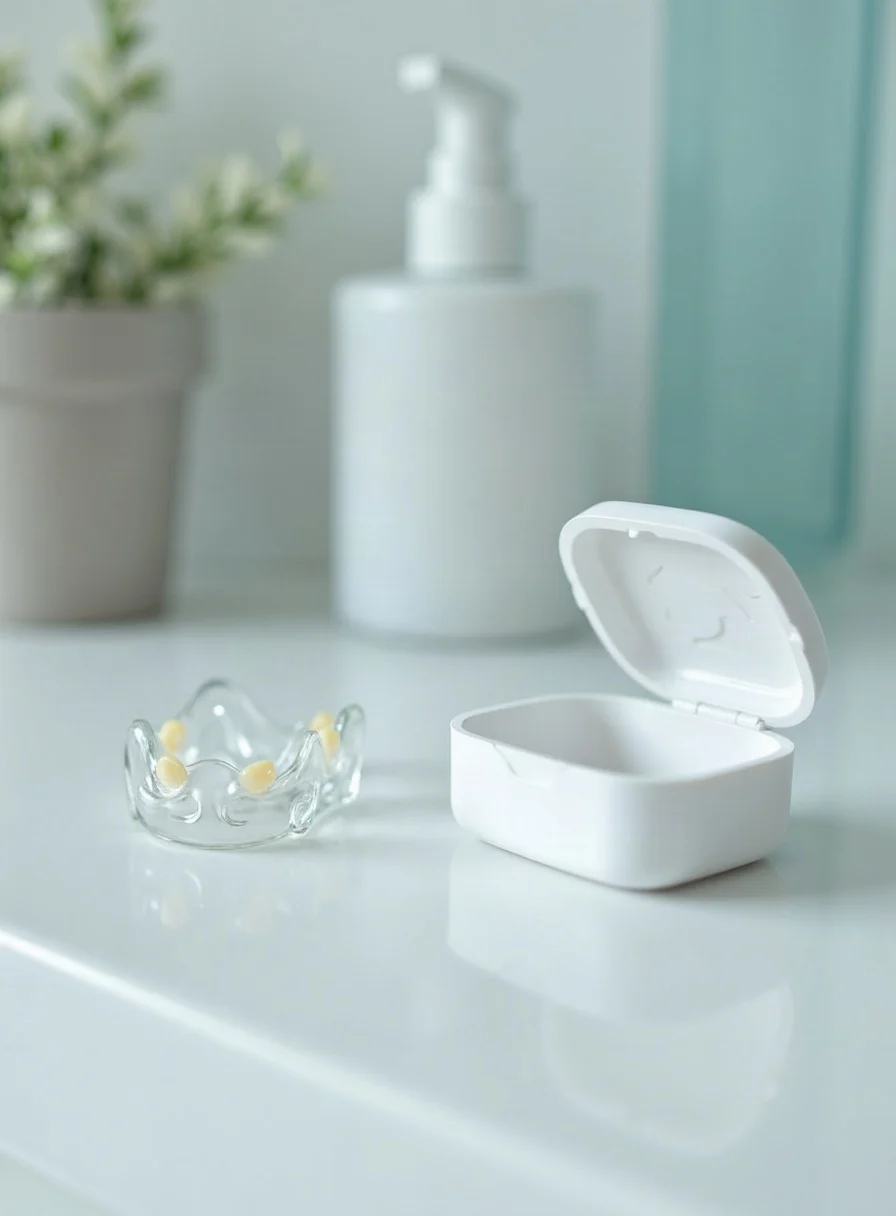
Gum shield, mouth guard or night guard: same cleaning, different job
These names cause confusion. They are all removable oral appliances and they are cleaned in much the same way. The difference is what they are for, and that affects how they get dirty.
- Gum shield or mouth guard is worn during sport such as rugby, boxing, hockey or martial arts. It is usually softer EVA material, and it picks up sweat, dirt and pitch debris as well as saliva. Rinse it the moment you come off the pitch, because dried-on grime plus a warm, damp kit bag is the worst combination. Do not zip it away wet.
- Night guard or dental splint is worn in bed to protect teeth from grinding (bruxism) and ease jaw tension. It is often harder acrylic and usually made by a dentist. It tolerates brushing well but can be more sensitive to long chemical soaks, so stick to short soaks and any specific advice your dentist gave you.
- Soft or dual-laminate guards scratch and absorb more easily. Be extra gentle, use alcohol-free mouthwash, and expect to replace them more often as they wear.
- Whitening trays and clear aligners have a similar shape and are cleaned similarly, but check the maker’s own instructions first.
The same logic covers orthodontic retainers, and our retainer cleaning guide is the sister article if that is what you are holding. If it is a sports shield, our rugby boots guide covers the other muddy item in the kit bag.
The daily clean, step by step
Do this every time you use the guard. It takes under a minute.
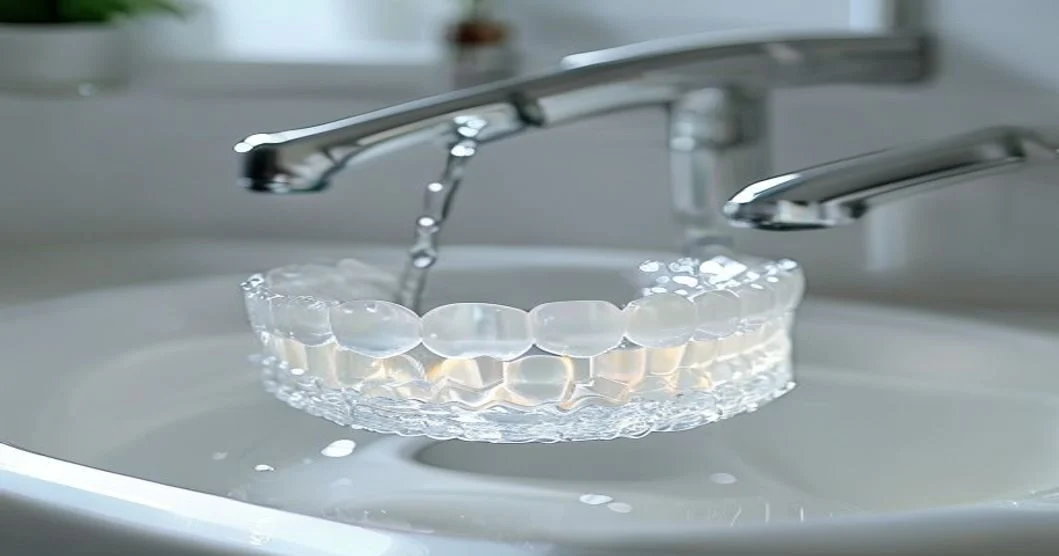
- Rinse immediately under cool or lukewarm running water the moment you take it out, never hot, which can warp the material. This floats off saliva and loose debris before they dry on.
- Brush it gently all over with a soft-bristled toothbrush kept only for this purpose, which avoids cross-contamination. Cover both the inner and outer surfaces. This is the step that removes the biofilm.
- Use a mild cleanser, not toothpaste. A drop of washing-up liquid or a non-abrasive appliance cleaner is ideal. Ordinary toothpaste is abrasive and scratches the surface, and those micro-scratches are where bacteria collect fastest.
- Rinse thoroughly to remove all the cleanser.
- Air-dry completely on a clean, flat surface before it goes anywhere near its case. Storing it damp undoes the rest of the work.
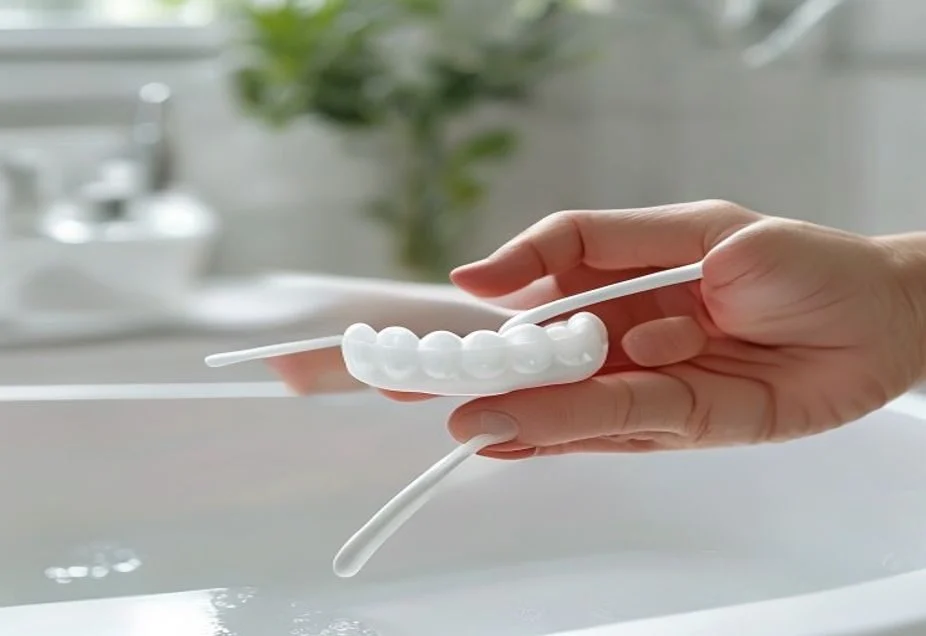
Why brushing beats rinsing
Two research findings shape this routine. First, mechanical brushing does the heavy lifting. The 98% versus 60 to 70% result from Badari et al. means a quick rinse is not enough on its own, because you have to physically brush the biofilm off. Second, how you store the guard matters as much as how you clean it. Ogawa et al. (2012) found no detectable bacteria on guards stored in a ventilated environment for two days or more, while bacteria survived up to 14 days on guards kept in a closed, damp container.
Analyses of used athletic mouthguards have also isolated a range of bacteria, yeasts and moulds, including Staphylococcus species, after only moderate use (Glass et al., 2011). Put an inadequately cleaned guard back in night after night and you are reintroducing that load, which is linked to bad breath, gum irritation and oral thrush. If you are unsure how well your own mouth is coping, that is a question for your dentist. Our appliances section covers other items that benefit from regular cleaning.
The weekly soak
Once a week, give the guard a proper soak to reach what brushing misses. Choose one of these.
| Soak | How | Notes |
|---|---|---|
| Denture-cleaning tablets | Dissolve one in a glass of water, submerge fully, soak for about 15 to 30 minutes, or as the packet says | A common dentist suggestion; effective and gentle on most materials |
| Mouthwash and water (50:50) | Submerge for about 30 minutes in an antiseptic mouthwash and water mix | Convenient; choose alcohol-free for softer guards |
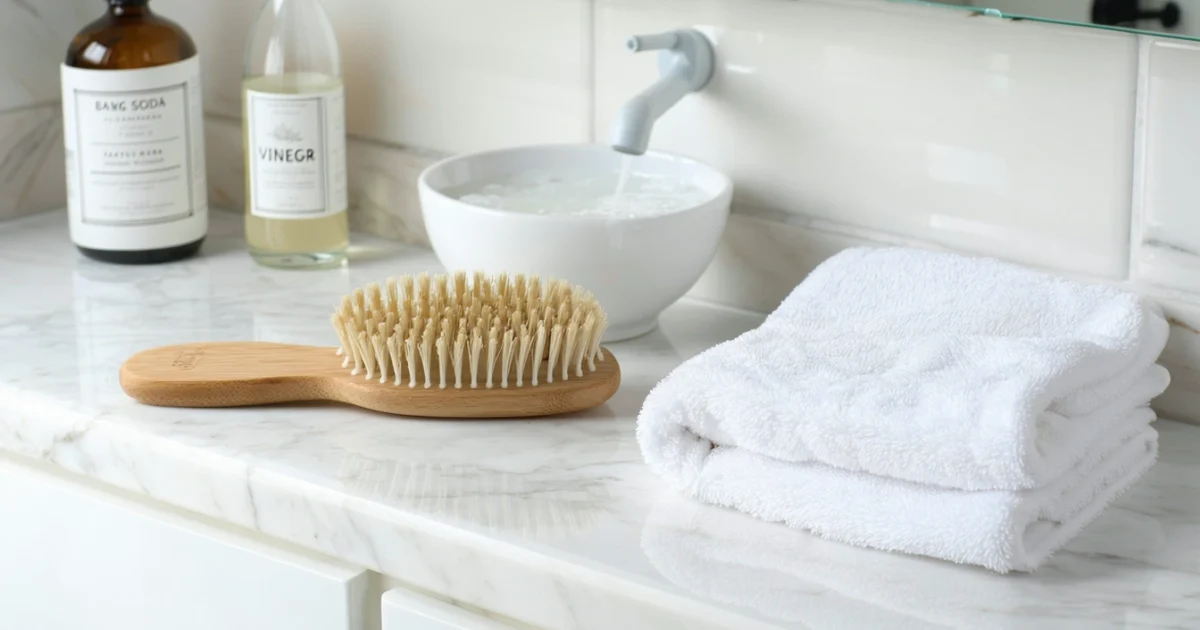
| White vinegar, then water | Soak 15 to 30 minutes in diluted white vinegar for calcium build-up, rinse well, then a short soak in plain water | Best for descaling; always rinse thoroughly afterwards |
| Dedicated guard or retainer cleaner | Follow the product instructions | Formulated for the material; worth considering if you wear a guard nightly |
After any soak, brush lightly, rinse thoroughly and air-dry. Do not soak for longer than directed. Prolonged soaking, especially in vinegar or alcohol-based mouthwash, can degrade some guard materials over time. For more on why vinegar is useful for limescale-type deposits but a weaker disinfectant, see our piece on whether vinegar disinfects.
Shifting cloudiness, yellowing and chalky film
Over time guards can go cloudy, yellow or develop a hard, chalky film. That film is usually calcium build-up (tartar) from saliva, the same kind of mineral that forms limescale, together with stain and biofilm. Here is how to deal with each problem safely.
- Calcium or tartar film: soak in equal parts white vinegar and water for 15 to 30 minutes to dissolve the mineral deposit, then brush gently and rinse thoroughly. Repeat if needed rather than scrubbing hard.
- Yellowing and general cloudiness: a denture-tablet soak lifts most discolouration. For stubborn cases, alternate vinegar and denture-cleaner soaks on different days rather than combining them.
- Persistent haze: this is often permanent micro-scratching from abrasive cleaning, usually toothpaste. It cannot be polished out at home, so the fix is prevention: soft brush, no toothpaste.
What not to use: avoid boiling water, which warps the guard, as well as abrasive scrubs and stiff brushes, which scratch it. Do not use undiluted bleach. Some dentists permit a very dilute bleach soak for heavy disinfection, but for home care denture cleaner and vinegar are safer and do the job. Never mix cleaning products together, and rinse any soak off completely before the guard goes back in your mouth.
Black, green or pink spots
Dark, green or pink spots that do not wipe away usually mean mould or a heavy biofilm has taken hold in tiny scratches. Try a thorough brush and a full soak in your normal cleaner. If the spots return within a few days, or the guard smells musty after cleaning, do not keep wearing it. A new guard costs far less than repeated gum irritation or an infection, and a dentist can advise on a replacement.
Storage and the case
Storage is where good cleaning is won or lost. A dry, ventilated guard stays hygienic, while a damp, sealed one can grow bacteria for up to a fortnight, according to the research above.
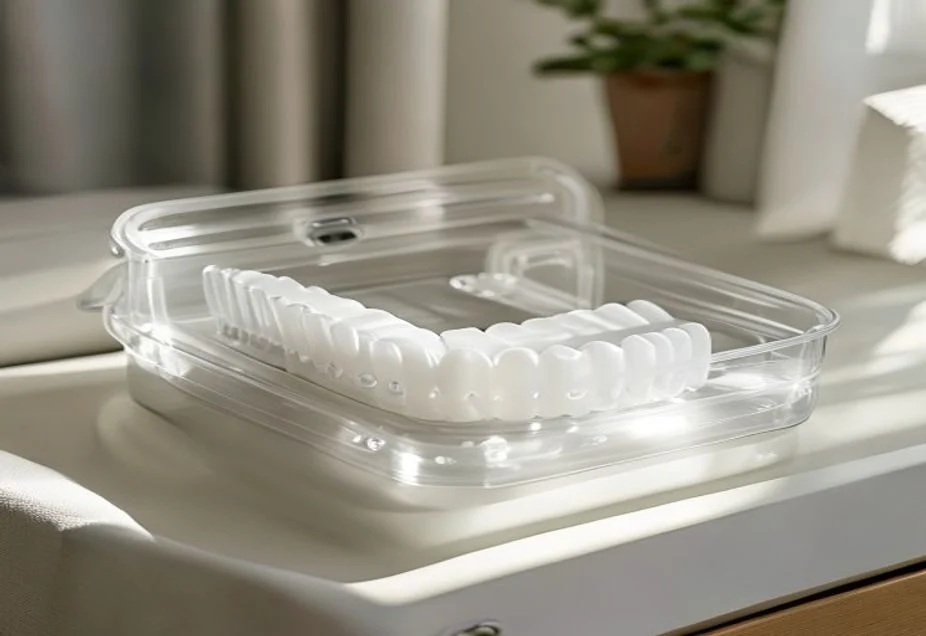
- Air-dry the guard completely before it goes in the case. Damp in, trouble later.
- Use a case with ventilation holes. The ones supplied usually have them for exactly this reason. Never seal a wet guard in an airtight tub.
- Clean the case itself regularly, about twice a week, with washing-up liquid, and let it dry fully. A dirty case re-contaminates a clean guard.
- Keep it out of the bathroom if you can. Bathrooms are warm and humid, while a bedside drawer is drier. Keep it away from pets, who find guards irresistible to chew.
- Never leave it in a hot car or on a sunny sill. Heat warps the fit.
Travelling and kit bags
A rigid, vented case is the best bet on the move. Rinse and shake off the guard, let it dry for a few minutes while you pack, then put it in the case and keep the case in a side pocket, not at the bottom of a damp bag. At the end of the trip, give the case a proper wash before it is used again. For a sports shield, rinse it after training and again in clean water at home, because gym floors, changing rooms and kit bags add dirt that a rinse at the pitch may not remove. Never share a guard with someone else, even a team-mate.
When it is time to replace it
No amount of cleaning saves a worn-out guard, and a rough, deteriorated surface holds far more bacteria. Replace it if you see thinning or bite-through spots, a rough or jagged surface, cloudiness that will not clean off, a smell or taste that survives a deep clean, or a fit that has gone loose or uncomfortable. A well-cared-for night guard can last from one to several years depending on how hard you grind. A sports gum shield often needs replacing sooner, and growing children need theirs checked regularly as their teeth change.
Bring the guard to dental check-ups so the dentist can inspect it for wear and confirm it still fits. If you also like to keep other small things you wear overnight clean, see our guide on how to clean ear plugs.
The kit, as a checklist
You can do all of this with items from the kitchen, but a few dedicated bits make the routine easier. Disclosure: Cleaners Guide is a participant in the Amazon Associates programme, so if you buy through links on this page we may earn a small commission at no extra cost to you. The links are Amazon UK searches. Prices and availability change, so check the current price before buying.
- ☐ Cleaning tablets. Denture or retainer tablets suit most hard and soft guards, but read the packet to check it is safe for your material and follow the soak time. Search tablets →
- ☐ A dedicated soft toothbrush. Soft or extra-soft, kept only for the guard and replaced when the bristles splay. Search brushes →
- ☐ A vented case. Look for ventilation holes and a shape that fits your guard without squashing it. Avoid airtight tubs. Search cases → Vented cases →
- ☐ Alcohol-free antiseptic mouthwash. For the 50:50 soak, especially on soft guards. Check the label for alcohol content. Search mouthwash →
- ☐ Distilled white vinegar. For the occasional descaling soak. Always dilute and rinse. Search vinegar →
- ☐ Mild washing-up liquid. Fragrance-light if you can, for the daily brush and for washing the case. Search washing-up liquid →
Seven things people also ask
Can you clean a mouth guard with baking soda?
Some people use a baking soda paste, but it is gritty and can scratch softer guards over time, which creates places for bacteria to hide. A soft brush with washing-up liquid is gentler. If you want to try baking soda, ask your dentist first. For general background see our guide on baking soda and vinegar.
Can you boil a mouth guard to sterilise it?
No. Hot water softens and warps most guard materials and ruins the fit. Boiling is only used when moulding a boil-and-bite sports guard at the start, and then following the maker’s instructions exactly. For cleaning, stick to cool or lukewarm water and a gentle soak.
Can a mouth guard go in the dishwasher?
It is best not to. The heat can warp the guard, detergent can be harsh on the material, and a small item can easily slip or get damaged. Hand cleaning takes less than a minute and is far safer for the fit.
Can you use hydrogen peroxide on a night guard?
Some dentists suggest a very dilute solution for occasional disinfection, but it is not essential and can affect some materials. Do not use stronger solutions than your dentist recommends, rinse very thoroughly and never put it back in your mouth wet with peroxide. Denture tablets are usually the easier option.
Can I leave my guard soaking overnight?
Generally no. Soak times on the packet are usually minutes, not hours, and long exposure to vinegar, mouthwash or cleaning tablets can cloud or weaken some guards. You also need the guard dry and ventilated when it is not in use, so follow the label and then air-dry it.
Why does my night guard smell even after cleaning?
A lingering smell usually means biofilm is still on the surface, the case is dirty, or the guard is stored damp. Brush more thoroughly, do a deep soak, wash the case and dry both fully. If the smell survives that, the surface is probably too worn and the guard needs replacing.
Should I disinfect my guard after being ill?
It is sensible to give it a thorough brush and a full soak in your usual cleaner after a cold, flu or mouth infection, and to replace the toothbrush you use on it. If you have thrush or another mouth infection, ask your dentist or pharmacist whether the guard needs special treatment or replacing.
The research behind this guide
The cleaning and storage advice here draws on peer-reviewed dental research, including Badari et al. (2025), BMC Oral Health, on brushing versus rinsing efficacy and surface wear, Ogawa et al. (2012), International Journal of Oral Science, on ventilated versus closed storage, and Glass et al. (2011), Sports Health, on the microbial contamination of athletic mouthguards. As always, follow any specific instructions from your own dentist, who knows your guard’s material and your mouth.