A retainer is made to fit your teeth to a fraction of a millimetre, then sits in a warm, damp mouth for hours every day. That makes it easy to damage and easy to neglect. Heat bends it. Toothpaste scratches it. Strong chemicals cloud and weaken it. And a dirty one carries plaque, which is not good for your teeth or gums.
Because the stakes are a replacement appliance and your teeth staying where they are, this guide starts with what can go wrong and how to check your own instructions, then covers the safest daily method, the options for a deeper clean with their cautions, and when to stop and contact your orthodontist. If your orthodontist or the manufacturer gives different instructions, follow theirs, as they know your specific appliance.
Wear a night guard or sports gum shield too? The cleaning is nearly identical, see our guide to cleaning a mouth guard, night guard or gum shield.
Disclosure: Cleaners Guide is a participant in the Amazon Associates programme, so if you buy through links on this page we may earn a small commission at no extra cost to you. It never changes our recommendations, we suggest products because they work and we point out cheaper options where they do the same job. Prices and availability change, so always check the current price before buying.
What can go wrong, and what to check first
This is general cleaning information, not dental advice. Orthodontists vary in what they recommend, and your retainer’s materials may differ from the standard types. If you were given a leaflet or told to use a specific product, use that.
| Risk | How it happens | How to avoid it |
|---|---|---|
| Warping | Hot water, a hot car, a hot dishwasher, leaving it on a radiator or in sunlight | Use cool or lukewarm water only, and keep it away from heat |
| Scratching and clouding | Toothpaste, hard brushes, scouring pads and abrasive powders | Soft brush, gentle cleaners and light pressure |
| Chemical damage | Bleach, harsh disinfectants, strong acids, and some mouthwashes | Use products made for dental appliances, and rinse thoroughly |
| Bending or breaking wires | Pulling it out roughly, pressing hard while brushing | Take it out with both hands and brush gently |
| Loss | Wrapping it in a napkin or tissue, leaving it on a tray | Always put it in its case straight after taking it out |
| Mouth irritation | Leftover cleaner, taste or residue on the retainer | Rinse well under running water before wearing |
The type of retainer you have changes the details. A Hawley retainer is a wire and acrylic appliance. Clear plastic retainers, such as Essix-type or vacuum-formed ones, are thin thermoplastic trays. Bonded or fixed retainers are thin wires glued behind your front teeth and cannot be removed. Each is covered below.
| Type | Made of | The main thing to protect |
|---|---|---|
| Hawley | Acrylic base and metal wires | The acrylic from scratches and the wires from bending |
| Clear plastic (Essix or similar) | Thermoplastic sheet | Its shape, from heat, and its clarity, from abrasives |
| Bonded (fixed) | Thin metal wire glued to the teeth | Your gums and teeth around the wire, since you cannot remove it |
Type by type: what to protect
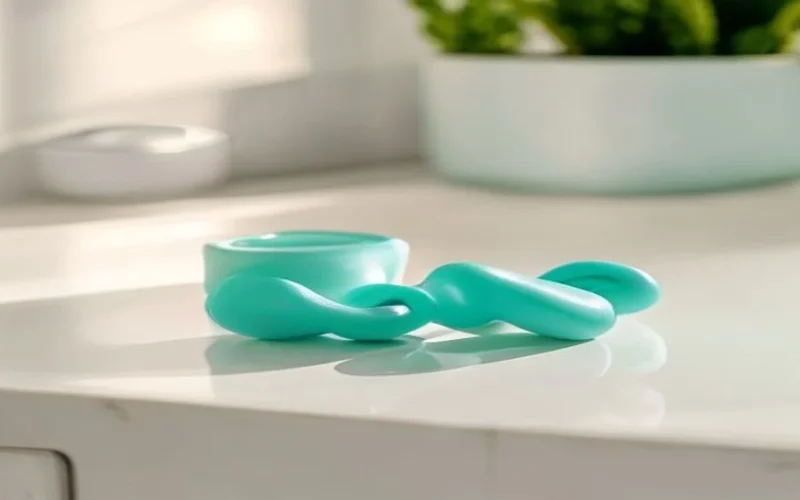
Hawley retainers have an acrylic plate that sits against the roof of the mouth or the inside of the lower teeth, with a wire across the front and clasps that grip the back teeth. Acrylic is porous at a microscopic level, so it picks up smells and stains more readily than smooth plastic. Plaque tends to collect at the junction between the wire and the acrylic, and under the clasps, so those are the places to brush most carefully. The wires can be bent out of shape, so handle them by the acrylic, not by the wire.
Clear plastic retainers are thin, tight and see-through, which means every scratch, stain and cloud shows. They cover the whole tooth surface, so any bacteria on them sit directly against the teeth for hours. They also change shape in heat, so water temperature matters more than with any other type. Do not bite them into place, and do not bend them to clean the inside.
Bonded retainers are cleaned in the mouth, like your teeth, and are covered in their own section below. They are exposed to the same plaque as your teeth and need the same attention, particularly along the gumline.
Questions to ask your orthodontist
- Which cleaners and tablets do you recommend for this retainer, and which should I avoid?
- Can I use denture tablets, and for how long?
- How often should I wear it, and do I need to clean it differently if I wear it all the time?
- What should I do if it cracks, loosens or no longer fits?
- If the retainer is bonded, how should I clean under the wire, and when should I see the hygienist?
The safest daily routine, and how to go further
Every day: rinse, brush, rinse, dry
- Take the retainer out using both hands, and avoid pulling at the wires or flexing the plastic.
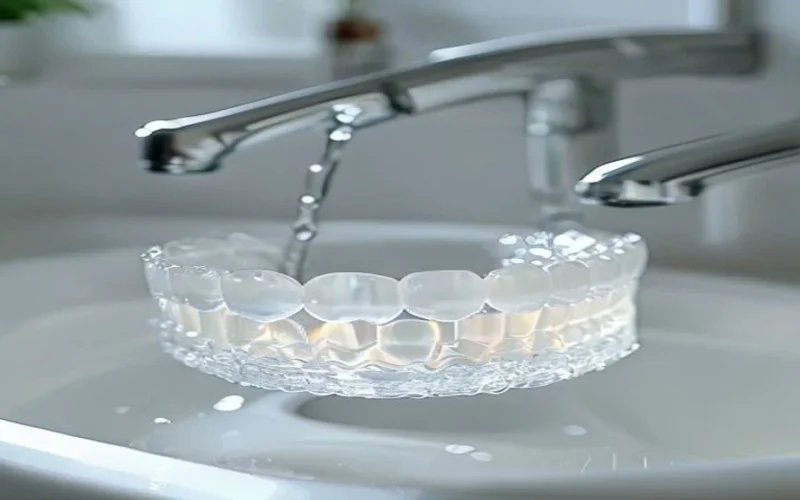
- Rinse it under cool or lukewarm tap water straight away, before saliva and food dry on.
- Put a small drop of mild, unperfumed liquid soap on a soft toothbrush, a children’s brush or a denture brush. Brush all surfaces gently, including the inside, the grooves and around the wires, for about 30 seconds.
- Rinse thoroughly under running water until there are no suds or taste of soap.
- Let it air dry on a clean surface, or place it in a clean, ventilated case. Brush your teeth before wearing it again.
Use a brush that is only for the retainer. Soft bristles, light pressure and small circles do the job. A soft toothbrush or a soft denture brush reaches the grooves. Plain soap and water, done daily, is more useful than an occasional intensive clean. Many people clean their retainer in the morning, and again before bed, and rinse it after meals if they wear it all day.
Why does the daily clean matter so much? A retainer sits against the teeth and gums in a warm, moist space, so a film of saliva, food particles and bacteria forms on it within hours, in the same way plaque forms on teeth. If that film is left, it hardens into deposits that are harder to remove, it gives the retainer a smell, and it keeps bacteria pressed against the teeth. Wearing a clean retainer is part of looking after your teeth and gums, not just the appliance.
Water temperature
Cool to lukewarm is the rule. Plastic retainers soften at temperatures that are not very high, and once warped the fit may be lost for good. Do not use boiling water, do not put a retainer in a dishwasher or microwave, and never leave it on a radiator, windowsill or car dashboard. If you are not sure, use cold water.
Which method suits whom? Someone who wears a retainer at night only, and cleans it every morning, can often manage with soap, a soft brush and an occasional tablet soak. Someone who wears it for most of the day, eats and drinks with it in, or has a tendency to get film on it may want a tablet soak more often. If you notice a build-up between soaks, shorten the interval, do not lengthen the time of each soak. Orthodontists generally also stress that you should keep wearing the retainer as instructed. Cleaning is there to keep it safe to wear, not to replace the wearing schedule.
Rinsing and drying
Rinse for long enough to remove all soap or cleaner, turning the retainer so water runs over every surface and through the grooves. Taste is a good indicator, because leftover cleaner leaves a bitter or minty taste. Then let it air dry on a clean tissue or in an open case. Do not dry it with a hairdryer or heat. If you put it away wet in a closed case, it stays damp and bacteria thrive, which is a common cause of smell.
Weekly: a gentle soak
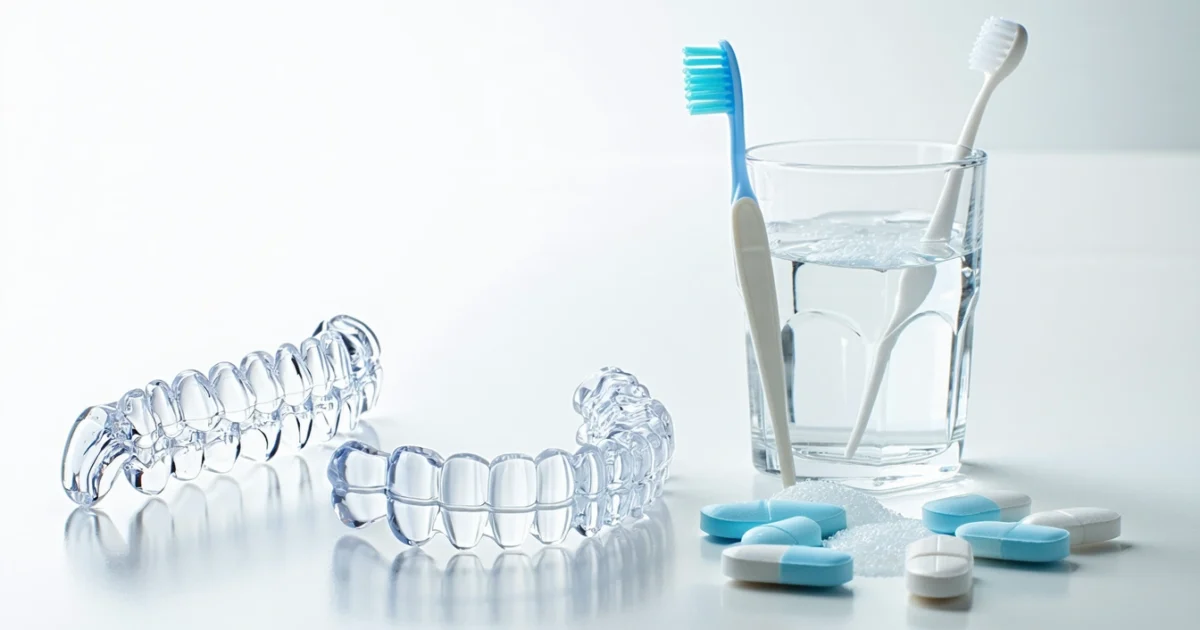
Once or twice a week, or as your orthodontist advises, give the retainer a soak. Retainer cleaning tablets are effervescent tablets that dissolve in a glass of cool or lukewarm water. Follow the pack for the amount of water and the soaking time, which is typically a short soak and no longer than the label says, then brush and rinse thoroughly. Do not leave a retainer soaking in a cleaner for hours unless the label says it is designed for overnight use, because long exposure can dull or damage some materials.
Stronger options and their cautions
| Option | What it does | Caution |
|---|---|---|
| Retainer cleaning tablets | Loosens plaque, film and odours | Follow the time on the label and rinse well |
| Denture cleaning tablets | Similar effervescent action | Check with your orthodontist first, as some makers advise against them for certain plastics and metal parts |
| Baking soda paste or soak | Mild cleaning and deodorising | Use a soak, or a loose paste with a soft brush, never a gritty scrub on clear plastic |
| Diluted white vinegar | Dissolves chalky mineral film | Short soaks only, with plenty of rinsing. Skip it if you have metal parts, a bonded wire or your orthodontist says no |
| Hydrogen peroxide | Used by some people for stains | Only if your orthodontist approves it. Use a low-strength, dental or pharmacy product, rinse thoroughly and never use bleach |
| Ultrasonic cleaner | Vibrations dislodge debris | A good option if you have one, used with water and a suitable solution as instructed. Not for bonded wires |
Never use bleach, chlorine products, or household disinfectants, and avoid strong acids. Take care with mouthwash too. Some alcohol-based ones can affect certain plastics over repeated exposure, so rinse the retainer after using mouthwash. If you use baking soda and vinegar at home, remember that the two cancel each other out when mixed, which our piece on baking soda and vinegar explains.
It is easy to overdo cleaning. More soaking, stronger solutions or harder brushing do not improve the result, and they speed up wear. If you find yourself repeating the same stronger treatment every few days to deal with smell or film, the problem is more likely scratched, aged material that will not come clean, and the answer is to speak to your orthodontist, not to escalate.
On ultrasonic cleaners: these small machines fill a tub with water and vibrate at high frequency, which shakes loose debris from grooves and hard-to-reach corners. They are a useful extra for Hawley and clear retainers, as long as you use cool or lukewarm water, follow the instructions, and keep the time short. Do not use them for bonded wires, and do not run them dry. They are not essential, and a soft brush and a good routine are enough.
Why toothpaste is not the answer
Most toothpastes contain abrasive particles designed to scrub enamel. On a retainer they leave fine scratches that cloud clear plastic and give bacteria more places to hide, which makes the retainer harder to keep clean and more likely to smell. Use a brush with mild soap or a proper cleaner instead.
If you have a sensitive mouth
Residue from perfumed soaps and strongly flavoured tablets can irritate some mouths or leave a lingering taste. If that applies to you, switch to an unperfumed soap, use less product, rinse for longer, and ask your dentist or pharmacist about a gentle option. If you notice soreness, swelling, or a rash, stop using the product and speak to a dentist or pharmacist.
If it is warped, or will not go back in
If a retainer has been exposed to heat and no longer fits, do not push it onto your teeth, bend it back or try to reshape it with hot water. A forced fit can hurt and may move teeth. Contact your orthodontist as soon as possible and explain what happened. They may be able to adjust it or make a replacement, and in the meantime they can tell you whether to wear it. Fit problems can also come from teeth moving when you have missed nights, so mention that.
Stains, white film and smells
| Problem | Likely cause | What to try |
|---|---|---|
| White chalky film | Mineral deposits from saliva and hard water, which is a thin layer of calculus | Retainer tablet soak, then a brief diluted vinegar soak if your orthodontist is happy with it. Persistent hard deposits need a hygienist |
| Yellow or brown tint | Tea, coffee, red wine, curry, smoking, or ageing plastic | Tablet soak and gentle brushing. Take it out when you drink anything but water |
| Bad smell or taste | Plaque and bacteria in scratches and grooves, or a damp case | Clean daily, soak weekly, dry fully and wash the case. A smell that stays means it needs replacing |
| Cloudy appearance | Scratches from toothpaste or abrasives, or ageing of the plastic | Gentle cleaning will not reverse scratches. Ask your orthodontist whether it needs replacing |
| Rough or sharp edges | Wear, cracks or chips | Stop wearing it and contact your orthodontist |
A white film on a retainer is usually a combination of dried saliva proteins and minerals, which can harden into tartar (calculus). It is more likely to build up if your saliva is rich in minerals, if you wear the retainer all day, and if cleaning has been irregular. It is not harmful in itself, but it makes the surface rougher, which holds more plaque, so it is worth removing early.
Do not scrape tartar off with a knife, a pin or a nail. It scratches the retainer and can break it. If a retainer has hard deposits that will not come off with a soak and a soft brush, your dentist or orthodontist can advise, and the hygienist can often clean it professionally. Do not use steel wool, nail brushes or pumice stones either.
Making the routine stick
The best cleaning method is the one you actually do. Tie it to something you already do, such as brushing your teeth, and keep the retainer brush and case beside the sink so it is not a separate job. For children and teenagers, a simple checklist helps: rinse, brush, rinse, case. Put a reminder to soak on a set day of the week. If you wear a retainer at night, clean it in the morning when you take it out, because overnight film dries quickly in the open air.
Bonded retainers: cleaning what you cannot take out
A bonded retainer is a thin wire glued behind your front teeth. Because it cannot be removed, plaque forms along it and between the teeth, and tartar may build up, which can irritate the gums. Normal floss cannot slide down between the teeth because the wire is in the way, so you need a different approach.
- Brush carefully with a soft brush and fluoride toothpaste, angling the bristles towards the gumline and along the wire on the inside of the teeth.
- Use floss threaders or super floss to pass floss under the wire, then clean the sides of each tooth with an up-and-down motion.
- Use interdental brushes around the wire where the gap allows. Choose the size your dentist or hygienist recommends.
- Consider a water flosser on a low setting to flush food and plaque from around the wire, as a supplement to the above.
- Do not bite hard foods such as crusty bread, apples and sweets directly with the front teeth, because they can break the bond.
- See the dentist or hygienist regularly and let them scale around the wire.
Many people with bonded retainers see their dentist or hygienist for regular scaling, which removes hard deposits that brushing cannot. Tell them you have a retainer, point out where it is, and ask for advice on how to clean it. Hygienists can also demonstrate floss threaders and interdental brushes, which is much easier than learning from a leaflet. If your gums bleed regularly around the wire, it is usually a sign of plaque, and improved cleaning often settles it within a couple of weeks. If it persists, tell your dentist.
If the wire feels loose, is sharp, has detached from a tooth or you notice teeth shifting, contact your orthodontist or dentist promptly. A broken bonded retainer can allow teeth to move, and you should not try to fix it yourself. Fixed retainers do not need tablets or soaking, and abrasive cleaners and scrapers are not suitable.
Storage, cases and travel
A good case protects the retainer from being crushed or thrown away, and a clean, dry one limits bacteria. The most common way retainers are lost is by wrapping them in a napkin or tissue at a meal, so always put them in the case. Look for a case with ventilation holes if you can, so it dries between uses. Wash the case with soap and warm water regularly, let it dry fully, and replace it if it is cracked or smells.
Pets deserve a second mention. Dogs in particular are drawn to the smell of a used retainer, and a chewed retainer cannot be repaired, so it needs a new impression and a new appliance. Keep the case shut and out of reach, including on bedside tables and in bags on the floor.
Looking after the case
The case can reinfect a clean retainer, so clean it too. Once a week, wash it with warm water and a little soap, brush the corners, rinse well and let it dry upside down with the lid open. Some people also wipe it with a diluted, dental-safe disinfectant, but soap and water is enough for most. Replace the case when it cracks, warps or cannot be got clean.
- Dry the retainer before putting it away, or leave it open to air for a few minutes first.
- Keep the case away from heat, such as a car dashboard, a bag in sunlight or a radiator.
- Store it out of reach of pets, since dogs love the taste of retainers. Label your case, so it does not get mixed up with someone else’s.
- When travelling, pack a hard case, a spare soft brush and a small supply of tablets in a dry pouch, and keep them in your hand luggage.
- Do not store the retainer in water unless your orthodontist says to.
Travel and eating out
Away from home, the same rules apply with fewer tools. Pack the case, a travel toothbrush, a few tablets in their wrapper, and a small bottle of cool water for rinsing. Never wrap the retainer in a napkin or put it in a pocket, because it is likely to be thrown away or crushed. If you are flying, keep it in your hand luggage. If you cannot soak it, a daily rinse and brush is a fine stopgap. If you go swimming, take it out and store it in the case, because chlorine and hot tubs are bad for retainers.
Replace worn cases and old brushes regularly, and check expiry dates on tablets and solutions. Damp or old product can lose its effect.
A short checklist of what to keep to hand
You do not need everything on this list, and plain soap and a soft brush cover daily care. These are the items that help if you want a complete set-up. The links are Amazon UK searches.
- Soft toothbrush, kept only for the retainer
A children’s size gets into the corners without scratching. Browse brushes → - Denture-style brush
A larger head with soft bristles that suits the acrylic of Hawley retainers. Browse denture brushes → - Retainer cleaning tablets
Look for a tablet intended for retainers and aligners, and follow the soaking time. Browse tablets → - Vented retainer case
A hard case with ventilation, large enough that the wires do not bend. Browse cases → - Floss threaders or super floss
For bonded retainers, to get floss under the wire. Browse floss → - Interdental brushes
Soft, small brushes for around the wire. Ask your hygienist for the right size. Browse brushes →
When to contact your orthodontist or dentist
- The retainer no longer fits, feels tight or loose, or you notice your teeth moving. Do not force it in.
- There are cracks, chips, rough or sharp edges that irritate your tongue or gums.
- It looks warped, even slightly, after heat exposure.
- Heavy, hard deposits remain after soaking and brushing.
- A strong smell or taste that does not go with cleaning, or your gums are red, sore or bleeding.
- A bonded wire has come away, snapped or become sharp.
- You have lost it. Contact them soon, because teeth can begin to shift within days to weeks if you stop wearing it.
There is no set lifespan for a retainer. Some last years and others crack sooner, depending on wear, grinding and care. Replace it when your orthodontist advises, when it is damaged or when it can no longer be kept clean. Regular check-ups at the dentist are a good time to have the retainer looked at. Prices for replacements and hygienist visits vary, so ask for a quote. The same gentle, no-abrasives approach applies to other small items you put in or near your mouth and ears, and our guides to cleaning ear plugs and cleaning glasses follow it. For other delicate or awkward items, see cleaning a laptop screen safely, cleaning ears safely and a stainless steel sink, or the dishwasher filter and toaster guides, where the same idea of gentle, regular cleaning applies. You can also browse the appliances and other categories, or go back to the homepage.
Retainer questions answered
How often should I clean my retainer?
Rinse and brush it gently every day, ideally morning and night, and soak it once or twice a week as the product or your orthodontist advises. If you wear it all day, rinse it after meals.
Can I use toothpaste on a retainer?
It is best not to. Toothpaste contains abrasives that scratch plastic and acrylic, leaving fine marks where bacteria collect. Use a soft brush with mild, unperfumed soap or a retainer cleaner instead.
What water temperature is safe?
Use cool or lukewarm water. Heat can warp plastic retainers and change the fit, so avoid hot or boiling water, dishwashers, microwaves and hot cars.
How do I clean a bonded retainer?
Brush it carefully, use floss threaders or super floss under the wire, add interdental brushes or a low-setting water flosser if suitable, and see your dentist or hygienist for regular scaling. Do not try to remove it.
Can I use denture tablets?
Many people do, but it depends on the retainer and the tablet. Check the pack and ask your orthodontist, particularly for clear plastic or retainers with metal parts. Follow the soak time and rinse well.
Can I soak my retainer overnight?
Only if the product says it is designed for overnight use. Most tablets are meant for short soaks, and long exposure can dull or damage some retainers. Soaking in plain water is also unnecessary, and a dry, ventilated case is better.
Why does my retainer smell?
Bacteria build up in scratches and grooves, and in a damp case. Clean it daily, soak it weekly, dry it fully and wash the case. If the smell does not clear, or the retainer is cloudy and scratched, ask your orthodontist whether it is time to replace it.