The things that ruin a bath are almost never dirt. They are scouring pads, gritty creams, the wrong solvent on acrylic, two products mixed in a closed bathroom, or a slip on a wet surface while you scrub. Cleaning an enamel bath is easy when you know what to avoid, so this guide starts with what can go wrong and what to check before you pick up a sponge, then moves from the safest method to stronger options.
The short answer for a modern steel or cast-iron enamel bath is washing-up liquid and warm water for everyday care, a diluted white vinegar spray for limescale and soap scum, and a bicarbonate of soda paste for stubborn marks, all with a soft cloth or sponge. Enamel scratches permanently and cannot be polished back, so no scourers, gritty cream cleaners or wire wool. But “bath” covers two very different surfaces in UK homes, hard glassy enamel and softer acrylic, and a method that is safe on one can damage the other.
What can go wrong, and how to avoid it
| Risk | What causes it | How to avoid it |
|---|---|---|
| Permanent scratches | Scouring pads, the green side of a sponge, gritty creams, wire wool | Soft cloths and sponges only; let time and a gentle paste do the work |
| Fumes and chemical burns | Mixing bleach with vinegar, limescale remover or other cleaners; poor ventilation | Use one product at a time, rinse between products, open a window and wear gloves. Our list of cleaning products you should never mix explains the combinations to avoid |
| Damaged acrylic | Acetone, white spirit, other solvents and neat bleach | Keep solvents away from acrylic; check the maker’s care guidance |
| Dulled or marked enamel | Strong acids or bleach left on for too long | Check the product label, keep contact times short and rinse thoroughly |
| Damaged taps and fittings | Acid left on chrome or stone surrounds | Wipe and rinse promptly |
| Slips and falls | Wet enamel or acrylic is slippery | Put a towel or bath mat on the floor, and avoid standing in the bath while cleaning if you can |
Wear rubber gloves, keep the bathroom ventilated, and never leave children or pets with open cleaning products. If you ever get a splash in your eyes or feel unwell from fumes, move to fresh air and follow the product’s first-aid advice.
Identify the bath, then read the label
Thirty seconds now saves a scratched bath later. The two materials look similar but behave very differently.
| Enamel (steel or cast iron) | Acrylic | |
|---|---|---|
| Feel and sound | Cold, hard, glassy; a tap sounds solid and rings slightly | Warm to the touch, flexes slightly underfoot; tap sounds dull and plasticky |
| Weight | Heavy, cast iron especially | Light |
| Main weakness | Chips (which then rust) and scratches from abrasives | Scratches very easily; can be dulled or melted by harsh chemicals |
| Generally safe | Mild detergent, diluted vinegar, bicarb paste, soft cloth | Mild detergent, bicarb paste, soft cloth, and go even gentler |
| Never use | Scourers, gritty creams, wire wool | All of the above plus acetone, white spirit, strong solvents and neat bleach |
Not sure? Treat it as the more delicate of the two. If you still have the manufacturer’s care guidance, read it, because some finishes and coatings have their own limits on acids and bleach. A hidden test patch, down by the taps or near the overflow, shows how the surface reacts before you commit.
The safest method: an enamel bath, step by step
- Rinse the bath with warm water to float off loose grime and wet the surface.
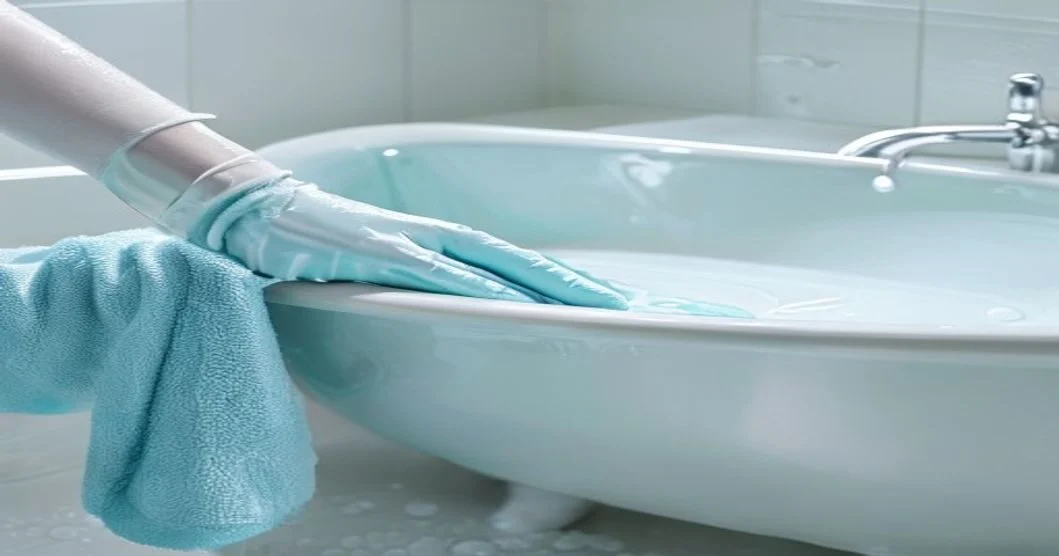
- Wash with warm soapy water. A few drops of washing-up liquid on a soft cloth or sponge, worked over the whole surface, handles routine dirt and a surprising amount of light soap scum.
- Tackle limescale and scum with diluted vinegar. Spray a 50/50 white-vinegar-and-water mix onto the affected areas, leave it 5 to 10 minutes to dissolve the deposits, then wipe away with a soft cloth. Reapply for heavy build-up rather than scrubbing harder.
- Lift stubborn stains with a bicarb paste. Mix bicarbonate of soda with a little water into a paste, spread it on the stain, leave a few minutes, and work gently with a soft sponge or old toothbrush.
- Rinse thoroughly. Enamel holds cleaning residue that dulls the shine and can mark, so rinse until the water runs clear.
- Dry to a shine. A quick buff with a dry microfibre cloth prevents new watermarks and limescale.
Do this weekly, using ordinary home ingredients, and the deep-clean problems below barely get a chance to form. Our piece on whether baking soda and vinegar really clean explains why these are gentle rather than powerful, which is exactly what you want here. Use vinegar and bicarb one after the other rather than together in a closed container, and rinse between steps.
Acrylic baths need an even lighter touch
Acrylic is more forgiving of chips but far more prone to scratches. Warm soapy water and a soft cloth is the everyday clean. For soap scum, a bicarbonate of soda paste is the safest first choice. Use diluted vinegar sparingly and briefly, because prolonged acid contact can dull some acrylic finishes. Rinse and buff dry with a microfibre cloth.
The acrylic warnings really matter. Never use acetone (nail varnish remover), white spirit or other solvents, because they can etch or even partially melt acrylic, and keep neat bleach off it too. Light scratches in acrylic can sometimes be improved with a specialist acrylic polish used exactly as the instructions say, which is a repair option enamel does not have. Test somewhere hidden first.
Stronger options, with cautions
Limescale around taps, plughole and waterline
Limescale, the chalky, rough build-up round the taps, plughole and waterline, is a common bath problem in hard-water areas, and it is a chemistry job. Acid dissolves it, scrubbing does not.
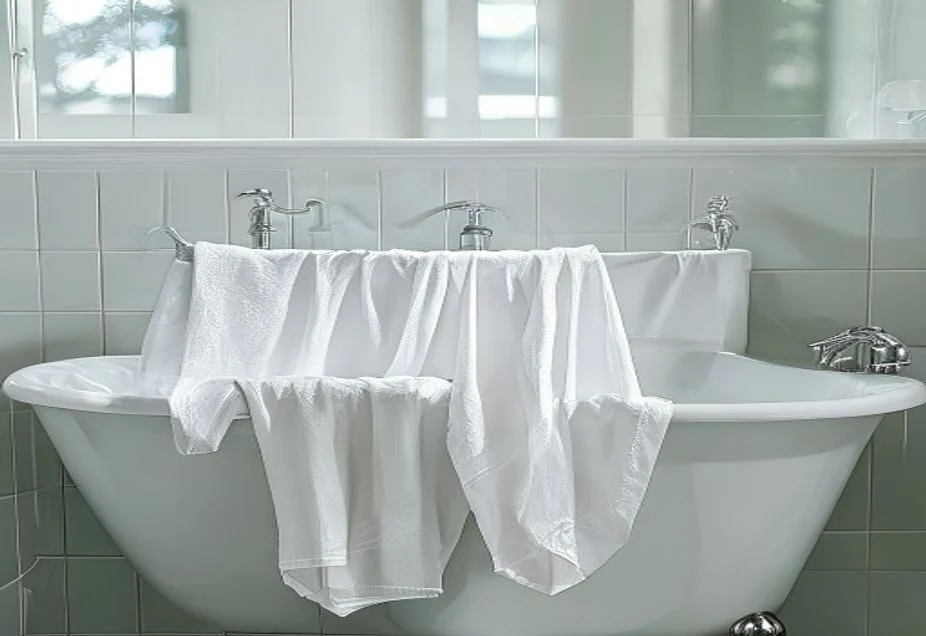
- The vinegar-soaked cloth trick is the best method for the tap area. Soak cloths or kitchen roll in white vinegar, drape them over the limescaled taps and surrounds so they stay in contact, leave 30 to 60 minutes, then wipe and rinse. Draping beats spraying because the acid cannot run off before it works.
- Around the plughole and waterline: spray 50/50 vinegar, leave 10 minutes, wipe, and repeat for heavy scale. An old toothbrush gets into the awkward rim.
- A lemon rubbed directly on light scale is a gentle alternative.
Important limits: on chrome taps and any stone or composite surround, do not leave acid on too long, because it can damage the finish. Wipe and rinse promptly. On acrylic, keep vinegar contact short. A shop-bought limescale remover can be stronger than vinegar and some contain strong acids, so read the label to see whether it is safe for your bath and taps, follow the contact time, and never mix it with bleach. The same limescale problem afflicts the shower, and our guide to removing limescale from a shower head uses the same soak method. If water is slow to leave the bath, the shower drain guide has tips that also apply to a bath plughole.
Soap scum and the tidemark
That greasy grey film and the ring around the waterline are soap scum, a mix of soap, body oils and hard-water minerals. Washing-up liquid cuts the grease, and a bicarbonate of soda paste lifts the film without scratching. For a heavy tidemark, spread bicarb paste along the ring, leave it ten minutes, then work gently with a soft sponge and rinse. A vinegar spray afterwards dissolves the mineral part and leaves the surface clean.
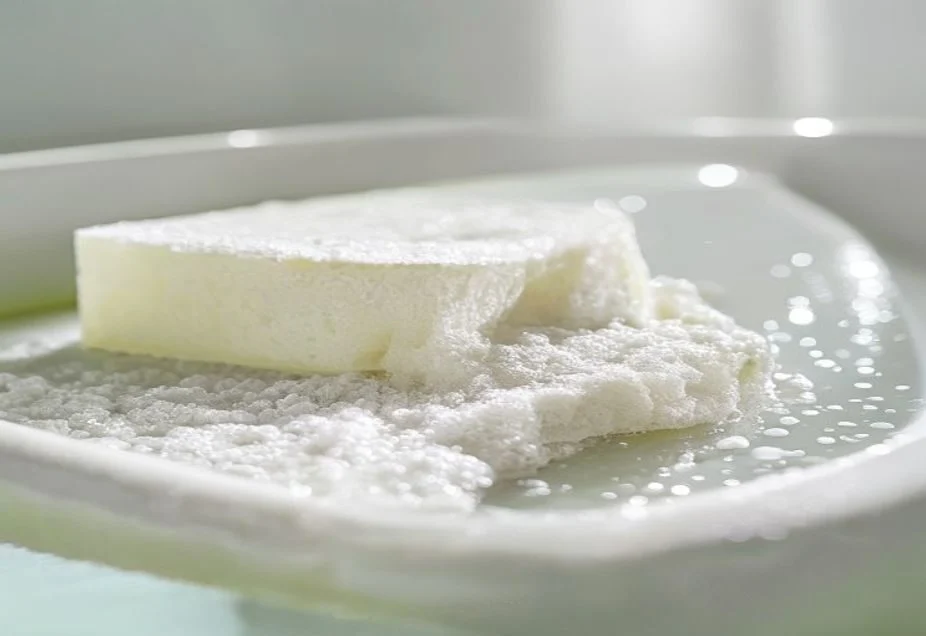
Prevent it returning: switching from bar soap to shower gel or a liquid body wash cuts scum, because bar soap is a main culprit. A quick rinse-and-wipe after use stops the ring ever setting.
Stains on enamel
| Stain | How to remove it |
|---|---|
| Yellowing or age dullness | Bicarb paste over the whole base, left 15 minutes, gently sponged and rinsed; repeat weekly for old baths |
| Rust marks (from a dripping tap or a tin left on the edge) | A paste of cream of tartar and a little lemon juice, left on the spot, then gently wiped. Never abrasives, which spread rust into scratches |
| Blue-green stains under taps | Copper and limescale from dripping taps; a vinegar soak lifts it, then fix the drip or it returns |
| Hair dye, fake tan, bath bomb dye | Bicarb paste promptly; for fresh spills, a soapy wipe straight away stops them setting |
| Black spots or mould at sealant edges | Not the enamel. It is the silicone sealant, so see the mould section below |
The golden rule across all of these is time and repetition, not force. Leaving a gentle paste to work for longer, twice, beats scrubbing hard once, and scrubbing hard is exactly what permanently scratches the enamel you are trying to save. Do not mix hydrogen peroxide with vinegar, and do not use peroxide in a closed container.
Bleach and mould
Bleach is a last resort on enamel. Well diluted and rinsed off quickly, it can lift organic staining, but left to sit it can dull enamel over time, and it does nothing for limescale, which is mineral rather than organic. Follow the label, ventilate, never mix it with vinegar, limescale remover or any other cleaner, and avoid it entirely on acrylic. For the black mould you often see around a bath, the target is the silicone sealant along the edge, not the enamel, and a mould-and-mildew spray used for its stated contact time works better than bleach on the bath. The full method is in our guide to cleaning mould.
A shelf checklist for bath care
A few safe, non-abrasive items cover everything above. Disclosure: Cleaners Guide is a participant in the Amazon Associates programme, so if you buy through links on this page we may earn a small commission at no extra cost to you. The links open Amazon UK searches, so compare options and check the current price.
- ☐ Non-scratch bath sponge. Soft, not scouring, with no abrasive green side. Replace it when it starts to fray or smell. Search sponges →
- ☐ Non-abrasive bathroom cleaner spray. The label should say it is safe for baths and enamel or acrylic. Avoid anything labelled as a scouring or abrasive formula. Search bathroom cleaners →
- ☐ Limescale remover. Check the label for the acid type and for use on enamel and acrylic, and keep it off chrome. Follow contact times and rinse well. Search limescale removers → Search bath cleaners →
- ☐ Cream cleaner. Choose a fine, non-abrasive formula, not a gritty scouring cream. Test on a hidden spot, especially on acrylic. Search cream cleaners →
- ☐ Rubber gloves. Long enough to keep splashes off your wrists, with a grippy palm to hold wet sponges. Search gloves →
- ☐ Enamel repair kit. For small chips only, to stop rust spreading. Match the colour and follow the instructions, and check it is meant for baths. Search repair kits →
When cleaning is not enough: chips, rust and resurfacing
Be realistic about an old enamel bath. Once the enamel has chipped through to the metal, water reaches the steel or iron beneath and it rusts, and no cleaner fixes that, because the surface is gone, not dirty. Small chips can be patched with an enamel repair kit to stop rust spreading. A bath that is chipped and stained across large areas is a candidate for professional resurfacing (re-enamelling), which can cost less than replacing the bath and re-tiling around it, though you should get quotes. Do not dry sand or scrape old coatings on a very old bath yourself, because old finishes can contain hazardous substances such as lead. Leave that to a professional.
The signs you have reached that point are brown rust bleeding up through the surface, enamel worn thin and grey where it cannot be polished back, or a rough patch that catches a cloth. Everything short of that is a cleaning job, and most “ruined” old baths just need the patient routine above, done a few times.
| Problem | Method | Caution |
|---|---|---|
| Everyday grime | Non abrasive bath cleaner and a cloth | No scouring powders on enamel |
| Limescale | White vinegar or a limescale remover, then rinse | Keep acids off nearby chrome, rinse well |
| Soap scum and tidemark | Cream cleaner or a bicarb paste | Do not use wire wool |
| Stains | Bicarb paste, gentle bleach only if advised | Patch test coloured enamel |
Keeping a bath clean with less effort
- Rinse and wipe after each use. Twenty seconds with the shower head and a cloth stops scum and scale ever setting.
- Switch bar soap for body wash to cut soap scum at the source.
- Fix dripping taps. The drip is what causes rust and blue-green stains.
- Buff dry occasionally in hard-water areas so limescale never gets a foothold.
- Never stand tins, razors or wire baskets on the enamel, as they rust-mark and scratch.
- Do a proper clean weekly as part of the wider bathroom deep-clean routine, and the bath never becomes a big job.
Bath cleaning questions, answered
Can I use a melamine sponge on an enamel bath?
Use it cautiously. Melamine sponges work like very fine abrasives, so they can dull a glossy finish, especially on acrylic. Test a hidden patch, use light pressure and plenty of water, and stop if the shine changes. A soft sponge with bicarb paste is the safer first choice.
Is it safe to mix vinegar and bicarbonate of soda in the bath?
The fizz is mostly harmless but it neutralises both, so you gain little. Use them one after the other: paste first, then a vinegar spray, rinsing between steps. Never add bleach or other cleaners to either, and do not seal the mixture in a bottle, as pressure can build.
Why does my bath look dull after cleaning?
Usually leftover residue from cleaner, soap or minerals, so rinse thoroughly and buff dry with microfibre. If the dullness is permanent, the surface may have been scratched or etched by an abrasive or harsh product, which cleaning cannot reverse. Acrylic can sometimes be improved with a specialist polish.
Can I leave cleaner on the bath overnight?
Generally no. Bicarb paste can be left for a short while, but vinegar, limescale remover and bleach can mark finishes or fittings if left too long. Follow the label contact time, rinse thoroughly and never leave strong products unattended near children or pets.
Can I use a steam cleaner on a bath?
A handheld steamer can loosen grime around taps, plugholes and sealant, but keep it moving, avoid prolonged heat on acrylic and check the maker’s advice. Do not point steam at damaged sealant or electrical fittings. Wipe the surface afterwards so loosened dirt does not dry back on.
What should I do about a non-slip textured bath?
Textured patches trap dirt and scum, so a soft brush works better than a flat sponge. Use warm soapy water, a gentle bicarb paste and a soft nylon or old toothbrush, then rinse well. Avoid stiff scourers, which can wear the texture and reduce grip.
How do I clean the bath without slipping?
Put a towel or non-slip mat on the floor beside the bath, wear shoes or grippy socks, and avoid standing in a wet bath while cleaning. Kneel on a folded towel instead. Rinse soap off the surface, because residue makes the bath slippier.
Is a shop-bought limescale remover safe on enamel?
Many are, but products vary in strength and some are meant for toilets or kettles only. Check the label for baths and enamel, test a hidden patch, keep contact times short, ventilate, rinse well and keep it off acrylic and chrome unless the label says it is safe.