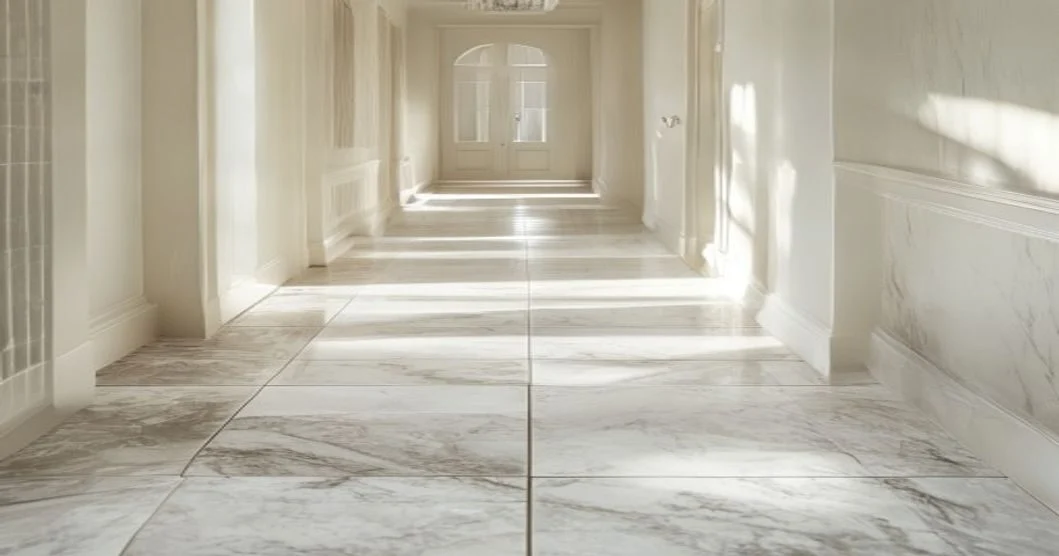
Clean limestone with warm water and a pH-neutral stone cleaner on a soft cloth or well-wrung mop, and never with vinegar, lemon juice, limescale remover or any other acid. Limestone is calcium carbonate, and acid dissolves the surface on contact, leaving a dull, rough patch called an etch mark that cannot be wiped away. Blot spills at once, avoid abrasive scrubbers, and keep the stone sealed. That one rule protects limestone floors, fireplaces and patios alike.
The rest of this page gives the safe method for each surface, how to draw out stains and soot, why black limestone paving fades and what to do about it, and how to seal the stone so spills are easier to deal with.
Disclosure: Cleaners Guide is a participant in the Amazon Associates programme, so if you buy through links on this page we may earn a small commission at no extra cost to you. It never changes our recommendations, we suggest products because they work and we point out cheaper options where they do the same job. Prices and availability change, so always check the current price before buying.
Quick reference: what to use where
| Surface | Method | Caution |
|---|---|---|
| Limestone floor | pH neutral stone cleaner and a mop | Never vinegar or lemon, they etch |
| Limestone fireplace | Damp cloth and a mild stone soap | Blot spills fast, no acids |
| Limestone patio | Soft brush and a stone safe patio cleaner | Skip strong acids and harsh jet washing |
| Stains | A poultice for oil, gentle cleaner for organic | Test in a hidden spot first |
Limestone is a beautiful natural stone, but it is soft and porous, and the cleaning advice that is fine for ceramic tile will slowly ruin it. Wherever it appears in a UK home, in floors, fireplace surrounds, worktops or garden paving, much of the damage on limestone is not dirt but etching from acidic cleaners and everyday spills like wine, citrus and coffee.
Why acid is the one thing to avoid
Limestone is calcium carbonate, and any acid reacts with it, dissolving the surface and leaving a dull, rough, lighter patch called an etch mark. Etching is not a stain sitting on top. It is damage to the stone.
The list of things that etch limestone is longer than people expect:
- Cleaning products: vinegar, lemon juice, limescale remover, descaler and many bathroom and kitchen sprays that are mildly acidic. Bleach is not an acid, but it can discolour stone and wear down sealers, so it is best avoided too.
- Everyday spills: wine, fruit juice, citrus, tomato, coffee, fizzy drinks, and even some toiletries on a bathroom floor.
So the rule is pH-neutral cleaner only, and wipe acidic spills the instant they happen. If you are ever unsure whether a product is safe, it is not worth the risk. A dedicated natural-stone cleaner costs little and removes the doubt. The same chemistry governs marble and Victorian encaustic tiles, which we cover in our old and Victorian floor tiles guide.
Limestone floors
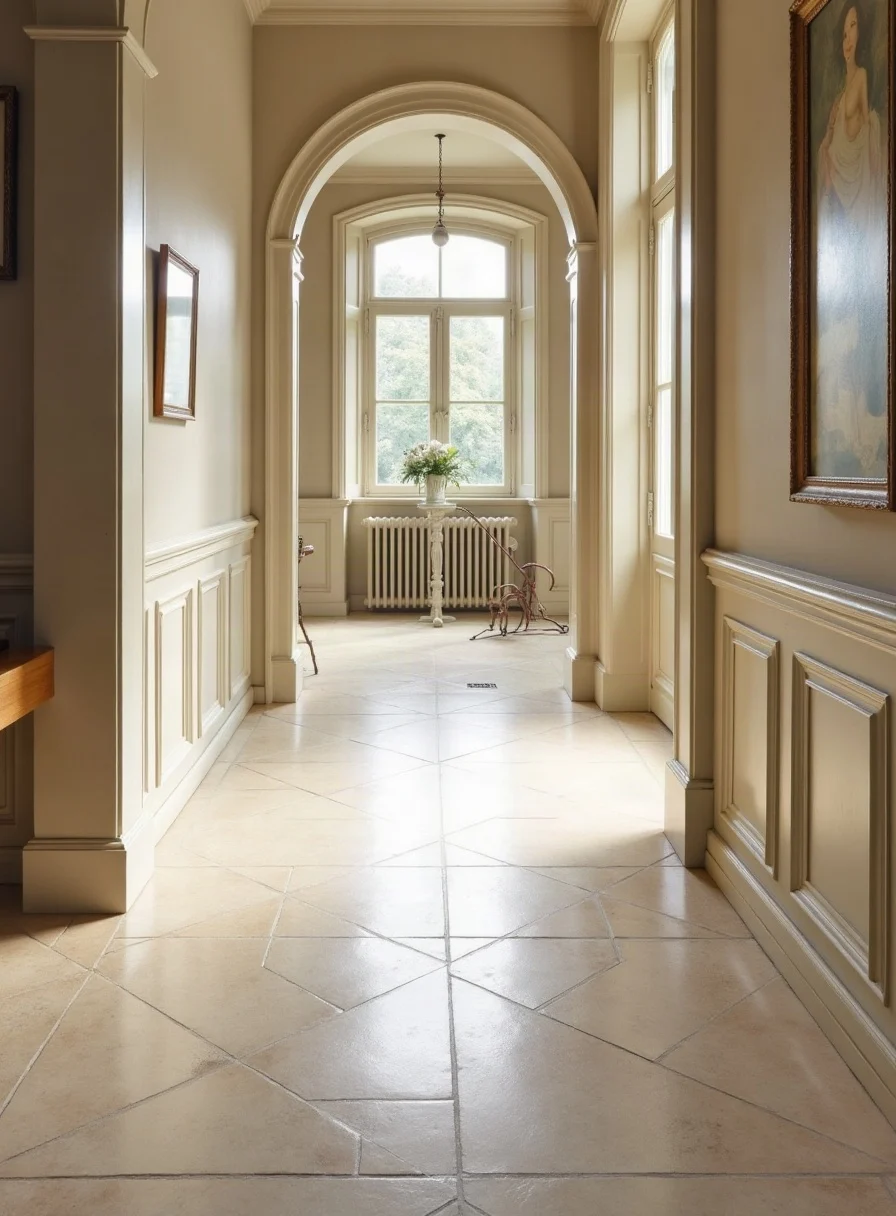
A pH-neutral limestone floor cleaner is the product to look for. The label should say it is safe for natural stone or limestone, and ideally state that it is acid-free. Dilute it exactly as the bottle says, because more is not better and a heavy mix leaves a film.
- Sweep or vacuum thoroughly first. Grit is abrasive and scratches soft limestone when dragged by a mop, so get it all up, including along the grout lines. (Quarry-tiled floors have their own quarry tile guide.)
- Mop with warm water and a pH-neutral stone cleaner, following the dilution on the bottle. Use a soft, well-wrung mop, because limestone does not want to sit under standing water.
- Work in sections and change the water often. Dirty water just redeposits grime and dulls the finish.
- Rinse with clean water to remove any cleaner residue, then dry or buff with a soft cloth to prevent watermarks and streaks.
For daily upkeep, a dry sweep or vacuum plus an occasional damp pH-neutral mop keeps a sealed limestone floor looking its best. Put doormats at entrances to catch grit, and use felt pads under furniture so it does not scratch. Avoid steam mops on limestone, as the heat and moisture can damage the stone and degrade the sealer over time. Grout between limestone tiles needs the same acid-free care, and our grout cleaning guide shows which of its methods to skip on natural stone.
Kitchens and bathrooms
Limestone in a kitchen or bathroom meets acid every day: citrus, tomato, wine, shampoo and limescale. Wipe spills straight away with a damp cloth, then dry the area. Bathroom floors also collect hard-water marks, which are best prevented by drying the stone after showers rather than treated afterwards with a descaler. In a busy kitchen, a doormat at the garden door and a small washable rug by the cooker or sink protect the spots that take the most wear.
Limestone fireplaces
Fireplaces are the trickiest limestone job, because they combine a delicate, often polished surface with soot, smoke staining and heat. The stone is the same acid-sensitive calcium carbonate, so the no-acid rule applies, plus a few fireplace-specific points.

- Routine dust and light marks: a soft dry brush or cloth, then a wipe with a barely damp cloth and pH-neutral stone cleaner. Dry immediately.
- Soot and smoke stains: these sink into the porous stone, so do not scrub them, which grinds them in. Use a specialist poultice, a paste that draws the stain out of the stone as it dries, or a stone-safe soot remover, following the product instructions. Repeat rather than resorting to anything harsh.
- Greasy marks and fingerprints (common on a mantel): pH-neutral cleaner and a soft cloth, and a poultice for anything that has soaked in.
- Never use bleach, acidic cleaners or abrasive pads. They will etch or scratch a fireplace that is often the focal point of the room.
Because a limestone fireplace is so porous and prominent, it is worth having it professionally sealed, and worth calling a stone-restoration specialist for heavy soot staining or etch damage rather than risking a valuable surround. A honed limestone surround marked by one acidic wipe is an expensive mistake. Never clean a fireplace while it is warm or in use.
Patios, paving and the black limestone problem
Outdoor limestone faces a different enemy: algae, moss, black spots and general weathering rather than kitchen spills. It is more robust outdoors than a polished indoor floor, but it is still acid-sensitive stone, so the product rules hold.
- Sweep off loose debris, then wet the patio and scrub with warm water and a stone-safe or pH-neutral patio cleaner using a stiff (but not wire) brush.
- For algae, moss and green growth, use a dedicated patio or stone cleaner, or a specialist algae remover made for natural stone. Rinse thoroughly.
- Rinse well with clean water. A garden hose is ideal, and the pressure should stay gentle.
Two important don’ts for limestone paving. First, avoid patio cleaners containing acid, because some brick and patio cleaners are hydrochloric-acid based and will etch and pit limestone. Check the label says stone-safe. Second, go easy with the pressure washer. High pressure erodes soft limestone, opens the surface to more staining and can blast out jointing. If you must use one, keep it on a low setting, use a fan nozzle and keep your distance. The same gentle approach applies to a block paving driveway, and the wider picture, with costs and when to call in a pro, is in our patio cleaning guide.
Why black limestone paving fades, and what to do
Black limestone is hugely popular for patios, and it comes with one well-known quirk: it naturally fades to a grey, patchy, weathered look once it is laid outside and exposed to UV and rain. This is not dirt and it is not a cleaning failure. It is the stone’s natural behaviour, and scrubbing will not bring the black back. The fix is a colour-enhancing sealer made for black limestone, which restores and deepens the dark colour and then protects it. Clean the paving first, let it dry completely, then apply the enhancer per the instructions. Expect to reapply periodically, as outdoor sealers wear.
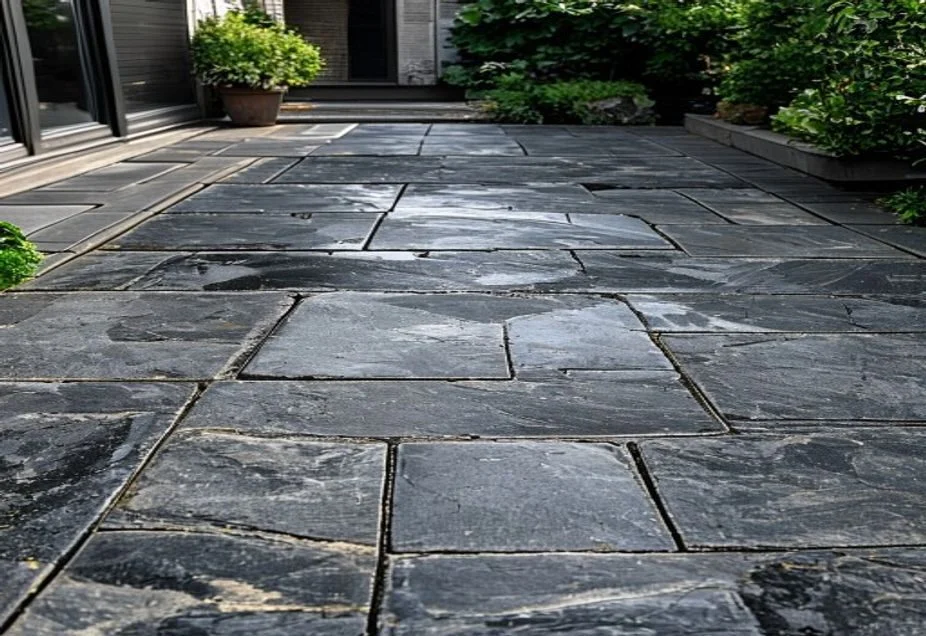
You may also see a white, powdery bloom on new limestone paving. That is efflorescence, mineral salts working out of the stone and jointing. Brush it off dry. It usually clears over the first months as the stone settles, and a specialist efflorescence remover handles stubborn cases.
Getting stains out of limestone
Because limestone is porous, stains sink in, so the tool is usually a poultice (a paste that draws the stain out as it dries), not scrubbing. Match the approach to the stain. For a ready-made option, look for a stone poultice powder that names limestone or natural stone on the pack, and follow its instructions for covering, drying time and removal.
| Stain | Safe approach |
|---|---|
| Etch marks (dull spots from acid) | Not a stain but surface damage. Light etching on polished limestone can sometimes be improved with stone polishing powder, and deep etching needs professional honing |
| Oil and grease | A poultice (stone poultice powder, or a bicarb paste for light marks) drawn out over several hours and repeated as needed |
| Organic (wine, coffee, food, leaves) | pH-neutral cleaner first. For set-in stains, a stone-safe poultice, sometimes with a little hydrogen peroxide for pale stone (test first) |
| Rust (from metal furniture) | A stone-safe rust remover. Many are acidic, so use only one labelled for natural stone |
| Soot (fireplaces) | Poultice or stone-safe soot remover. Never scrub or use acid |
The recurring theme: draw stains out, do not grind them in, and never reach for acid. Patience with a poultice beats aggression every time on porous stone. Always try a method on a hidden spot first, and if the stone is valuable or the stain is large, ask a stone specialist. Our kitchen worktops guide has more on how different surfaces cope with kitchen spills.
Sealing limestone
Because limestone is so porous, sealing is not optional maintenance. It is what stands between the stone and every spill. An unsealed limestone floor or worktop stains and etches far more easily, while a sealed one gives you time to wipe a spill before it soaks in.
- Clean and dry the stone fully first. Sealing over dirt or damp traps it in. After a deep clean, let limestone dry for a day or more.
- Use an impregnating (penetrating) sealer made for limestone or natural stone. It soaks in and blocks the pores without leaving a surface film. Indoors, a colour-neutral one keeps the natural look, and for black limestone paving, use a colour-enhancing sealer. A limestone stone sealer should say on the label whether it is for indoor or outdoor use.
- Apply thin, even coats per the instructions, wiping off excess before it dries to a haze.
- Test and reseal periodically. Drip water on the stone. If it soaks in and darkens rather than beading, it is time to reseal. As a rough guide that is every year or two indoors and sooner on a busy floor or outdoor paving, but follow the sealer’s own instructions.
Sealing does not make limestone bulletproof. You still wipe acidic spills fast, because a strong enough acid can etch even through a worn sealer, but it transforms how forgiving the stone is day to day. The main habits that undo all this are using vinegar or limescale remover, scrubbing soot, skipping the seal, steam cleaning and expecting black limestone to stay black outdoors.
Five things worth having for limestone
You do not need much. Pick from this list, and check each label says it is safe for natural stone before you buy. The links go to Amazon UK searches.
Limestone questions, answered briefly
Can I use washing-up liquid on limestone? A very small amount in plenty of warm water is generally fine for light cleaning, but it can leave a film if you do not rinse well. A pH-neutral stone cleaner is the safer, residue-free choice, and the better option for regular use.
Is bicarbonate of soda safe on limestone? Bicarb is only mildly alkaline, so it will not etch the stone the way acid does. It suits poultices for light oil marks. Do not use it as a gritty scouring powder, because rubbing it in can scratch soft limestone.
Can I use bleach on limestone? It is best avoided. Bleach is not an acid, but it can discolour stone and wear down sealers, and mixing it with other products is dangerous. A pH-neutral cleaner removes everyday dirt, and a stone specialist can advise on stubborn staining.
Is limestone treated the same as marble? For cleaning, yes. Both are calcium-based stones that etch with acids, so the same rules apply: pH-neutral cleaner, quick spill removal, soft cloths and a good sealer. Limestone is usually more porous, so staining is a bigger risk.
What should I do about limescale on limestone in a bathroom? Do not use a descaler, because most are acidic and will etch the stone. Wipe the surface dry after use to stop water drying into a deposit, and ask a stone specialist if a buildup has formed. Sealing helps water bead and run off.