Karndean usually goes wrong in a few familiar ways. It turns dull or hazy, it streaks, it picks up black scuffs, or it starts to feel faintly sticky underfoot. Nearly all of these come from one of three causes: grit scratching the surface, cleaner residue building up, or the wrong product being used somewhere along the way.
Karndean is luxury vinyl tile (LVT). It is tougher and lower-maintenance than the wood or stone it imitates, but the protective wear layer that gives it that durability is exactly what harsh cleaning damages. This page starts with the symptoms, then gives fixes in order from easiest to hardest, and finishes with the signs that mean it is time to contact your retailer or fitter.
Disclosure: Cleaners Guide is a participant in the Amazon Associates programme, so if you buy through links on this page we may earn a small commission at no extra cost to you. It never changes our recommendations, we suggest products because they work and we point out cheaper options where they do the same job. Prices and availability change, so always check the current price before buying.
What is your floor telling you?
| What you see | Likely cause | Start with |
|---|---|---|
| Dull, hazy or cloudy finish | Residue from washing-up liquid, wax or a non-neutral cleaner, or surface wear | A rinse mop, then a deep clean and dressing (see the dull floor section) |
| Streaks and smears after mopping | Too much cleaner, dirty water or a soaking-wet mop | Re-mop with clean water and a well-wrung microfibre mop |
| Sticky or tacky feel | Over-strong or undiluted cleaner left to dry | Rinse with clean water and re-mop |
| Black scuffs | Shoe soles and furniture rubbing | A dry or barely damp cloth, then a pencil eraser |
| Fine scratches | Grit dragged underfoot or furniture moved without pads | Prevention, because the wear layer cannot be re-sanded. Light marks may blend after cleaning |
| Yellow or brown patches | Rubber or latex backing from a mat, or strong chemicals | Try pH-neutral cleaner, but this may be permanent |
| Lifting edges, gaps or bubbling | Moisture getting through the joints, or a fitting problem | Stop wet cleaning and contact your fitter or retailer |
The baseline: what to use and what to avoid
Before you troubleshoot anything else, check what is going on the floor. A surprising number of problems are caused by a cleaner that should never have been used on vinyl.
| Use these | Never use these |
|---|---|
| Karndean Clean (pH-neutral, purpose-made) | Steam mops (can void the warranty) |
| Any pH-neutral floor cleaner safe for vinyl | Bleach |
| Flat microfibre mop | Ammonia and ammonia-based cleaners |
| Soft broom or vacuum (hard-floor setting) | Abrasive scourers, wire wool, scrubbing pads |
| Warm water, well wrung out | Washing-up liquid on a regular basis (leaves a dulling film over time) |
| Karndean Refresh (protective dressing) | Wax and silicone polishes, solvents, white spirit |
Karndean does not recommend steam mops, and using one can void your warranty. It is a common mistake because steam mops are marketed as safe for sealed hard floors, but Karndean is vinyl. The heat and forced moisture can get into the joints and the wear layer, which can cause discolouration, lifting and deterioration over time. A flat microfibre mop with pH-neutral cleaner cleans just as well without the risk. If you have been steaming your floor and it still looks fine, stop now, because the damage can be cumulative. Check your own warranty paperwork for the precise terms.
Washing-up liquid is fine in an emergency, but it leaves a residue that builds up and dulls the floor. Avoid over-wetting too, because Karndean needs a damp mop, not a soaking. If you use a vacuum, switch off the beater bar or use the hard-floor setting so it does not scuff the wear layer.
The routine that prevents most of this
- Sweep or vacuum with a soft broom or a vacuum on the hard-floor setting. Grit is the main thing that scratches LVT, so doing this often is the single best habit. Always do it before any wet cleaning.
- Mix your cleaner as the label says. Karndean’s own cleaner has been quoted at around 50ml per 8 to 10 litres of warm water, but the bottle is the final word.
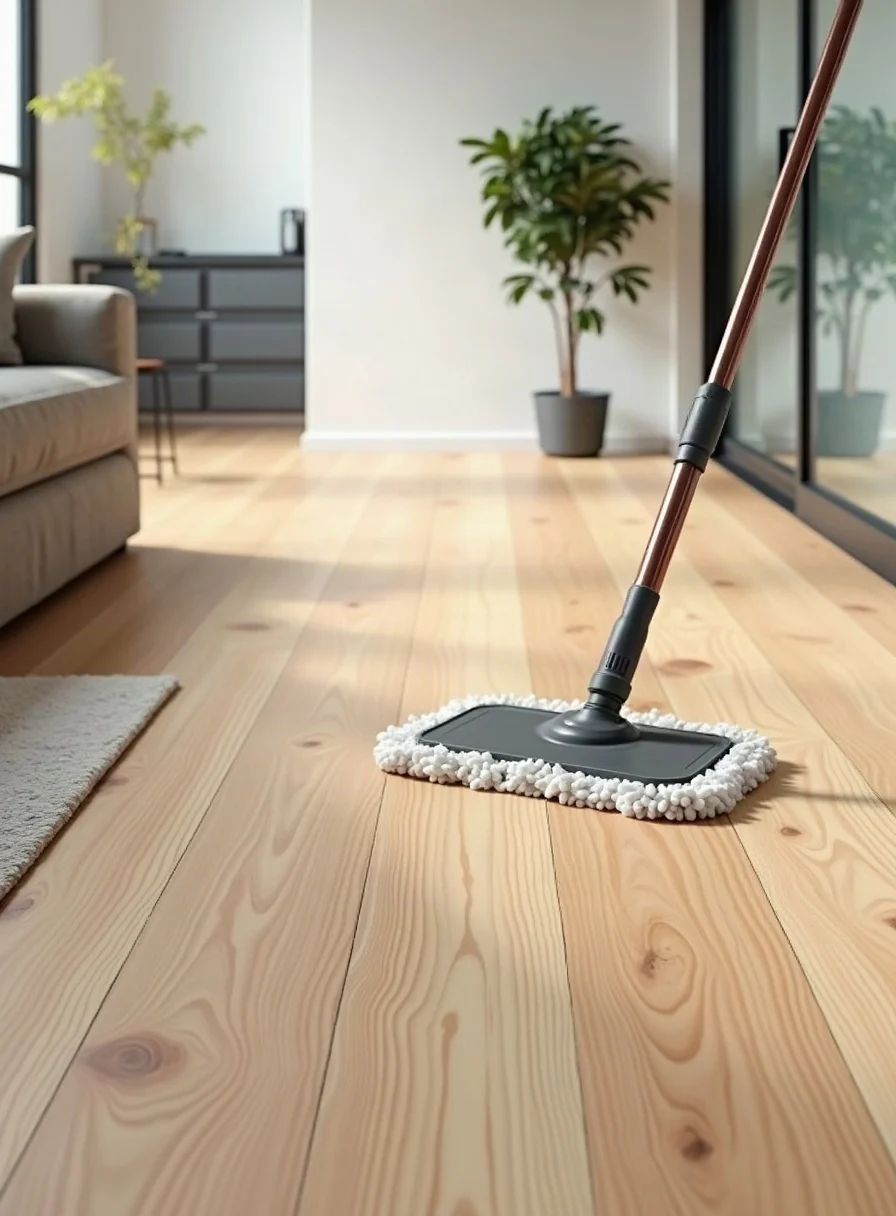
- Mop with a well-wrung flat microfibre mop. Damp, not wet, so the floor dries quickly rather than sitting under standing water. Our comparison of microfibre and cotton cloths explains why microfibre suits hard floors.
- Work in sections, rinsing the mop as it picks up dirt. There is no need to rinse the floor afterwards if you have used the correct dilution.
- Let it air-dry, which is quick because you have kept the water minimal. Wipe spills promptly so nothing seeps into the joints.
The same sweep-first, damp-mop, dry-fast logic applies to other hard floors, like the ones in our hardwood floor guide. If yours is genuine tile rather than tile-effect LVT, see our old and Victorian floor tiles guide instead.
Fixing each problem, easiest first
Streaks, smears and stickiness
These are almost always too much cleaner or dirty water. Empty the bucket, refill with clean warm water, add the correct amount of pH-neutral cleaner (less than you think), and re-mop with a well-wrung mop. If the floor still feels tacky, do a plain-water pass to rinse the film away, and dry with a clean microfibre cloth if needed. Change the water as soon as it looks grey.
Scuffs, stains and general marks
Karndean’s smooth wear layer means most marks come off easily if you deal with them promptly and gently. Match the method to the mark.
| Mark | Safe fix |
|---|---|
| Scuff marks (shoes, furniture) | Rub gently with a dry or barely damp microfibre cloth. A pencil eraser lifts stubborn black scuffs |
| Food, drink, general spills | Wipe promptly with pH-neutral cleaner and a damp cloth |
| Sticky residue (tape, stickers, spills) | Warm soapy water and patience. For stubborn adhesive, a tiny amount of isopropyl alcohol on a cloth, tested on a hidden spot first, and never solvents like acetone or white spirit |
| Grease | pH-neutral cleaner (a mild degreasing one) and a soft cloth |
| Ground-in dirt in textured or embossed tiles | A soft nylon brush with pH-neutral cleaner worked along the texture |
| Rubber marks (rubber-backed mats, castors) | These can be permanent, so see prevention below. Try gentle cleaner first |
Golden rule: always start with the gentlest method and escalate slowly. Never reach for a scourer or a solvent to save time, because a scratched or clouded wear layer is far harder to fix than the mark you were trying to remove. Test anything stronger than pH-neutral cleaner on a hidden area first. Stone-effect designs with grouted joints are covered in the FAQs below, and our general grout guide explains the basics, though skip any acidic grout product on vinyl.
A floor that has gone dull: Clean Start and Refresh
If your Karndean has gone dull, hazy or lost its sheen, usually from residue build-up (often washing-up liquid or the wrong cleaner) or years of wear, Karndean makes a two-product system to restore it.
- Karndean Clean Start is a stronger initial deep-cleaner that strips built-up residue and grime back to the bare wear layer. It is used when a floor is dull, newly installed or being rescued. Follow the dilution and dwell instructions, agitate, and remove the residue with clean water.
- Karndean Refresh is a protective dressing applied after Clean Start (or periodically) that adds a fresh protective layer and restores sheen. It renews the surface that daily cleaning gradually wears.
You do not need these for routine cleaning, since pH-neutral cleaner and a microfibre mop handle that. Clean Start and Refresh are the periodic reset, for example once or twice a year in busy areas, or whenever the floor stops looking its best. Using them is far cheaper than replacing flooring, and it is the manufacturer-approved route to reviving Karndean rather than resorting to anything harsh.
Keeping the problems from coming back
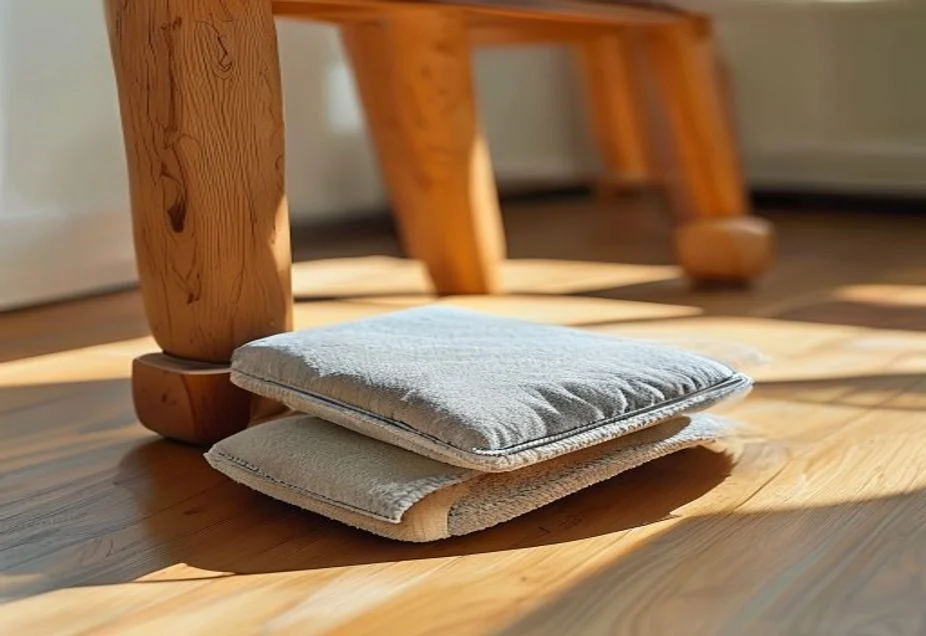
- Doormats at every entrance to catch grit before it reaches the floor. Choose non-rubber-backed mats, as some rubber and latex backings can permanently stain or discolour vinyl.
- Felt pads under furniture legs, and never drag heavy furniture. Lift it, or use furniture slides.
- Soft castors on chairs, or a chair mat under office chairs.
- Wipe spills quickly and avoid letting water pool, especially at joints.
- Blinds or curtains on big sunny windows, because prolonged direct sunlight can fade any flooring over years.
- Choose rugs labelled colour-fast and vinyl-safe, and avoid rubber-backed ones.
The mistakes that cause most damage are steam mopping, bleach or ammonia, abrasive pads, regular washing-up liquid, over-wetting, dragging furniture, rubber-backed mats and wax or silicone polish. Avoid those and you will rarely need the fixes above.
When to stop and call the retailer or fitter
- Edges or tiles are lifting, curling or bubbling. This can mean moisture has got through or the adhesive or subfloor has a problem. Stop wet cleaning.
- Gaps are opening at joints. Take photographs and contact the fitter.
- Staining will not shift after gentle methods. Further aggression usually makes it worse. Ask the retailer or manufacturer.
- Your floor is under warranty and something has gone wrong. Read the warranty before using any new product, because the manufacturer may specify which cleaners are acceptable.
Our pick, and two alternatives
Featured pick: a purpose-made Karndean cleaner. If your floor is under warranty, the safest single buy is Karndean’s own pH-neutral cleaner, because it is formulated for the product and is the one the manufacturer names. Karndean Clean is the search to start with, and other pH-neutral Karndean-safe cleaners are alternatives if the branded bottle is out of stock. Whatever you choose, the label should say it is suitable for vinyl or LVT and pH-neutral, and you should dilute it as directed.
Alternative one: a dressing for a tired floor. If the floor is dull even after proper cleaning, Karndean Refresh (also found via floor dressing searches) is the maker’s protective dressing. Apply it after a deep clean, in thin coats, and keep wax and silicone polishes away.
Alternative two: the right mop. A flat microfibre mop with washable pads is the tool that keeps water use low. Look for a head that fits flat on the floor, and pads you can machine-wash without fabric softener, which can clog the fibres and cause streaks.
Karndean questions people ask
Can I use a string mop or spin mop on Karndean?
You can, as long as it is wrung out well. The danger is water, not the mop type. Flat microfibre mops are easier to control because they hold less water and lie flat, which helps the floor dry quickly. Avoid anything that leaves puddles.
Is Karndean waterproof?
The surface resists water, but that is not the same as the floor being fully waterproof. Standing water can find its way through joints and edges to the subfloor. Wipe spills up promptly and check your specific product range’s guidance on water.
Can I use vinegar on Karndean?
It is better not to. Karndean advises pH-neutral cleaning, and acids such as vinegar are outside that. They may not damage the floor in a single use, but there is no benefit over a proper neutral cleaner. Our piece on whether vinegar disinfects covers what it is good for.
How soon after fitting can I clean a new Karndean floor?
Follow the fitter’s and manufacturer’s instructions, since adhesive needs time to cure and many retailers advise waiting a couple of days before wet cleaning. In the meantime, sweep or lightly vacuum, and protect the floor from heavy traffic and furniture.
How do I clean the grout lines on a stone-effect Karndean floor?
Use a soft brush with pH-neutral cleaner, working along the grout. Avoid acidic or bleach-based grout cleaners, which can harm the vinyl around it. Rinse with clean water and dry. If grout looks stained after cleaning, ask the retailer what they recommend.
Can I remove hair dye, ink or marker from Karndean?
Wipe it up immediately if you can. For dried marks, try pH-neutral cleaner first, and then a cloth with a tiny amount of isopropyl alcohol on a hidden spot to check. Do not use acetone or white spirit. If the mark remains, contact the manufacturer for advice.
Can I use wet wipes or baby wipes on Karndean?
For a small spill, a plain damp cloth is better. Wipes can contain oils, fragrance or alcohol, which may leave residue that builds up and dulls the floor. If you do use one, follow with a damp cloth and then dry the area.