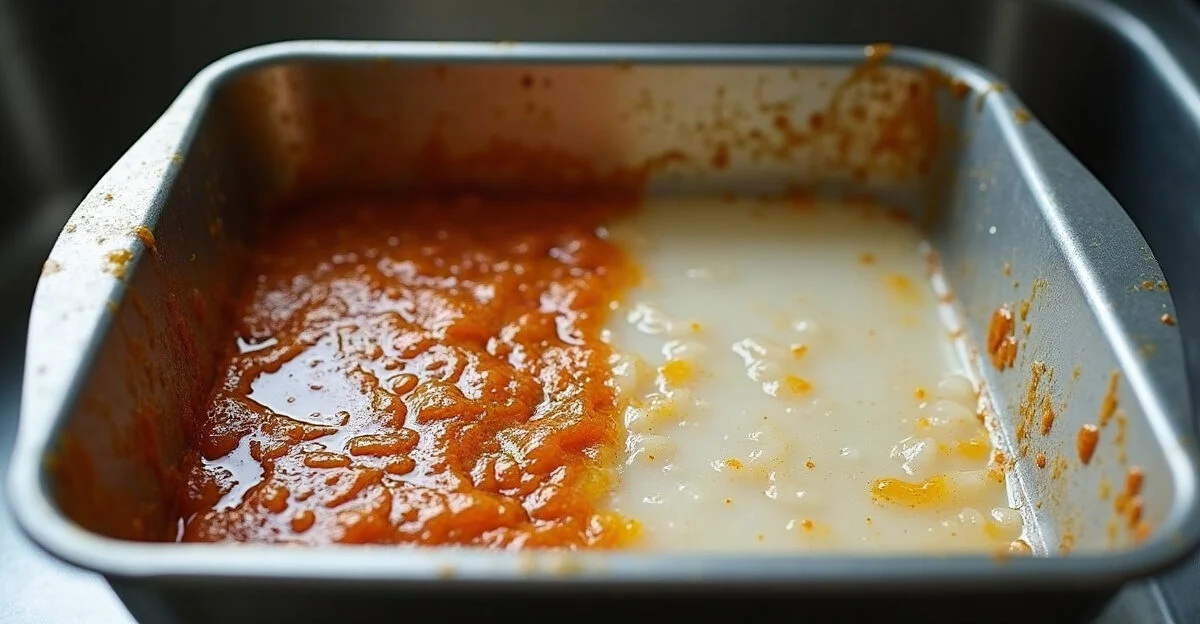
You slide the tray out of the cupboard and it is the colour of strong tea. Years of roast potatoes and sausages have baked onto it in layers, some of it sticky, some of it hard as toffee, and a normal wash just slides over the top. Before you give up and buy a new one, it is worth knowing that this kind of grime is mostly old oil, and old oil responds to patience far better than to force.
The method below uses a bicarbonate of soda paste that does most of the work while you do something else. First, a quick look at what the tray is made of, because that decides how gentle you need to be.
Some links in this guide are Amazon affiliate links. If you buy through them we may earn a small commission at no extra cost to you. Product mentions are generic types, so you can compare makes and prices yourself.
First, what is your tray made of?
The method that restores a stainless tray can ruin a non-stick one, so match it to what you have. Tray material is usually on the base or the packaging, and if you cannot tell, treat it as the more delicate type.
| Tray type | Best method | Avoid |
|---|---|---|
| Stainless steel | Bicarb and peroxide paste, or a stainless-safe cleaner | Circular scrubbing, which leaves swirls |
| Bare aluminium | Cream of tartar, or a short bicarb soak | Long soaks in bicarb or peroxide, which can darken it |
| Non-stick coated | Hot soak and a bicarb paste, soft sponge only | Metal, scourers and abrasive powders |
| Enamelled steel | Bicarb and peroxide paste | Harsh scourers on the enamel |
| Glass and ceramic | Bicarb paste, soak | Sudden temperature changes. Let it cool before cold water |
Warning: never use metal scourers, wire wool or abrasive powders on non-stick trays. They scratch the coating, which can then flake and stop food releasing. And do not leave a strong bicarb or peroxide paste on bare aluminium for hours, as it can leave dark discolouration.
The paste method, step by step
Bicarbonate of soda is a gentle abrasive. Mixed with hydrogen peroxide it becomes a thicker, mildly bleaching paste that clings to the tray and softens baked-on grease while it sits. It is cheap, has few fumes and needs little scrubbing. Wear washing-up gloves, because the paste can dry your skin.
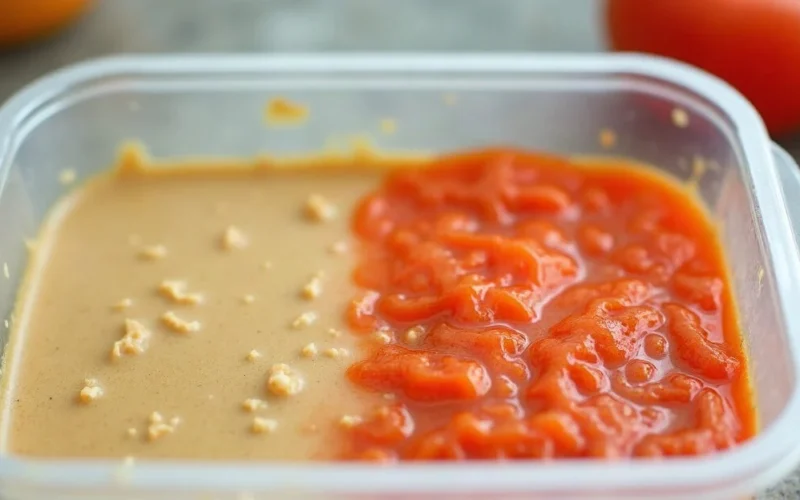
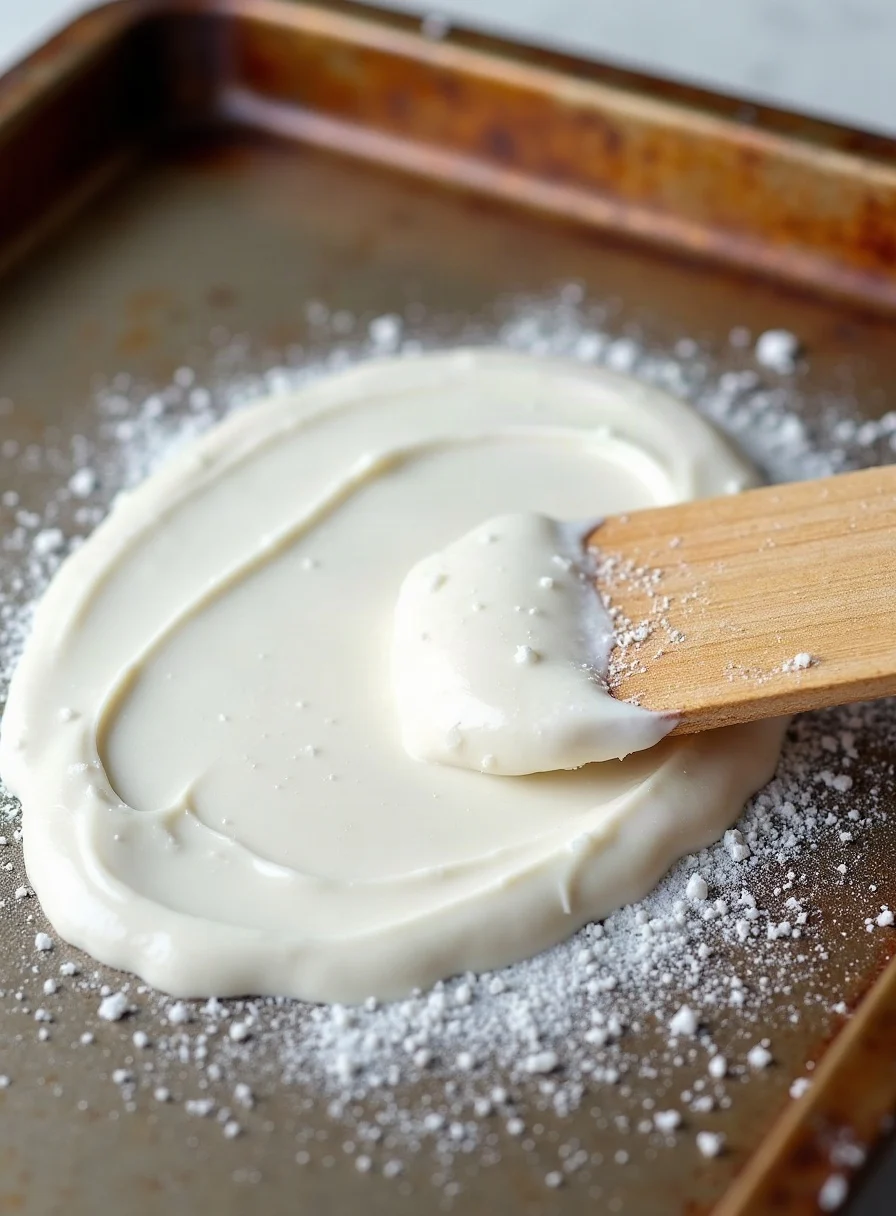
- Mix about 3 parts bicarbonate of soda to 1 part hydrogen peroxide (roughly half a cup of bicarb to 2 or 3 tablespoons of peroxide), until it is the texture of toothpaste. Use the ordinary low-strength kind sold for household use.
- Spread it evenly over the greasy areas of the tray.
- Leave it to work: about 20 minutes for light grime, or 2 to 8 hours for heavy, years-old build-up. Check bare aluminium after a short time, not hours.
- Scrub with a non-scratch sponge. On stainless steel, work back and forth along the grain, not in circles.
- Rinse thoroughly with warm water, then wash with washing-up liquid, rinse again and dry. Repeat once for very stubborn trays.
Do not mix peroxide with vinegar, and do not store a leftover paste in a sealed container, since peroxide gives off gas as it breaks down. Mix only what you need and rinse the rest away.
If it did not work
A second round usually does better than a harder scrub, because the first coat has softened the top layer. If marks are still there, try these in turn, gentlest first.
- No peroxide in the cupboard. A paste of bicarb and a little water works for lighter jobs, or a bicarb and white vinegar paste, applied on its own and never combined with peroxide. It is milder, so give it longer.
- Hot soak: for everyday grease, fill the tray with very hot water and a squirt of washing-up liquid, leave for 30 to 60 minutes, then wipe clean. Glass and ceramic should be left to cool first, to avoid cracking.
- Stainless-safe cleaner: a sprinkle of Bar Keepers Friend on a damp stainless or enamel tray lifts heat marks and stains fast. Wear gloves, rinse well, and check the tin for the surfaces it suits. Not for non-stick.
- Dishwasher tablet scrub: a wet dishwasher tablet rubbed over a damp tray cuts through grease, the same trick that works on oven racks. Wear gloves and rinse thoroughly. It is too harsh for bare aluminium and non-stick, so keep it to stainless, steel and enamel.
- Cream of tartar: the gentler choice for bare aluminium. Mix with a little water and rub on to brighten, then rinse.
Some trays cannot be rescued. Non-stick coating that is flaking or peeling, or steel with deep rust that has pitted the metal, is better replaced than scrubbed. A tray that is merely dark is a different matter: a stable, smooth dark patina on bare metal is normal, and it is loose, sticky or flaking grease that needs to go.
Which product for which tray
You probably own most of these already. The links go to Amazon UK searches so you can compare sizes and prices. As an Amazon Associate we earn from qualifying purchases.
| Product | Best for | What to check |
|---|---|---|
| Bicarbonate of soda | The base paste for most trays, including a gentle soak for non-stick | A food-grade pack. Sold as bicarb, not as a bath additive |
| Hydrogen peroxide (low strength) | Adding lift to the paste on stainless and enamel | The strength on the label. Keep it away from vinegar |
| Non-scratch scrubbing pads | Scrubbing stainless, enamel and non-stick without gouging them | Pads marked safe for non-stick. Avoid the green scourer type on coatings |
| Bar Keepers Friend | Heat marks and stains on stainless and enamel | Surfaces listed on the tin. Wear gloves |
| Reusable baking tray liners | Stopping grease reaching the tray in the first place | A size that fits your tray, and a maximum oven temperature that suits your cooking |
Keeping grease from baking on in the first place
Lining a tray with baking parchment or a reusable liner means the grease never reaches the metal, which does more than any cleaner. Wash trays after each use, before the grease has a chance to bake on next time, and wipe up spills and drips as soon as the tray is cool enough to handle. Dry them before they go back in the cupboard. Stacking them damp can cause spotting on aluminium and rust on cheaper steel.
A dishwasher is rarely the answer for thick baked-on grease. It struggles with carbonised layers and can dull aluminium, so a soak and a paste does better, and the machine is best kept for a final wash on trays that are marked dishwasher safe.
The same habits keep the rest of the oven cleaner too. See our guides to cleaning an oven, cleaning a burnt pan, using an oven liner and making a homemade oven cleaner. For why bicarb works as well as it does, and where it falls short, see does baking soda and vinegar really clean.
Three loose ends
What about a tray with rust spots?
Light surface rust on a bare steel tray can be rubbed off with a bicarb paste and a non-scratch pad, then the tray washed, rinsed and dried straight away. Rust that has flaked or pitted the metal, or has got under a coating, means the tray is best replaced.
Is it safe to bake on a tray after cleaning it with bicarb and peroxide?
Yes, as long as you rinse it thoroughly, wash it with washing-up liquid and rinse again. Any film left behind can burn on next time, so a final wipe with a clean damp cloth is worth the extra minute.
How often should baking trays get a deep clean?
When grease starts to feel sticky or you see it darkening in patches. Wiping or washing after each use means a deep clean is rarely needed, while trays used for roasting oily food without a liner may need one every few weeks.