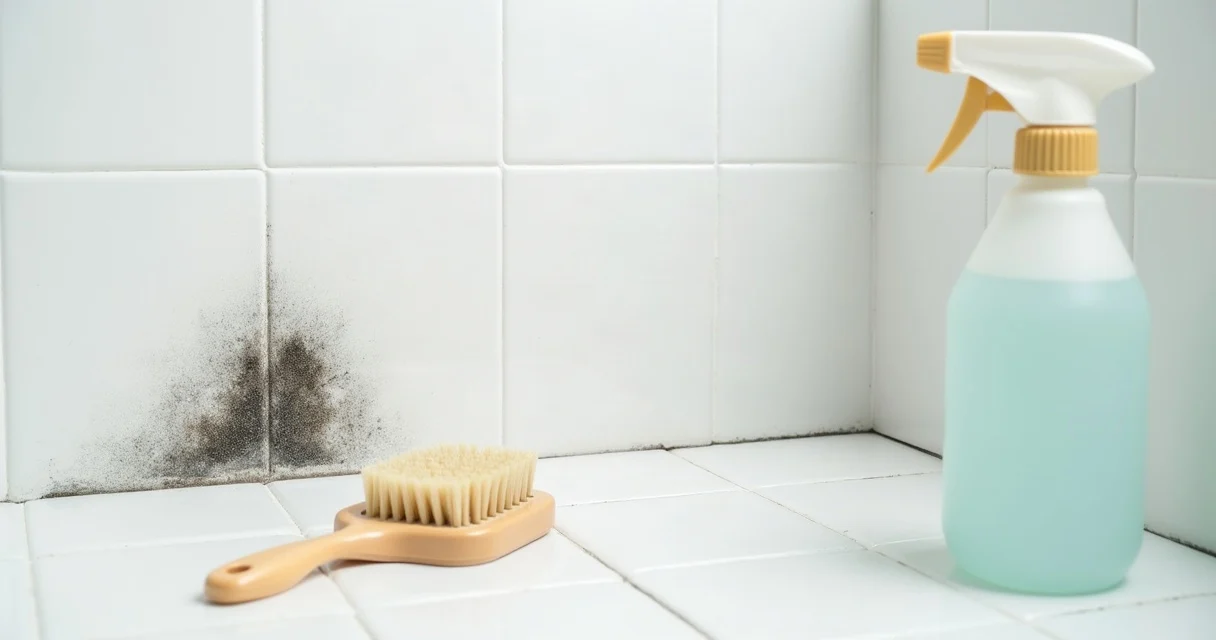
The short answer: the best mould-killer for most homes is not bleach. On hard, non-porous surfaces, tiles, glass, metal, white vinegar, 3% hydrogen peroxide or even plain soap-and-scrubbing all work well and far more safely. Bleach, the product everyone reaches for, is actually the worst choice for the surfaces mould usually grows on: porous ones like wood, plaster, grout and painted walls. Both the US Environmental Protection Agency (EPA) and OSHA advise against using bleach for routine mould cleanup, because it can’t reach the mould’s roots in porous materials, it bleaches the stain so the patch looks gone, while the living roots survive and grow back within weeks [1][2].
And here’s the part no spray can fix: mould only grows where there’s moisture, so unless you deal with the damp, it will keep coming back whatever you kill it with. This guide compares bleach, vinegar, hydrogen peroxide, soap and baking soda honestly, which works on which surface, why bleach disappoints, and the steps that actually stop mould for good. Sources are linked at the end.
How we researched this: the guidance below draws on the EPA and CDC’s mould-cleanup advice and published information on vinegar and hydrogen peroxide against mould. Full references are at the bottom.
Disclosure: Cleaners Guide is a participant in the Amazon Associates programme, so if you buy through links on this page we may earn a small commission at no extra cost to you. It never changes our recommendations, we suggest products because they work and we point out cheaper options where they do the same job. Prices and availability change, so always check the current price before buying.
Bleach vs vinegar vs peroxide: the honest comparison
See mould removers on Amazon →
The single most important factor isn’t which bottle you pick, it’s whether the surface is porous or non-porous. Non-porous surfaces (glazed tile, glass, metal, sealed worktops) hold mould only on top, so almost anything that kills it works. Porous surfaces (wood, plasterboard, grout, fabric) let the roots grow inside, where sprays struggle to reach. The chart below rates the common options on the surfaces that matter and on how harsh they are to use:
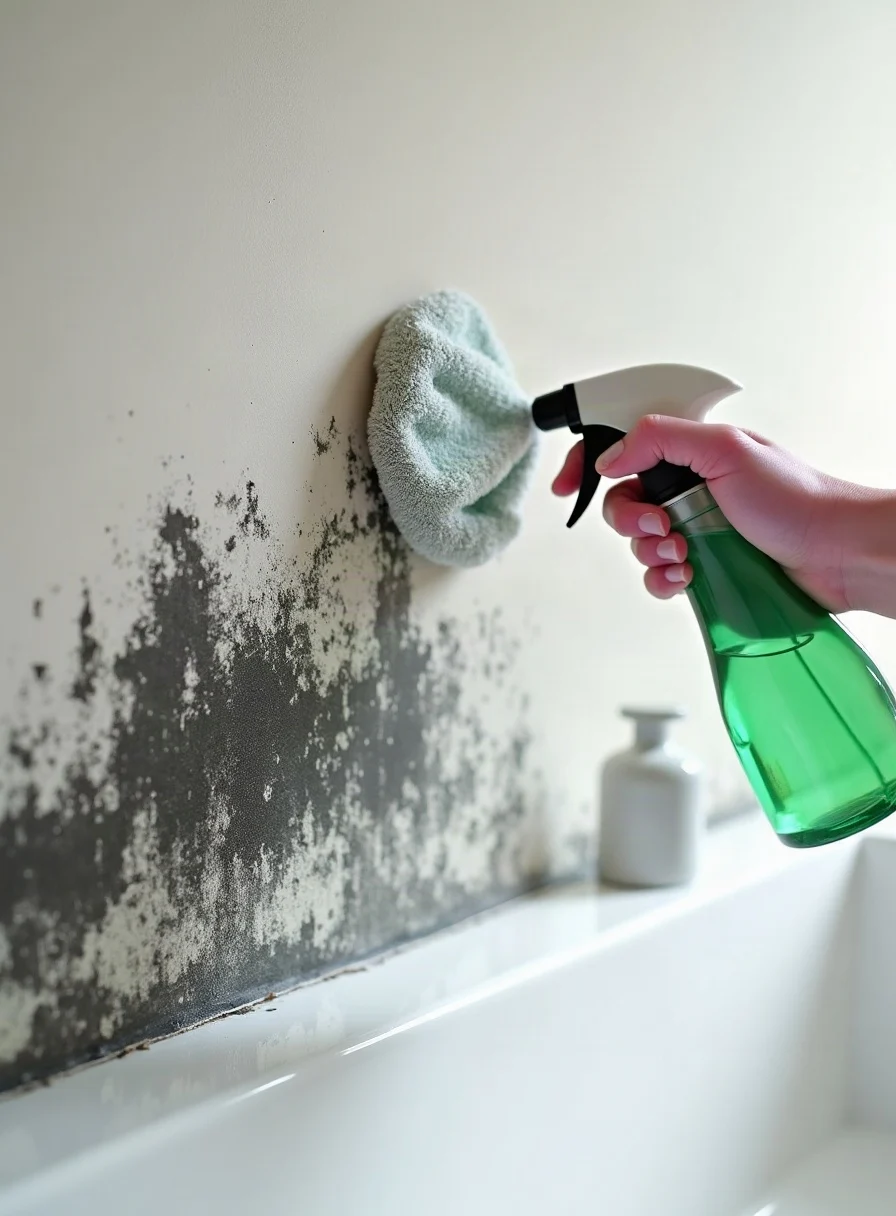
Two things jump out. First, on hard non-porous surfaces you have several good, safe choices, you don’t need bleach. Second, on porous surfaces everything is only partial at best, because no spray reliably kills roots buried in wood or plaster. That’s the honest limit of any mould spray.
Why bleach is the wrong hero
Bleach has a reputation as the ultimate mould-killer, and on a shiny bathroom tile it does work. The problem is the chemistry on the surfaces mould actually loves. Household bleach is around 90–95% water, and when you apply it to something porous, the active chlorine largely stays and evaporates on the surface while the water soaks in and feeds the mould roots below [2]. The visible mould loses its colour, so the patch looks clean, but the root network (the hyphae) is untouched, and the mould typically grows back within one to three weeks, sometimes worse than before.
This is why the EPA does not list bleach as a routine mould-cleanup method, suggesting soap and water or a detergent for most household mould instead, and why OSHA gives similar advice for workplaces [1][2]. Bleach earns its place only on hard, non-porous surfaces, glazed tiles, glass, sinks, metal, where there’s no “inside” for roots to hide. For the tiles-and-grout combo in a shower, that means bleach may clean the tile but disappoint on the porous grout lines, which is exactly where the mould keeps returning. If you’re tackling a mouldy bathroom, our practical walkthroughs on cleaning shower mould and removing mould from walls cover the method step by step.
Does vinegar kill mould?
Yes, mostly. Ordinary white vinegar (around 5% acetic acid) is mildly antimicrobial, and laboratory testing finds it kills roughly 82% of common household mould species, such as Aspergillus and Penicillium [3]. Better still, being watery and acidic it penetrates porous surfaces a little better than bleach, giving it a fighting chance at the roots. Its limits are honest ones: it doesn’t kill every species (notably it struggles against the toxic “black mould”, Stachybotrys chartarum), and it has a strong smell.
To use it: spray or wipe undiluted white vinegar straight onto the mould, leave it for at least an hour, then scrub with a brush and wipe clean. Repeat if needed. For the science of what vinegar can and can’t do elsewhere, see does vinegar actually disinfect?
Does hydrogen peroxide kill mould?
Also yes, and it’s arguably the best all-rounder. 3% hydrogen peroxide (the strength sold in pharmacies) kills mould spores and surface roots through oxidation, works on a wide range of surfaces, and has a big advantage over bleach: it breaks down harmlessly into water and oxygen, leaving no toxic residue, and it’s recognised under the EPA’s Safer Choice programme [3]. The key is contact time, leave it on for about 10 minutes before scrubbing.
To use it: spray undiluted 3% hydrogen peroxide onto the mould, wait around 10 minutes, scrub, then wipe dry. Test it on coloured fabrics or grout first, because, like bleach, it can lighten some materials. Store it in its original opaque bottle, since light degrades it (the same reason it, like bleach, has a real shelf life, see does bleach expire?).
What about soap, baking soda and borax?
Don’t underestimate the humblest option. The EPA’s baseline recommendation for most small household mould is simply detergent (or soap) and water with thorough scrubbing, because physically removing the mould works on nearly any surface, produces no fumes, and carries no mixing hazard [1]. Baking soda is a gentle helper: it removes surface mould, deodorises, and its mild alkalinity can discourage regrowth, so many people do a vinegar or peroxide pass first and a baking-soda scrub second (used separately, never sealed together, as we explain in does baking soda and vinegar actually clean?). Borax is another effective, low-fume option that inhibits regrowth. Here’s how the practical options stack up:
| Option | How to use it | Best for |
|---|---|---|
| White vinegar (5%) | Spray neat, leave 1 hour, scrub, wipe | Everyday mould; slightly porous surfaces |
| Hydrogen peroxide 3% | Spray neat, leave ~10 min, scrub, wipe dry | All-round non-toxic killer; tiles, grout, walls |
| Soap / detergent + scrubbing | Wash, scrub thoroughly, dry fully | The EPA baseline for most small jobs |
| Baking soda | Paste or spray, scrub, leave a light coat to deter regrowth | Deodorising and preventing return |
| Bleach | Diluted, on the surface only, kept wet briefly | Hard non-porous only (tile, glass, metal) |
The step that actually matters: fix the moisture
Here’s the truth that no cleaning product can replace: mould needs moisture to grow, so if you don’t fix the damp, it comes back, every time. Killing the visible patch is only half the job. To stop mould for good:

- Find and fix the water source, a leak, condensation, poor ventilation or rising damp. This is the real cure [1].
- Dry the area within 24–48 hours and keep it dry with ventilation, an extractor fan or a dehumidifier.
- Throw away heavily mouldy porous items, soaked plasterboard, ceiling tiles, carpet or fabric often can’t be salvaged, because the roots are all the way through.
- Know when to stop. The EPA advises that if the mould covers more than about 10 square feet (roughly 1 square metre), or keeps returning, you should bring in a professional [1].
In other words, spend your energy on the cause, not just the stain. A cheap hydrogen-peroxide spray plus a fixed extractor fan beats an arsenal of bleach every time.
Safety: what never to mix
Reaching for several products at once is tempting with stubborn mould, but some combinations are dangerous:
- Never mix bleach with vinegar (or any acid), it releases toxic chlorine gas.
- Never mix bleach with ammonia, it produces toxic chloramine vapours.
- Don’t combine hydrogen peroxide and vinegar in the same bottle, together they form corrosive peracetic acid. Use one, rinse, then the other if you must.
Use one product at a time, ventilate the room, and wear gloves, and a mask if you’re disturbing a lot of mould, since the spores themselves can irritate airways. The full rundown is in our guide to cleaning products you should never mix.
The three that actually kill mould, matched to the surface.
The bottom line
What kills mould best isn’t bleach, it’s the right tool for the surface, plus fixing the damp. On hard non-porous surfaces, 3% hydrogen peroxide is the standout all-rounder, with white vinegar and plain soap-and-scrubbing close behind, all safer than bleach. On porous materials, no spray reliably reaches the roots, so removal and moisture control do the real work. Save bleach for shiny tiles if you like it, never mix your cleaners, and remember the golden rule: kill the mould you can see, but fix the water that feeds it, or you’ll be back with the spray bottle in a fortnight.
Myths vs facts
| Myth | What the evidence says |
|---|---|
| “Bleach is the best mould-killer.” | Not on porous surfaces, the EPA/OSHA don’t recommend it for routine mould [1][2]. |
| “If the stain’s gone, the mould’s dead.” | Bleach removes colour but leaves living roots that regrow in 1–3 weeks [2]. |
| “Vinegar can’t kill mould.” | It kills ~82% of common species and penetrates porous surfaces better than bleach [3]. |
| “A stronger spray solves everything.” | Without fixing the moisture source, mould always returns [1]. |
| “You can clean any amount of mould yourself.” | Over ~1 m², or if it keeps returning, call a professional [1]. |
Frequently asked questions
What actually kills mould?
On hard, non-porous surfaces, 3% hydrogen peroxide, white vinegar and even soap-and-water with scrubbing all kill or remove mould effectively and safely. On porous materials no spray reliably kills the roots, so removal and fixing the moisture matter most. Bleach is not the best choice and isn’t recommended for routine mould cleanup.
Does bleach kill mould?
Only on hard, non-porous surfaces like glazed tile, glass and metal. On porous materials, wood, plaster, grout, bleach can’t reach the roots; it removes the colour so the patch looks clean, but the mould regrows within one to three weeks. The EPA and OSHA don’t recommend bleach for routine mould cleanup.
Does vinegar kill mould?
Yes, mostly. White vinegar (5% acetic acid) kills around 82% of common household mould species and penetrates porous surfaces a little better than bleach. Spray it on undiluted, leave for at least an hour, then scrub. It doesn’t kill every species, including toxic black mould, and has a strong smell.
Does hydrogen peroxide kill mould?
Yes, 3% hydrogen peroxide kills mould spores and surface roots by oxidation, works on many surfaces, and breaks down into just water and oxygen, so it leaves no toxic residue. Spray it on, leave about 10 minutes, then scrub. Test coloured materials first, as it can lighten some fabrics and grout.
What kills mould on walls and drywall?
Painted, sealed walls can be cleaned with hydrogen peroxide, vinegar or detergent and scrubbing. Bare, porous plasterboard is different: if it’s more than lightly affected, the roots run through it and it usually needs cutting out and replacing. Whatever you use, fix the damp behind the wall or the mould returns.
What kills mould in the shower and on grout?
Hydrogen peroxide is ideal for showers, spray it on tiles and grout, leave 10 minutes and scrub. Grout is porous, so it may need repeat treatments, and badly stained grout sometimes has to be raked out and re-done. Improving ventilation to cut condensation is what stops it recurring.
Can you mix vinegar and hydrogen peroxide to kill mould?
Not in the same container. Combined, they form corrosive peracetic acid, which can irritate skin, eyes and lungs. You can use one, rinse the surface, and then use the other, but never pre-mix or store them together. And never mix either with bleach.
Why does mould keep coming back after I clean it?
Because the moisture that feeds it is still there, and/or the roots survived in a porous surface. Cleaning removes the visible patch, but unless you fix the leak, condensation or poor ventilation and dry the area, spores simply regrow. Moisture control is the real cure, not a stronger spray.
When should I call a professional for mould?
The EPA suggests hiring a professional if the mould covers more than about 10 square feet (roughly 1 square metre), if it keeps returning, if it’s from contaminated water, or if anyone in the home has a mould-related health condition. Large or hidden infestations behind walls also warrant expert help.
Is black mould dangerous, and can I remove it myself?
Any mould can cause allergy-like symptoms, and large amounts are best avoided by sensitive people. A small patch on a hard surface can be cleaned with protection (gloves, mask, ventilation), but extensive black mould, or mould on porous materials, is safest handled by a professional, alongside fixing the moisture that caused it.
Related reading: how to clean mould off walls and does bleach expire?
Related reading: for the science behind why peroxide works, does hydrogen peroxide disinfect, and how?
References
- US Environmental Protection Agency. “Mold Cleanup in Your Home” / “A Brief Guide to Mold, Moisture and Your Home” (detergent and scrubbing for most jobs; fix the moisture; hire a professional above ~10 sq ft). epa.gov
- US Centers for Disease Control and Prevention. “Mold: Cleanup and Remediation” (control moisture; bleach not required for routine cleanup; porous materials may need discarding). cdc.gov
- Healthline. “Does Hydrogen Peroxide Kill Mold?” (3% hydrogen peroxide method and effectiveness; vinegar against common mould species; peroxide + vinegar caution). healthline.com
This article is general cleaning information, not a remediation or medical guide. For large infestations, damp caused by contaminated water, or health concerns, consult a qualified mould-remediation professional and follow EPA/local guidance.