You open the door to put a load in and something stale drifts out. The towels you took out last night had a faint damp-cellar smell, even though they went through a full wash. Nothing is broken. The machine that cleans your clothes has simply not been cleaned itself, and a maintenance wash is the routine fix.
A maintenance wash (also called a service wash, drum clean or tub clean) is an empty, hot, full-length cycle, run with a suitable cleaner, that clears the film of detergent, softener, skin oils and bacteria from the drum, pipes and pump. There is more than one way to do it. This page compares them first, so you can pick the one that suits your machine and your mess, then covers each in turn, the step-by-step method, the parts a hot wash cannot reach, and what to do when the smell stays.
Disclosure: Cleaners Guide is a participant in the Amazon Associates programme, so if you buy through links on this page we may earn a small commission at no extra cost to you. It never changes our recommendations, we suggest products because they work and we point out cheaper options where they do the same job. Prices and availability change, so always check the current price before buying.
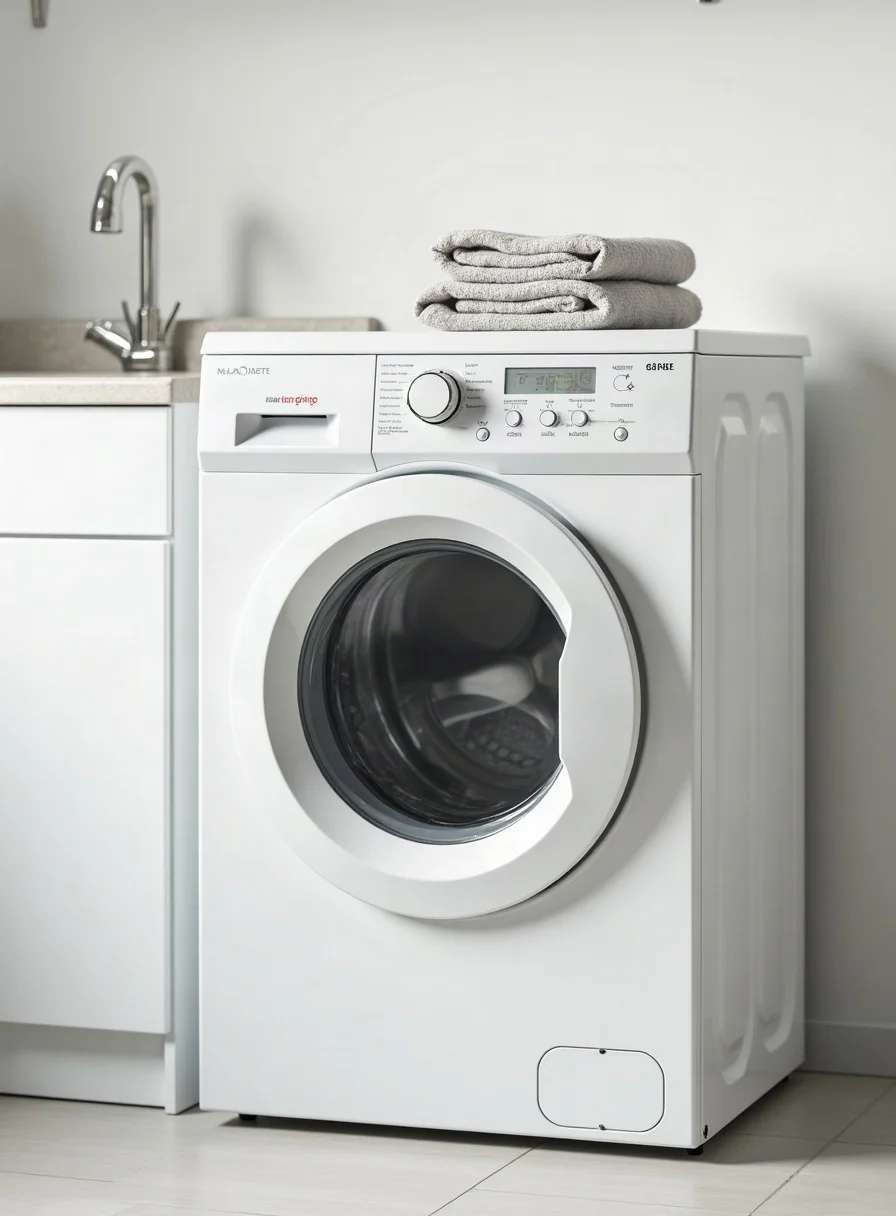
Seven ways to do a maintenance wash, compared
| Method | Best for | Effort | Risk to the machine |
|---|---|---|---|
| A dedicated drum clean or tub clean programme | Machines that have one, for routine monthly upkeep | Very low | Very low, it is what the maker designed |
| A purpose-made washing machine cleaner | Smells, visible film, and a first clean of a second-hand machine | Low | Low when used as directed |
| Washing powder with oxygen bleach, hottest cotton cycle | Routine upkeep on a budget | Low | Low, check the manual allows it |
| Soda crystals | Greasy film and soap residue, gentle and cheap | Low | Low, but do not overdose |
| A descaler | Hard water areas and limescale on the heater | Low to medium | Low with a product made for washing machines |
| White vinegar | Occasional light descaling | Low | Medium, rubber seals and some makers advise against it |
| Chlorine bleach | Not recommended as a routine | Medium | Higher, can corrode parts and gives off fumes if mixed |
Our short answer: for most people the best routine is the machine’s own cleaning programme if it has one, or a hot empty cotton cycle with a machine cleaner or oxygen-bleach powder if it does not, plus ten minutes now and then on the seal, drawer and filter. Descale only if you live in a hard water area. The sections below say why.
Why a washing machine needs this at all
Every wash leaves a little behind. Detergent and softener that do not rinse away, skin oils and body soil from clothes, fluff, and minerals from the water form a thin film on the drum, in the pipes and in the folds of the door seal. That film is food for bacteria and mould, which like the warm, damp, dark inside of a machine. Cooler, shorter and more efficient wash programmes, and liquid detergents and softeners, are good for fabrics and energy bills but do less to flush and sanitise the machine. Hence the stale smell, the greasy film on the door glass, and sometimes clothes that come out less than fresh.
Hard water adds limescale on the heating element and inside the drum. A coating of scale makes the element work harder, and heavy build-up can cause faults. Pocket debris, hair and fluff gather in the drain filter and cause slow draining and smells. A hot wash is good at the film and the bacteria but cannot reach everything, which is why the manual jobs later matter too.
What actually builds up
- Detergent and softener residue. A sticky, sometimes waxy film on the drum, the drawer and inside the pipes. Fabric softener is the worst culprit. It can narrow small passages and gives bacteria a surface to cling to.
- Bacteria and mould. They thrive in warmth and damp. The door seal on a front loader is where they usually show first, because water collects in the folds. Some of it transfers to clothes as a stale smell.
- Limescale. In hard water areas, calcium and magnesium deposits coat the heating element and drum, like fur in a kettle. It makes heating less efficient and, in bad cases, can contribute to a failed element.
- Debris. Hair, fluff, tissues, coins and grit settle in the drum holes, drain filter and pump. They cause slow draining, smells and sometimes noise.
Neglect has a cost. You are likelier to meet smells, rewashing, stains and slow drains, and the machine works harder than it needs to. We cannot put an honest figure on how much sooner a neglected machine fails, because it depends on the model, your water and how you use it, but regular cleaning is one of the cheaper things you can do to look after an appliance. If a smell is accompanied by black mould, take it seriously: people with allergies, asthma or eczema may find mould and damp laundry aggravating, so clean it off properly rather than leaving it.
Black or brown spots on the seal, slime in the drawer, a musty smell when you open the door, clothes that smell after washing, and a greasy residue on the drum are all signs it is time. Do not try to mask a smell with perfumed detergent or softener, which feeds the problem.
Each option in more detail
The machine’s own cleaning programme
Many machines have a programme called Drum Clean, Tub Clean, Self Clean, Machine Care, Maintenance or something similar. If yours has one, it is the first choice, because it is tuned to the machine: temperature, drum movement, water level and rinses are set by the manufacturer. Our page on what drum clean on a washing machine is explains how these programmes work. Check the manual for how often the maker suggests running it (often monthly, and some machines show a reminder after a set number of washes) and whether it wants a cleaner added. Some are designed to run empty with nothing, others with a tablet or powder. Follow the manual.
A purpose-made machine cleaner
These are tablets, sachets or powders formulated for washing machines. They usually combine a cleaning agent with something to tackle limescale or odours, and they are designed to be used in an empty drum on a hot cycle. They suit a first deep clean, a machine with a smell, or a second-hand machine. Choose one whose label says it is for washing machines (not dishwashers), put it where the instructions say (usually the drum, sometimes the drawer) and use the temperature on the pack. Our page on the best washing machine cleaners in the UK compares what is on the market.
Our featured pick: Dr Beckmann Service-it Deep Clean. It is a powder, and it is one of the few machine cleaners that both Which? and Expert Reviews discuss by name. Which? says to pour 250g straight into the drum, with no detergent, and run a main wash of at least 60 degrees. Expert Reviews says it uses activated carbon to absorb dirt and neutralise odours, and suggests about every two months. It suits a machine with a smell and second-hand machines. Do not use it with bleach or vinegar, and use it in an empty drum, as the pack says. This is compiled from published UK reviews and the makers’ information, not our own tests.
| Product | Who it suits | What it is | Caution |
|---|---|---|---|
| Dr Beckmann Service-it Deep Clean (default) | Smells and routine upkeep, one product and no guesswork | Powder placed in the drum, run at 60 degrees or above (Which?, Expert Reviews) | Drum, not drawer. Check your manual first, as Which? notes unsuitable products can void a warranty |
| Dettol 5-in-1 Washing Machine Cleaner | Readers who prefer a liquid | Expert Reviews describes a 250ml liquid that kills bacteria, removes odours and descales. Which? says to pour a 250ml dose in the drawer and run 60 degrees | Small bottle. Wear gloves if you use it diluted on outer parts, per Expert Reviews |
| Vamoosh 6-in-1 Washing Machine Cleaner | Hair and soap build-up in older machines | Expert Reviews describes a 175g powder that dissolves hair, removes odours and descales, run on the hottest, longest cycle | Needs a very hot cycle (Expert Reviews says around 85 to 95 degrees), so check your machine allows it. The “only one to do so” claim is the brand’s own |
| Calgon Antibacterial Water Softening Gel | Hard water areas, between cleans | A 750ml gel that Expert Reviews says combats limescale and softens water, used with normal detergent | Not a deep clean. Dose by water hardness as the pack says |
As an Amazon Associate we earn from qualifying purchases.
Oxygen-bleach washing powder on a hot cycle
Many ordinary powders contain a bleaching agent, such as sodium percarbonate, that is activated by heat. Run a few tablespoons in the drawer, empty drum, hottest cotton programme (60 degrees C or the machine’s maximum), full length. It is cheap and effective for upkeep. Check the ingredients list for percarbonate or oxygen bleach. Liquid detergents and ‘colour care’ powders generally do not contain it, so they will not do the same job. Use a low-suds powder, because heavy suds in an empty drum can cause problems. If your manual says not to use powder in this way, follow the manual.
Soda crystals
Soda crystals are sodium carbonate, a strong alkali that cuts grease and soap scum and softens water a little. A common household method is a few tablespoons in the drawer or drum for a hot empty cycle. They are cheaper than machine cleaners and can be a sensible occasional extra, but they do not kill bacteria the way an oxygen bleach does. Dri-Pak Soda Crystals are stocked by UK supermarkets such as Tesco and Morrisons and are easy to find in the cleaning aisle. Keep them dry, wear gloves when handling because they irritate skin, do not put them with aluminium parts, and do not exceed the amount in the manual or on the pack. Measure with a dry spoon.
Alternative one: soda crystals for a low-cost option that works on grease and soap film. Alternative two: a descaler, below, if you live where the kettle furs up fast.
A descaler, for hard water
A maintenance wash and a descale are different jobs. The maintenance wash deals with film and bacteria. A descale dissolves limescale (calcium and magnesium) that builds up on the heater and drum, and usually uses a mild acid such as citric acid. If you live in a hard water area, which includes much of the south and east of England, it is worth doing every few months or as the maker advises. A product made for the job, such as Dettol 5-in-1 Washing Machine Cleaner (which Expert Reviews says descales) or the Calgon Antibacterial Water Softening Gel for hard-water protection between cleans, come with dosing instructions for washing machines, which takes the guesswork out of using home acids. Many modern detergents also contain anti-scale ingredients that help between descales. Run the descale as a separate cycle from the oxygen-bleach wash, never straight after, and never alongside bleach. You can alternate, descale one month and maintenance wash the next.
White vinegar
Vinegar is acetic acid, which dissolves limescale and removes some smells. It is popular online, but opinions differ. Some manufacturers advise against using it because repeated exposure may harm rubber seals and hoses, so check your manual before trying it. If you decide to use vinegar, do it only occasionally for a descale, not as the monthly routine, and follow with a plain water rinse. Never put vinegar into the same cycle as bleach, or mix them anywhere, because the mix releases chlorine gas, which is harmful to breathe. Our guide to cleaning a washing machine with vinegar and baking soda covers that method in detail, including the cautions, and cleaning products you should never mix explains the dangers.
Chlorine bleach
Some people add household bleach to the drum for a hot cycle. It does kill mould and bacteria, but we would not suggest it as routine. Several manufacturers say not to put bleach in the drum or drawer, as it can attack seals and metal parts, and any left in the system will damage your next load. If you ever treat mould on a seal with diluted bleach, ventilate, wear gloves, keep it off the rest of the machine, rinse thoroughly, and do not combine it with any other product. An oxygen-bleach powder or machine cleaner is the safer way to get the same effect.
Safety before you start
- Wear gloves when handling soda crystals, descalers, bleach or any cleaner, and keep them away from your eyes.
- Never mix cleaning products, particularly bleach with vinegar, acids or other cleaners.
- Ventilate the room if you use anything with a strong smell, and keep children and pets out of the way.
- Store cleaners in their original containers, out of reach.
- Switch the machine off at the socket before you open the filter panel or touch hoses.
- Keep a towel and a shallow tray handy for the filter, because there is always some water.
Powder or liquid: why it matters here
Most powders contain a bleaching agent that is activated by heat, plus builders that help cut grease. Liquids and gels are gentler on fabrics and colours, dissolve well at low temperatures, and are easier to dose, but generally contain no bleach. That is why we suggest powder for the maintenance wash and for whites and towels, and liquid where fabrics need it. Capsules and tablets vary, so check the pack. Whichever you use, follow the dose on the pack for your water hardness and load.
Check your water hardness
If you are not sure whether you are in a hard water area, your water company publishes hardness information by postcode, and test strips are cheap. Visible scale on taps, showerheads and in the kettle is the quick sign. Hardness affects how much detergent you need as well as how much scale builds up, and it explains why neighbours in different parts of the country give different advice about descaling.
Running the wash, step by step
- Empty the drum. Check inside for stray socks. Anything left in absorbs the cleaner. Do not use the cycle to wash a load “while you are at it”, because the cleaner then works on the laundry instead of the machine.
- Check the drain filter and seal first. A blocked filter makes the wash less effective. A quick wipe of the seal removes loose gunk before the hot water moves it around.
- Add the cleaner. Put the machine cleaner in the drum or drawer as its pack says, or add a few tablespoons of oxygen-bleach powder to the main wash compartment of the drawer. Do not add fabric softener.
- Choose the programme. Use the drum clean programme if there is one. If not, choose the cotton programme at the hottest temperature your machine offers (at least 60 degrees C where possible) and the longest cycle. Avoid quick, eco and low-temperature settings, which will not heat or flush enough. Turn on an extra rinse if you have the option.
- Start it and leave it. It will take a couple of hours or more. Many people run it overnight, or use the delay timer so it finishes when they are home and not leave the damp drum shut up for hours.
- Finish by hand. Wipe the seal and the glass dry, take out the drawer and rinse it, and leave the door and drawer open so the inside can air.
- Rinse if needed. If you can still see suds or smell the cleaner, run a short plain rinse before the next load.
Front loaders, top loaders and low-suds machines
Front loaders are the common type in UK homes, and their door seal is the number one place for mould. The seal needs its own care, see the next section. Top loaders let you pause mid-cycle to soak with hot water and a cleaner, scrub the rim under the lid and clean around any agitator, which can help for heavy soil. Some machines are marketed as low-water or low-suds and are fussy about detergents, so use products labelled as suitable. Powder that foams heavily can cause trouble in an empty drum. If your manual names a cleaner or a procedure, use it.
Brand differences, in general terms
Names and advice vary between manufacturers and between models, so always go by your own manual. Broadly: Miele machines often have a maintenance programme, sometimes with a short and an intensive version, and machines with automatic dosing have their own cartridge cleaning routine. Bosch and related brands commonly label it Drum Clean or Tub Clean and may remind you every so many washes. Samsung machines often have a Self Clean or Eco Drum Clean programme that relies mostly on heat, with a reminder after a set number of cycles. LG calls it Tub Clean and typically shows a reminder. AEG and Electrolux machines often have a Machine Clean or Drum Clean option and some have dosing systems with their own cleaning. Hotpoint, Indesit and some others may not have a dedicated programme, in which case a hot cotton cycle serves. Whirlpool pairs with its own cleaner tablets on some models.
A few manuals say not to use certain cleaners, vinegar or bleach, and some tie warranty conditions to using specific products or following reminders. If your machine is in warranty, check before trying anything unusual.
Finding the programme on your machine
| If your machine has | It is probably | What to do |
|---|---|---|
| A programme labelled Drum Clean, Tub Clean, Self Clean, Machine Care or similar | The maker’s maintenance programme | Run it empty as the manual says, with a cleaner only if the manual calls for one |
| A reminder light or message after a set number of washes | A prompt to run that programme | Run it when the message appears, rather than waiting |
| Nothing marked, but a 90 degree cotton programme | A programme that can serve as a hot service wash | Use it empty with a machine cleaner or oxygen-bleach powder |
| A maximum of 60 degrees C | A lower-temperature machine | Use 60 degrees, run it a little more often, and consider a machine cleaner |
| A steam option | A supplementary feature | It can help loosen residue, but it does not replace a hot maintenance wash |
Cold-fill machines heat water inside, so a hot cycle is as hot as the machine is set for, whatever your boiler does. The cycle is longer because of the heating time, but the temperature is the same.
The parts a hot wash cannot reach
The door seal
The folds of the rubber seal on a front loader hold a puddle of water after every wash, along with fluff, hair and the odd coin or tissue. A hot cycle does not scour them. Pull the seal gently back and wipe round every fold with a cloth and a little diluted washing-up liquid or a mould-cleaning product suited to rubber. For black mould, some people use a weak bleach solution, kept off the rest of the machine, left for a short time, then scrubbed gently with an old toothbrush and rinsed thoroughly. Check your manual first, ventilate, wear gloves, and never mix bleach with another product. Dry the seal after each wash and leave the door open. Our full page on cleaning the washing machine rubber seal has the detail. A seal that is cracked, torn or stained through can be replaced, and it is a worthwhile part to renew on an otherwise sound machine.
The detergent drawer and its housing
Softener and detergent gum up here. Press the release (usually a small button or tab inside the drawer) and pull the drawer out. Soak it in hot water with a spoonful of soda crystals or washing-up liquid for half an hour, scrub the compartments and siphon cap with a toothbrush, and rinse. Look into the slot where the drawer sits with a torch, and clean it with a brush and cloth, because that is where mould often hides. Dry the parts before replacing. Doing this every month or two stops the mouldy smell at the source.
The drain filter
The drain filter catches coins, hair grips, buttons and fluff before they reach the pump. It sits behind a small panel low at the front on most machines. Switch the machine off at the socket first. Put a shallow tray and towels in place, because water will come out. Many machines have a small emergency drain hose, and if so, drain into the tray first. Then unscrew the filter slowly anticlockwise, remove debris, rinse it, check the housing with a torch, and screw back until snug. Run a short rinse and watch for leaks. A blocked filter shows up as slow draining, error codes or banging and rattling, and our guide on cleaning the washing machine filter shows it step by step. If your machine will not empty, see washing machine not draining.
Inlet filters and hoses
Small mesh filters where the hoses connect can clog with sediment, slowing the fill. Cleaning them means turning off the taps, disconnecting the hoses and reaching the back of the machine. That is a job to do carefully, with the machine unplugged and a towel ready, or leave it to someone confident. Look at the hoses while you are there: stiff, cracked, bulging or weeping hoses should be replaced before they fail, and many insurers advise replacing them every few years. Do not overtighten fittings.
The outside and behind
Wipe the control panel with a lightly damp cloth, the top and door with mild soapy water, and vacuum the lint and dust around the machine when you can. Do not spray liquids at the controls. If you have a tumble dryer next to it, lint build-up is also a fire risk, so keep both areas clear. The Cleaners Guide home page lists other appliance guides.
How often, and what to do if it still smells
A sensible schedule
| Your situation | Suggested rhythm | Notes |
|---|---|---|
| Average household, mix of temperatures | About once a month | The usual advice. Some makers say less often, so check your manual |
| Mostly cold or quick washes, or only liquid detergent | Every two to three weeks | Less heat and no bleach means more build-up |
| Hard water | Monthly, plus a descale every few months | Check the kettle for scale as a quick guide |
| Light use, one or two loads a week | Every six to eight weeks | Do not skip it, damp machines can still grow mould |
| Large family, sports kit, work clothes | Every two to three weeks | More soil, more film |
| Holiday home or machine left unused | Before first use after a long gap | Stale water breeds mould |
| Second-hand or new machine | Before first use | See below |
Everyday habits cut the need for deep cleans. Use the right amount of detergent, because extra just leaves residue. Use softener sparingly or skip it for towels and sportswear. Include a 60 degree wash now and then for towels and bedding if the labels allow it, and take washing out promptly. Leave the door and drawer open between uses, and check pockets before loading.
Habits that mean you should do it more often
- Mostly liquid detergent. Liquids and gels generally lack the oxygen bleach found in many powders, so the machine gets less sanitising from everyday washes. Using a powder for whites, towels and bedding, and liquid for delicates and colours, is a sensible mix.
- Mostly cold or 30 degree washes. These save energy and are fine for most clothes, but they do not kill many bacteria. A 60 degree wash for towels and bedding, where the care labels allow, helps keep the machine fresher between maintenance washes.
- Hard water. Scale builds up faster. Use a descaler from time to time and an appropriate detergent dose.
- Eco or non-bleach products only. Soap nuts, eco balls and colour-safe detergents generally contain no bleaching agent. That is fine for the clothes, but do the maintenance wash more often.
- A front loader. Water sits in the seal, so give it extra attention.
- Over-dosing. Using more detergent or softener than the pack suggests just leaves more behind.
Signs it cannot wait
Do not wait for the calendar if the machine smells musty or sour when you open the door, there is black or brown mould on the seal, the drawer is slimy, you can see scum in the drum holes, suds appear where they should not, the machine is slow to drain, or clean clothes come out smelling stale or with mysterious marks. If several of these apply at once, plan two hot cycles back to back, with a hand clean of the seal, drawer and filter in between. The first cycle loosens the build-up and the second rinses it away.
When one wash is not enough
| Problem | Likely cause | What to try |
|---|---|---|
| Machine still smells after a maintenance wash | Heavy build-up, or mould in the seal or drawer housing | Run a second wash, then clean the seal, drawer and housing by hand |
| Smell comes from the bottom | Blocked drain filter or stagnant water | Clean the filter and check the drain hose is not kinked or too low |
| Clothes smell after washing but the drum is clean | Overloading, too much or too little detergent, or leaving wet washing in the drum | Load loosely, dose properly, and unload straight away |
| Black mould keeps returning | Damp seal, poor ventilation | Dry the seal each wash, leave the door open, and ventilate the room |
| Seal looks perished, cracked or deeply stained | Rubber has degraded | Replace the seal |
| Noises such as grinding, banging or squealing | Mechanical issue or something in the drum | Stop and check the drum is empty, then call a qualified engineer if it continues |
| Drainage or heating error codes | Blocked filter, hose, pump or a limescale-coated element | Clean the filter and check the hose; if the code stays, get it checked |
Error codes vary by make, so look up the code in your manual. Never keep using a machine that is making grinding noises or leaking, and have an engineer look at it. Switch off at the socket before touching anything inside, and take electrical or gas-adjacent faults to a qualified professional.
Other reasons washing smells
If the machine passes every test and the washing still smells, look at habits. Overfilling stops the clothes rinsing properly. Under-dosing leaves body oils in the fabric, and over-dosing leaves detergent in it. Wet washing left in a closed drum or in a laundry basket sours quickly. Slow drying indoors, especially in a damp room, makes clothes smell musty even when they were clean. Sports kit and synthetic fabrics hold on to odours, and a pre-soak, a hotter wash where allowed or a sports-specific detergent can help. Pet bedding and hair load the filter and the drum, so check the filter more often if you wash a lot of it.
Hoses, drainage and levelling
Smells and slow draining can also come from the outlet. Check that the drain hose is not kinked, is at the height the manual specifies, and is not pushed so far into the standpipe that it creates an airlock or siphon. A machine that is not level will vibrate and bang. Adjust the feet until it sits firm, and check with a spirit level. Plumbing changes, new pipework or anything involving the water supply should be done by a registered professional, such as a WaterSafe plumber.
Second-hand, unused and flooded machines
A second-hand machine has an unknown history, so give it a thorough first clean: run a hot cycle with a machine cleaner, wash the drawer and seal by hand, empty the filter, check the hoses, and repeat the cycle if it still smells. A machine that has sat in a holiday home or garage should be inspected for mould, spiders and perished hoses and given a hot cycle or two before it touches clothes. A machine that has been underwater should never be used until a qualified person has checked it, because water inside electrical parts is a shock and fire risk. A new machine is worth a hot empty cycle before first use, as most manuals say, to rinse away anything left from manufacturing and storage.
Mistakes that undo the good
- Running it with clothes inside. The cleaner works on the fabric instead of the machine, and bleach or hot water can damage clothes.
- Using liquid detergent or a colour-care product as the cleaner. They lack the ingredients that do the sanitising.
- Choosing a cool, quick or eco programme. It will not heat or flush enough.
- Adding fabric softener. It leaves a waxy residue, the opposite of the aim.
- Mixing cleaners. Never combine vinegar, bleach, descaler and other products. Some pairings release toxic gas.
- Forgetting the manual jobs. The seal, drawer and filter need hands.
- Doing it only when it smells. A fixed monthly date on the calendar is much easier than a rescue job.
- Overdosing. Use the amount stated. Extra just means more to rinse.
Eco modes and heat
Eco and low-temperature programmes are designed to save energy while washing clothes well with modern detergents. They are the wrong tool for a maintenance wash, because the point is heat, water volume to flush, and enough time for the cleaner to work. One hot cycle a month costs little compared with the rest of your washing, and a machine that is not full of scale and film does not have to work harder the rest of the time. We cannot give a percentage for the saving, so we will not pretend to.
Maintenance wash or descale?
They deal with different things. A maintenance wash is for film, bacteria and smell and uses a cleaner or oxygen bleach with heat. A descale is for mineral scale and uses a mild acid product. Soft water areas may rarely need the second. Hard water areas will want both, either alternated month by month or in a combined product that says it does both. If you only do one, choose the maintenance wash, and use the kettle as a guide to whether you need a descale: if it scales up quickly, so does the machine.
Did it work?
Open the door and sniff. A clean machine smells of nothing or faintly of the product. Look at the drum, the holes, the seal and the drawer for scum, spots or slime. Then wash an ordinary load and check that it smells fresh when it comes out. If something remains, repeat the cycle, clean the seal, drawer and filter by hand, and check the drain hose. If it still smells after two or three cycles and you have cleaned those parts, the cause may be inside the outer tub or in the drain, and it is time for an engineer.
What to change in everyday washing
- Dose to the pack, adjusted for load size, water hardness and how dirty the clothes are.
- Mix your detergents: powder for whites, towels and bedding, liquid for delicates and colours.
- Include a 60 degree wash now and then, where labels allow.
- Unload promptly. Damp clothes in a shut drum smell, and the damp stays in the machine.
- Leave the door and drawer open between washes, and wipe the seal.
- Check pockets before loading.
- Use softener sparingly, or not at all for towels and sportswear.
- Avoid overloading, because clothes need room to move and rinse.
Our verdict
Pick the simplest method that your manual allows. If your machine has a drum clean programme, run it about monthly. If it does not, use a hot, full-length cotton cycle with a washing machine cleaner or an oxygen-bleach powder. Add a descaler only in hard water areas, keep vinegar and bleach for rare, careful use, and pair the wash with a quick look at the seal, drawer and filter. A rough monthly plan: week one, the maintenance wash and the drawer; week two, the seal; week three, the filter; week four, a quick look at the hoses and whatever else you noticed. Each takes minutes, not hours.
Prevention is cheaper than repair: a clean machine drains better, smells better, and is less likely to need an engineer. If you want to see what else needs attention around the house, the other cleaning guides are a good next stop.
Three quick questions
Is a maintenance wash the same as a service wash?
Yes. Service wash, maintenance wash, drum clean and tub clean all mean the same thing: an empty, hot, full-length cycle run with a suitable cleaner to clean the machine rather than clothes. The names differ by brand and region. If your machine has a labelled programme, use it, otherwise use the hottest cotton cycle.
How long does a maintenance wash take?
Usually between about one and a half and three hours, depending on the programme and the temperature. Hot cotton cycles take longest because the machine needs time to heat the water. Dedicated drum clean programmes are often shorter. Do not use quick programmes, because they do not heat or flush enough. Using a delay timer so that it ends just before you are home avoids stale water sitting in the drum.
What if my washing machine only goes up to 60 degrees?
Use 60 degrees, which still helps shift film and kills many bacteria, and run the wash a little more often, around every two to three weeks. Check your manual, because some machines offer a hotter option inside a particular programme. A machine cleaner helps make up for the lower temperature. Running the wash twice in a row can help with a stubborn smell.