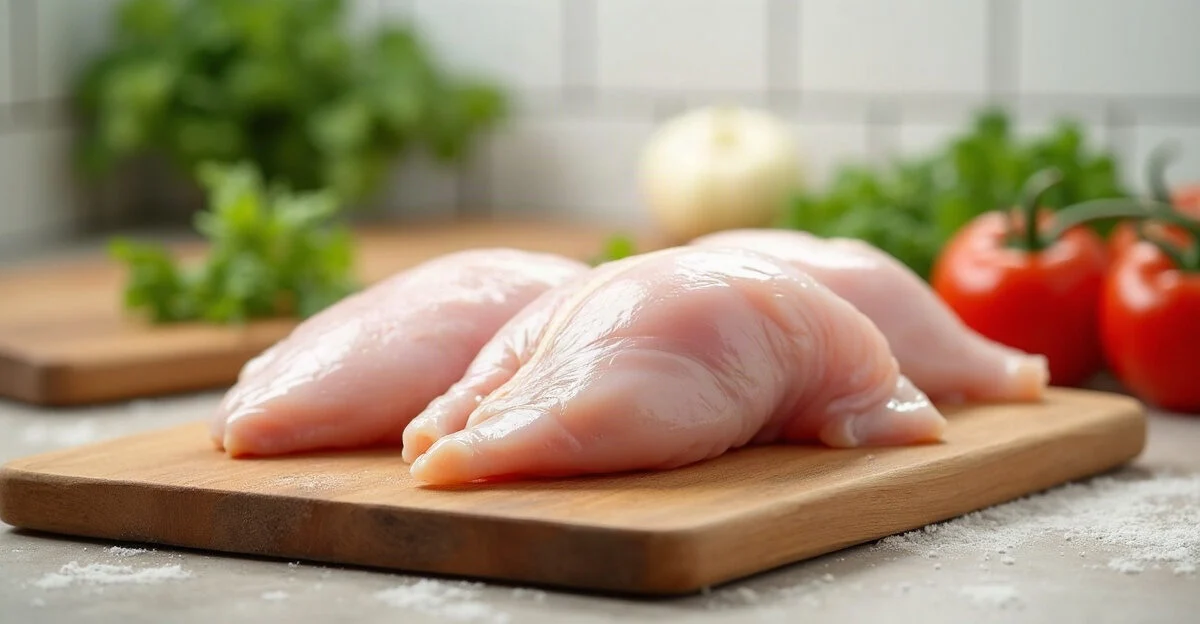
No, do not wash raw chicken. The UK Food Standards Agency, the NHS and the US CDC all give the same advice: washing does nothing useful and spreads bacteria. It can spray campylobacter, the most common cause of food poisoning in the UK, more than 20cm from the sink onto your hands, worktops and utensils. Cooking, not rinsing, is what makes chicken safe.
There is nothing visible to rinse off, either. Shop-bought chicken is not dirty in the way a muddy carrot is, so you gain nothing and risk a lot. It is a stubborn habit, often passed down through families, and Drexel University even ran a public campaign called "Don’t Wash Your Chicken" to break it.
The safe routine, step by step
- Take the chicken straight from its packaging to the pan, tray or dish. Do not rinse it. If you want it drier for crisp skin, pat it with kitchen paper and bin the paper.
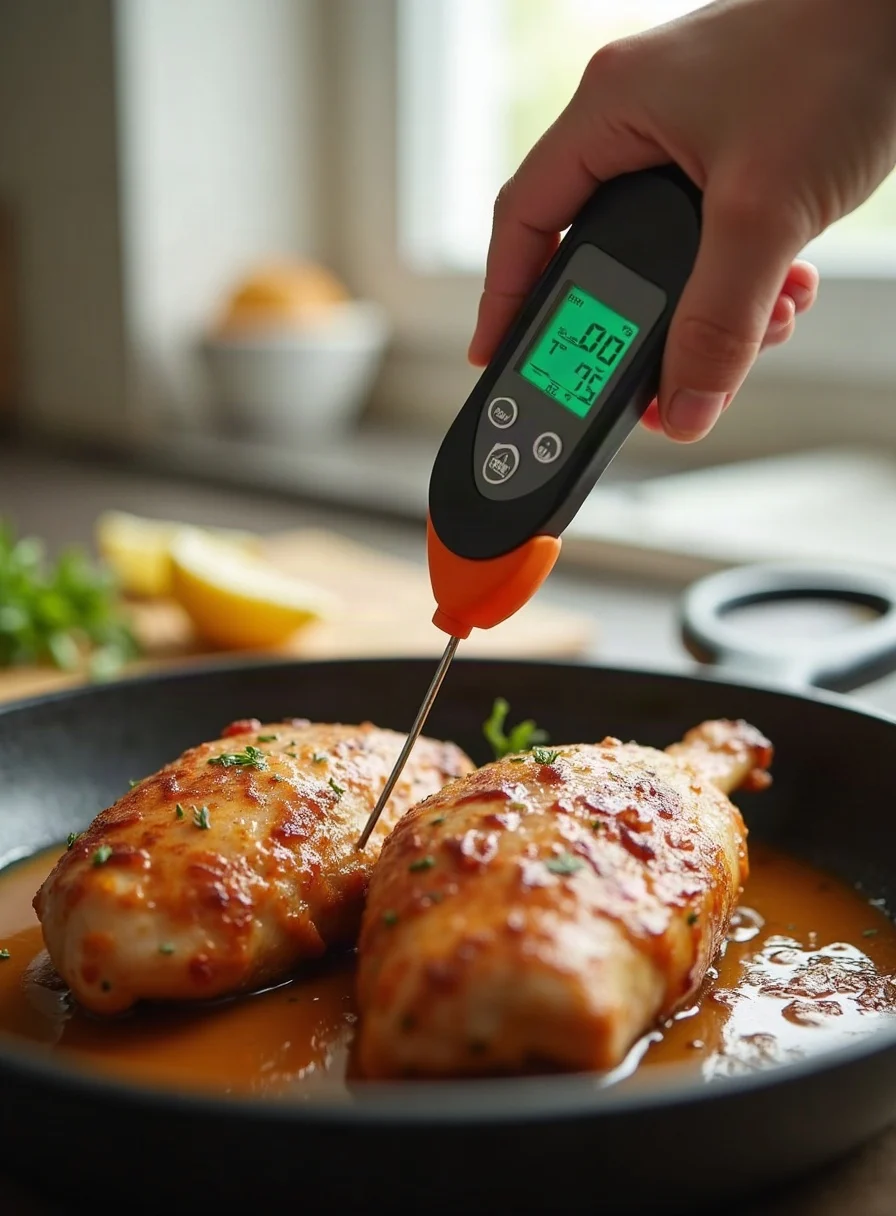
- Cook it until it is piping hot all the way through, with no pink meat and juices that run clear. The FSA benchmark is a core temperature of 70°C held for 2 minutes.
- Check the thickest part with a digital probe thermometer if you want certainty, especially for whole birds and thick breasts. Wipe the probe clean between checks so raw juices do not carry over.
- Keep raw chicken away from ready-to-eat food. Use a separate board for raw meat, and never put cooked food back on a board or plate that held the raw bird.
- Wash your hands with soap and warm water for 20 seconds afterwards, and clean any surface or utensil it touched with hot soapy water, then a food-safe antibacterial spray.
- Store raw chicken in a covered container on the bottom shelf of the fridge so it cannot drip onto other food, and use it by the date on the pack.
For the fuller picture on keeping the whole space safe, see our guide to deep cleaning your kitchen and the evidence on wood versus plastic chopping boards for raw meat. If your board is wooden, our guide to cleaning a wooden chopping board covers the care it needs.
Why a rinse makes things worse
The problem is splashing. When water hits a piece of raw chicken it does not simply disappear down the plughole. It bounces off, breaks into a fine spray, and carries bacteria with it.
A 2022 study in the journal Physics of Fluids, nicknamed "Chickensplash", put raw chicken under running taps and tracked where the droplets went. Tap height made the biggest difference: water falling from about 40cm above the chicken threw germs much farther than a tap just 15cm above it, with droplets travelling more than 22cm through the air. Those droplets land on your worktop, chopping board, nearby utensils, clothes and hands, seeding contamination well beyond the sink.
Washing therefore does not remove the risk, it multiplies it, turning a contained piece of meat into a spray of bacteria across your food-prep area. Hot water does not help either. Domestic hot taps are nowhere near hot enough to kill campylobacter, so you simply spread live bacteria in warm droplets.
What is on raw chicken, and what it does to you
The main concern is campylobacter, a bacterium that lives in the guts of poultry and is the biggest single cause of food poisoning in the UK. Salmonella is sometimes present too. Both are destroyed by proper cooking.
| Campylobacter fact | The detail |
|---|---|
| How common on UK chicken | Found on a large share of fresh chickens in FSA retail surveys, though the exact percentage varies by survey year |
| Link to poultry | Public health estimates tie most cases to poultry, with figures of up to about 80% often quoted |
| How little it takes | A small number of cells, in the hundreds, can make you ill |
| What kills it | Thorough cooking. It does not survive proper heat |
| Symptoms | Diarrhoea, cramps, fever and sickness, usually 2 to 5 days after exposure |
The reassuring flip side is that campylobacter is fragile once heated. The danger is not eliminated at the sink, it is eliminated in the oven or pan. Most people recover at home within about a week by resting and drinking plenty of fluids. See a GP or call NHS 111 if you have blood in your stools, symptoms that last longer than a week, signs of dehydration, or you are pregnant, elderly or have a weakened immune system.
When a recipe says to rinse
A few recipes and traditions call for rinsing, for example after brining, or to remove a marinade or bone fragments. If a recipe genuinely requires it, you can reduce the risk but not remove it.
- Lower the tap and use the gentlest flow possible. The Chickensplash study showed a low, soft stream splashes far less than a high, forceful one.
- Clear the area first. Move utensils, ready-to-eat food, cloths and the chopping board well away from the sink.
- Rinse in a bowl rather than under a running tap if you can, then pour the water away carefully.
- Clean and disinfect the sink, taps and surrounding surfaces immediately afterwards, and wash your hands.
For everyday cooking none of this is necessary. The default should always be: do not wash it.
Cleaning up after handling raw chicken
This is where the real hygiene happens. Raw chicken juices are the thing to worry about, not the surface of the meat you are about to cook.
- Wash your hands with soap and warm water for at least 20 seconds before you touch anything else. Soap and water beat gels on greasy, dirty hands, as hand sanitiser versus soap explains.
- Clean any board, knife or dish that touched raw chicken in hot soapy water, then finish with an antibacterial spray on worktops.
- Do not wipe surfaces with a dry cloth that then gets reused. A contaminated kitchen sponge or cloth just moves bacteria around. Use disposable kitchen roll, or a cloth that goes straight in a hot wash.
- Change or sanitise the cutting board before using it for anything else.
- Remember the sink and the tap handles. If the kitchen has a reputation as a germ hotspot, it is partly for this reason, as we cover in is the kitchen dirtier than the bathroom.
Turkey, duck, fish and other meat
The same rule applies to all raw poultry and meat: do not wash it. Turkey, duck and game carry the same splash risk and the same campylobacter and salmonella concerns, and rinsing spreads bacteria in exactly the same way. Cook them thoroughly and the bacteria are destroyed.
Fish and seafood are a slight exception in practice. Some cooks pat them dry with kitchen roll or give a quick rinse to remove scales or grit. If you do, keep the tap low and gentle, do it away from other food, and clean the sink and your hands straight afterwards. Patting dry with disposable paper is usually all that is needed, and it helps fish crisp up in the pan.
What to buy, if you want to
As an Amazon Associate we earn from qualifying purchases. You need very little, and the links go to Amazon UK searches so you can compare yourself.
A digital meat thermometer is the most useful. Choose a probe type with a fast read, a thin tip for poultry and a display you can read from a distance, and check the maker’s cleaning advice so you do not submerge one that is not waterproof. A set of colour-coded chopping boards lets you keep one for raw meat, and the best sets are dishwasher safe with grooves to catch juices. For worktops, an antibacterial kitchen spray used after cleaning with soap helps, but read the label for the contact time and for whether it is suitable for food surfaces. Last, kitchen roll is the simplest way to wipe up raw juices because you can bin it straight away.
Common reasons people give for washing, answered
| Claim | The reality |
|---|---|
| Washing chicken removes bacteria | No. It cannot reach bacteria in the meat and it sprays surface bacteria around the kitchen. |
| Rinsing makes chicken cleaner | Shop chicken is not visibly dirty. Rinsing adds risk without any benefit. |
| Hot water kills the germs as you wash | Tap water is nowhere near hot enough to kill campylobacter. Only cooking does that. |
| If I wash carefully there is no splash | Even a careful rinse splashes droplets over 20cm. Cooking, not washing, is the safety step. |
Five more things people ask
I have always washed chicken and been fine, so why stop? Getting away with a risky habit is not the same as it being safe. Most washes will not make you ill, but every one sprays bacteria around your kitchen, and it only takes a small dose of campylobacter to cause food poisoning. There is no upside to washing.
Does washing chicken with vinegar, lemon or salt make it safe? No. These do not reliably kill campylobacter or salmonella on raw meat, and you still splash while doing it. A marinade can add flavour, but only thorough cooking makes chicken safe, so cook it to the same temperature whatever you have added.
What if I have already washed it? Do not panic. Cook the chicken as normal, then wash your hands, and clean the sink, taps, draining board and anything nearby with hot soapy water followed by a food-safe disinfectant. Move on from the habit next time.
How should I defrost chicken safely? Defrost it fully in the fridge, in a covered container on the bottom shelf so juices cannot drip, and cook it soon after, following the instructions on the pack. Do not leave it on the worktop. Do not wash it afterwards, and do not refreeze raw chicken that has been defrosted.
Is slightly pink chicken always unsafe? Colour is an unreliable guide. Chicken that has reached a core temperature of 70°C for 2 minutes is safe even if a little pink near the bone, while chicken that looks white can still be undercooked. Rely on a thermometer, and cook it further if the juices are not clear.