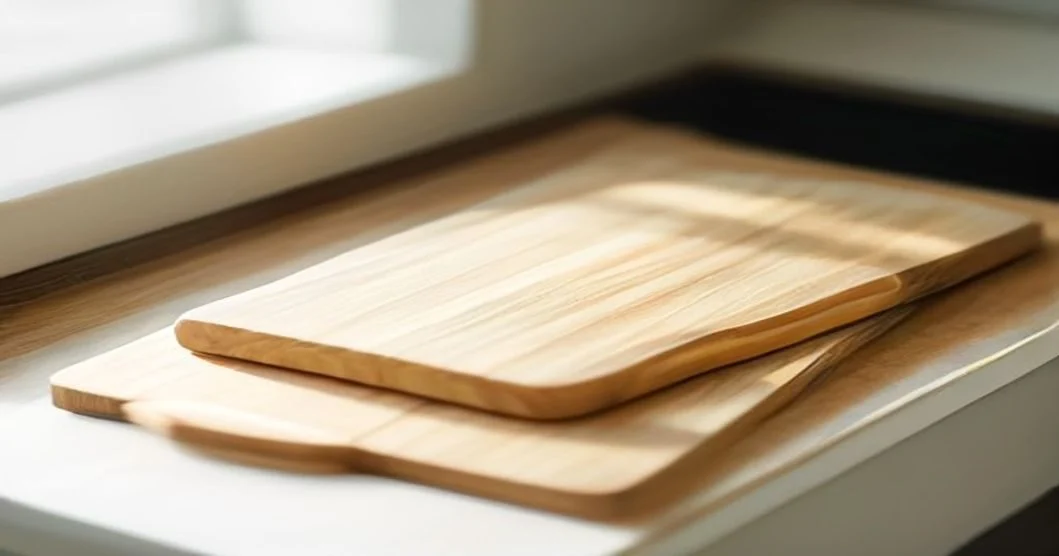
The short answer: contrary to popular belief, wood is at least as hygienic as plastic, and often more so. In the landmark research, bacteria like Salmonella died off rapidly when placed on wooden boards but survived and even multiplied on plastic. The genuinely risky board is a deeply knife-scarred one, and scarred plastic is the hardest of all to get clean. Both materials are perfectly safe if you look after them; plastic’s one real advantage is that it’s dishwasher-safe, while wood needs hand-washing and drying.
Handling raw meat safely starts before the board: here is why you should not wash raw chicken, and what to do instead.
“Use plastic, it’s more hygienic” is one of the most confidently repeated pieces of kitchen advice, and one the science doesn’t actually support. The surprising truth comes from decades-old food-safety research that still holds up today. Here’s what the studies found, why wood behaves so differently from plastic, and how to use either one safely, with sources linked at the end.
How we researched this: the findings below draw on food-safety research from UC Davis and studies in the Journal of Food Protection and Journal of AOAC International. Full references are at the bottom.
The landmark study that flipped the assumption
In the early 1990s, researchers Ak, Cliver and Kaspar at the University of California, Davis, deliberately contaminated wooden and plastic cutting boards with Salmonella, Listeria and E. coli to see how each material coped [1]. The results genuinely surprised people:
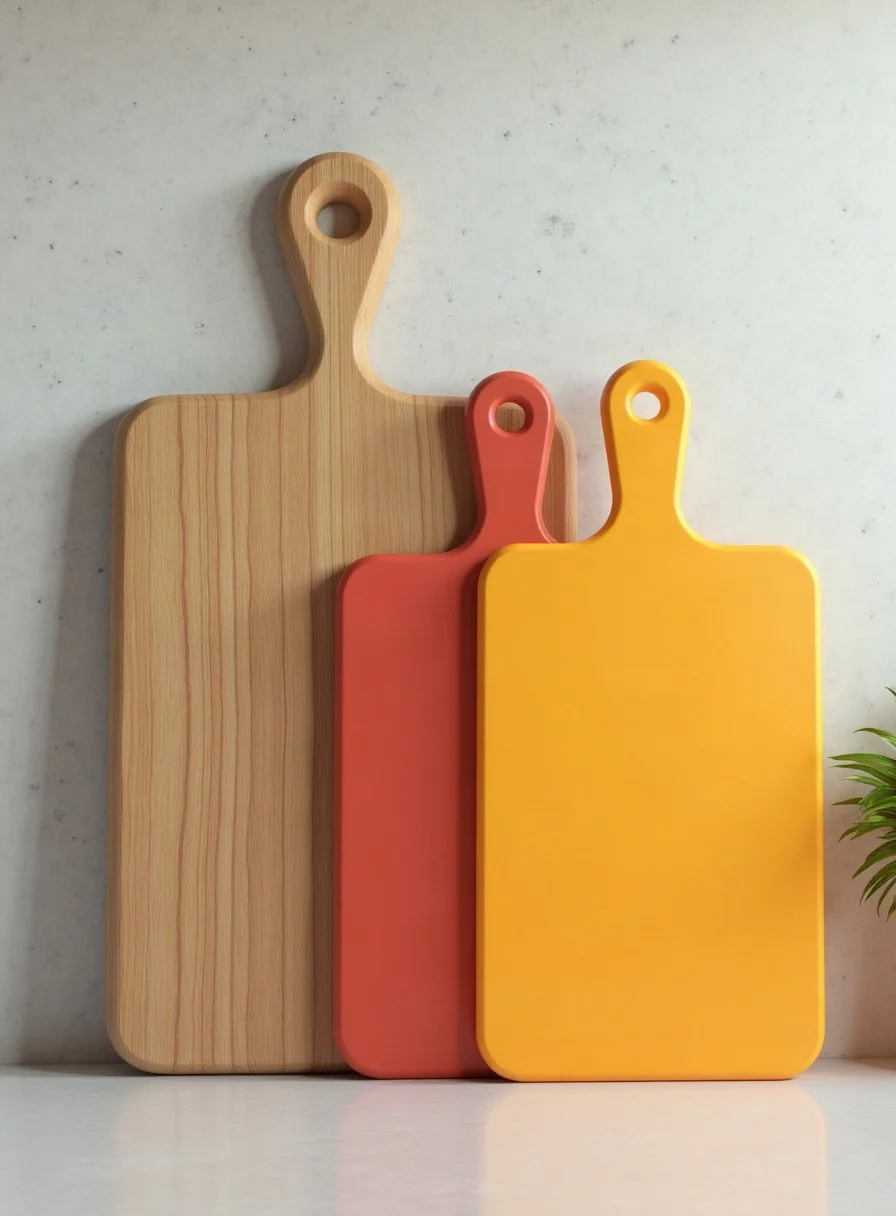
- On wood, the bacteria vanished fast. Around three minutes after contamination, roughly 99.9% of the bacteria on the wooden boards had died.
- On plastic, they thrived. The same bacteria survived on the plastic surface, and when boards were left out overnight at room temperature, the bacteria on plastic had actually multiplied, while the wooden boards had no recoverable bacteria at all.
- Old, scarred wood behaved like new wood. Even heavily knife-cut wooden boards still drew bacteria in and killed them, whereas knife-scarred plastic was, in the researchers’ words, essentially impossible to decontaminate by hand, especially with food residue like chicken fat present.
Later work has echoed this. A 2006 study in the Journal of AOAC International noted that, in home kitchens, plastic-board use was associated with a higher risk of Salmonella infection while wooden-board use was not [2]. And a 2025 Journal of Food Protection study comparing maple to plastic again found wood had a measurable bactericidal effect that reduced bacterial loads compared with plastic [3].
Why does wood kill bacteria?
It comes down to what wood does with moisture. When bacteria land on a wooden board, and when you wash it, the wood absorbs the water and draws the bacteria down into its fibres by capillary action. Once pulled below the surface, they’re away from your food, and they die as the board dries out. In effect, the wood traps and then kills them. (Many woods also contain natural antimicrobial compounds, which may add to the effect.)
This is the counter-intuitive bit: the very thing people worry about, wood being porous and “soaking up” germs, is exactly why it’s hygienic. The bacteria go in and don’t come back out onto your food.
The problem with plastic: knife scars
New plastic boards clean up easily, that’s not in dispute. The trouble starts once a plastic board has been used. Electron-microscope images show that knife cuts fracture the plastic surface, creating a web of microscopic fissures below the surface [1]. Bacteria lodge in these grooves, sheltered from soap, scrubbing and even sanitiser. Unlike wood, a scarred plastic board holds those bacteria on tap for the next thing you cut.
So is plastic ever the better choice?
Yes, plastic has one genuine advantage: you can put it in the dishwasher, where the high heat sanitises it. A new or lightly used plastic board run through a hot dishwasher cycle gets very clean. Wood, by contrast, must never go in the dishwasher (it warps, cracks and splits) and has to be hand-washed and dried.
The catch is that the dishwasher advantage fades as the plastic gets scarred, once those knife grooves form, even a dishwasher struggles to reach the bacteria hiding in them. So plastic is at its best when it’s new and replaced regularly, and at its worst when it’s old and scored.
Wood vs plastic: the honest comparison
| Wood | Plastic | |
|---|---|---|
| Bacteria on the surface | Die off quickly (drawn in and killed) | Survive; can multiply overnight |
| When knife-scarred | Still works like new wood | Very hard to clean; harbours bacteria |
| Dishwasher-safe? | No, hand-wash only | Yes (when new/unscarred) |
| Kinder to knives | Yes | Less so |
| Upkeep | Wash, dry upright, oil occasionally | Low; replace when scored |
| Best for | Everyday prep, bread, veg, general use | A dishwasher-sanitised board for raw meat, if you prefer |
The real takeaway isn’t “wood beats plastic” so much as “a well-kept board of either material beats a knackered one”, and a deeply scored old plastic board is the single worst option in the kitchen.
How to use either board safely
- Use separate boards for raw meat and ready-to-eat food. This is the single most important food-safety habit, it matters far more than which material you choose.
- Wash promptly in hot soapy water after use, and don’t let raw-meat residue sit.
- Dry wood standing upright so air reaches both faces; never leave it soaking or flat in water, and never put it in the dishwasher.
- Sanitise plastic in the dishwasher while it’s still relatively smooth.
- Replace any board that’s deeply scored, especially plastic, because the grooves can no longer be cleaned properly.
- Oil wooden boards occasionally with food-safe mineral oil to stop them drying and cracking.
For the full method, see our step-by-step guide to cleaning a cutting board.
Keep one of each and use them the safe way.
The bottom line
The idea that plastic chopping boards are the hygienic choice is a myth the research doesn’t back up. Wood actually draws bacteria in and kills them, while bacteria survive, and multiply, on plastic, and knife-scarred plastic is the hardest surface of all to clean. That said, both are safe when looked after: keep separate boards for raw meat, wash and dry them properly, sanitise plastic in the dishwasher, and bin any board that’s badly scored. Choose the material you’ll actually maintain, a cared-for wooden board and a regularly-replaced plastic one are both good; a battered old board of either kind is the thing to avoid.
Frequently asked questions
Are wooden or plastic cutting boards more hygienic?
The research favours wood. In UC Davis studies, bacteria such as Salmonella died off within minutes on wooden boards but survived and multiplied on plastic, and knife-scarred wood still worked while knife-scarred plastic couldn’t be cleaned properly. Plastic’s advantage is that it can be sanitised in the dishwasher when new, but wood is at least as hygienic and often more so.
Should you use a plastic board for raw meat?
You can, and many people prefer a plastic board for raw meat because they can run it through the dishwasher afterwards, that’s a reasonable approach as long as the board is smooth and not deeply scored. The most important thing, whatever the material, is to keep a separate board for raw meat so you never cut ready-to-eat food on the same surface.
Can you put a wooden cutting board in the dishwasher?
No. The prolonged heat and water make wood warp, crack and split. Wash wooden boards by hand in hot soapy water, rinse, and stand them upright to dry so air reaches both sides. Oil them now and then with food-safe mineral oil to keep them from drying out.
When should you replace a cutting board?
When it becomes deeply scored with knife cuts that trap food and bacteria, or (for wood) if it cracks or develops splits. Scarred plastic in particular can’t be reliably cleaned, so a heavily used plastic board should be replaced regularly. A wooden board can often be sanded smooth and re-oiled instead of replaced.
Does bleaching a plastic board make it safe?
A diluted bleach solution helps sanitise the surface, but it can’t reliably reach bacteria hidden deep in knife fissures, which is the whole problem with a scarred plastic board. Sanitising helps on a relatively smooth board; once it’s badly scored, replacement is the only reliable fix.
Do wooden boards harbour bacteria in the cracks?
Far less than you’d expect. The research found bacteria drawn into wood don’t survive to re-contaminate food, they’re trapped and die as the board dries. Even old, knife-scarred wooden boards behaved much like new ones. Keeping the board clean, dry and occasionally oiled maintains that natural effect.
Related reading: are kitchen sponges the dirtiest thing in your home? and does vinegar actually disinfect?
References
- Ak N.O., Cliver D.O., Kaspar C.W. “Cutting boards of plastic and wood contaminated experimentally with bacteria” and “Decontamination of plastic and wooden cutting boards for kitchen use.” Journal of Food Protection, 1994. Summary by the UC Davis researchers: Bacteria and Various Cutting Board Materials (D.O. Cliver, UC Davis)
- “Cutting boards in Salmonella cross-contamination.” Journal of AOAC International, 2006. pubmed.ncbi.nlm.nih.gov
- Comparative study of maple wood vs high-density polyethylene cutting boards. Journal of Food Protection, 2025.
This article summarises published food-safety research for general information. For food hygiene when cooking for vulnerable people, follow Food Standards Agency guidance.