The short answer: almost certainly yes. Laboratory studies have found used kitchen sponges to be among the most heavily bacteria-laden objects in the home, one landmark study measured up to 54 billion bacteria per cubic centimetre, densities comparable to human faeces. But the twist most people miss is this: microwaving or “sanitising” your sponge doesn’t reliably fix it. The best evidence says regular sanitising only knocks the numbers back temporarily, and may even leave the more troublesome bacteria behind, so the genuinely effective answer is to replace sponges often and keep them dry.
The kitchen sponge is the item everyone uses to clean, which is exactly why it’s worth knowing what the science actually says about it. Below we go through the real studies: just how dirty sponges get, whether the popular microwave-and-dishwasher tricks work, and what researchers actually recommend instead. Every finding is linked to its source at the end.
How we researched this: the findings below come from peer-reviewed studies in Scientific Reports, Food Control and food-safety journals, plus USDA research. Full references, with links, are at the bottom.
Disclosure: Cleaners Guide is a participant in the Amazon Associates programme, so if you buy through links on this page we may earn a small commission at no extra cost to you. It never changes our recommendations, we suggest products because they work and we point out cheaper options where they do the same job. Prices and availability change, so always check the current price before buying.
Just how dirty is a kitchen sponge?
Dirtier than almost anything else you touch daily. The most detailed look came from a 2017 study in Scientific Reports, which analysed used household sponges with DNA sequencing and microscopy. The researchers found densely packed bacterial communities reaching up to 5.4 × 10¹⁰ (54 billion) cells per cubic centimetre, and that five of the ten most common bacteria belonged to “risk group 2,” a category that includes species capable of causing infections [1].
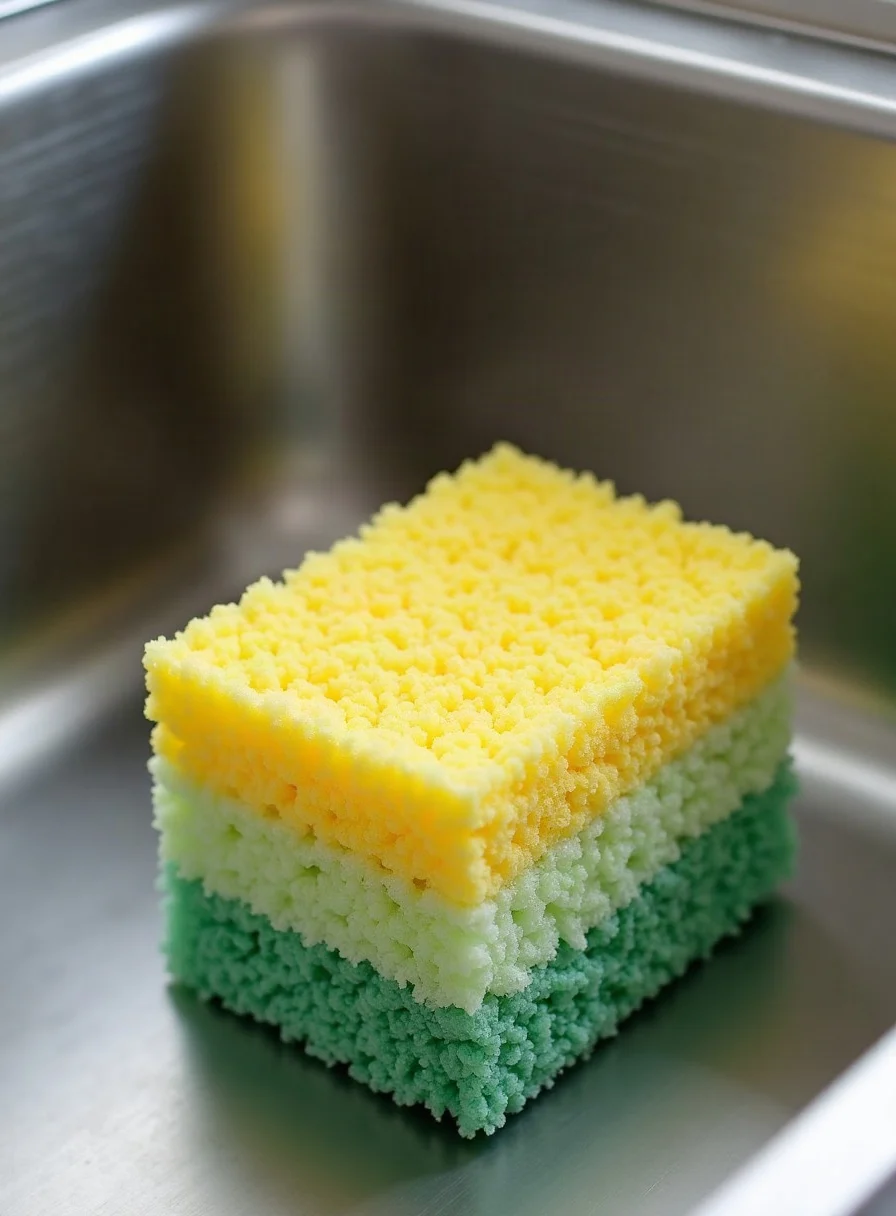
They’re not just sitting there, either. Sponges actively spread bacteria around your kitchen. Food-safety research shows that a contaminated sponge, pressed lightly onto a worktop, can transfer up to 100,000 (5 log) bacteria to that surface, which then transfer onward to chopping boards and food [2]. Surveys of real homes back this up: studies have isolated Salmonella from roughly 15% of household sponges and dishcloths, and E. coli from a third of sponges in one survey [2][3].
An important reality check: most of these bacteria are harmless, and most people are not made ill by their own sponge. But because a sponge can move germs from raw food onto clean surfaces and hands, it’s a genuine cross-contamination risk, especially around raw meat, poultry and eggs. That’s the real reason to care, not the raw bacteria count.
Why sponges are the perfect home for bacteria
A used sponge ticks every box bacteria need to thrive, which is why they colonise it so fast:
- Moisture, it stays damp for hours, and bacteria need water.
- Food, it traps tiny scraps of food that feed them.
- Huge surface area, the porous structure gives bacteria an enormous internal area to grow on, sheltered from drying out.
- Warmth, kitchen temperatures are ideal.
That combination is why a sponge can go from clean to heavily colonised within days, and why the drying-out point below matters so much.
Does microwaving a sponge actually work?
This is where the science gets genuinely interesting, because two respected studies point in different directions, and understanding why is the key to getting it right.
The case for: a USDA Agricultural Research Service study found that microwaving a wet sponge for one minute killed about 99.9999% of bacteria, and a hot dishwasher cycle with a drying phase killed 99.9998%, with microwaving the single most effective method tested [4]. On paper, that’s near-total destruction.
The case against: the 2017 Scientific Reports study looked at sponges from real kitchens and found something uncomfortable, sponges that owners regularly sanitised (by microwaving or reheating) were no cleaner overall, and actually showed higher proportions of some risk-group-2 bacteria such as Moraxella and Chryseobacterium [1]. The likely explanation: sanitising kills the weaker bacteria but the hardiest, potentially more problematic survivors bounce back and recolonise the freed-up space quickly.
How to reconcile them: microwaving genuinely does slash the bacterial count in that moment, the lab result is real. But within a day or two a damp, used sponge is heavily colonised again, and repeatedly sanitising the same old sponge doesn’t keep it safe long term. In other words, sanitising buys you hours, not a clean sponge. The reliable fix is replacement, not resurrection.
Sponge-cleaning methods, ranked by the evidence
See non-scratch sponges on Amazon →
| Method | Short-term kill | The catch |
|---|---|---|
| Microwave (damp, 1 min) | Very high (~99.9999%) | Recolonises fast; only ever microwave a wet sponge with no metal |
| Dishwasher (hot + dry cycle) | Very high (~99.9998%) | Same rebound; needs the heated-dry cycle |
| Boiling / very hot water | High | Temporary; awkward and easy to under-do |
| Bleach solution soak | High | Temporary; rinse well before reuse |
| Vinegar soak | Modest | Weaker than the above (see our vinegar evidence guide) |
| Just replace it | Total | The only method that actually resets the sponge |
If you want to know how vinegar specifically measures up as a sanitiser here, we cover the studies in does vinegar actually disinfect?
What the evidence says actually works
- Replace sponges regularly. This is the one method that truly resets things. Weekly is a sensible rule for a sponge in daily use, sooner if it smells or you’ve used it on raw-meat mess. A smelly sponge is already heavily colonised.
- Let it dry out between uses. Bacteria need moisture, so wring the sponge hard and store it somewhere airy (a rack, not the bottom of the sink). A sponge that dries fully each day grows far fewer bacteria than one left damp.
- Keep sponges away from raw meat, poultry and eggs. Use kitchen roll or a dedicated cloth for those jobs so you’re not seeding the sponge with foodborne pathogens.
- Consider a dish brush instead. Researchers have pointed out that brushes dry out quickly and hold far fewer bacteria than sponges, a small study found brushes harboured fewer Salmonella than sponges and dried faster, making them a more hygienic default for many jobs.
- If you do sanitise between replacements, a 1-minute microwave (damp sponge only) or a hot dishwasher cycle gives a short-term knock-down, just don’t treat it as a substitute for replacing.
Sponges are only one link in the chain, of course, see our guides to cleaning a chopping board and deep-cleaning your kitchen for the rest of the picture.
One safety note on microwaving sponges
If you microwave a sponge, it must be thoroughly wet, a dry or nearly-dry sponge can scorch or catch fire, and it must contain no metal (many scourer sponges have a metallic pad, which will spark). Heat it for no more than about a minute and take great care removing it, as it will be very hot and steamy. If in doubt, just replace it, sponges are cheap.
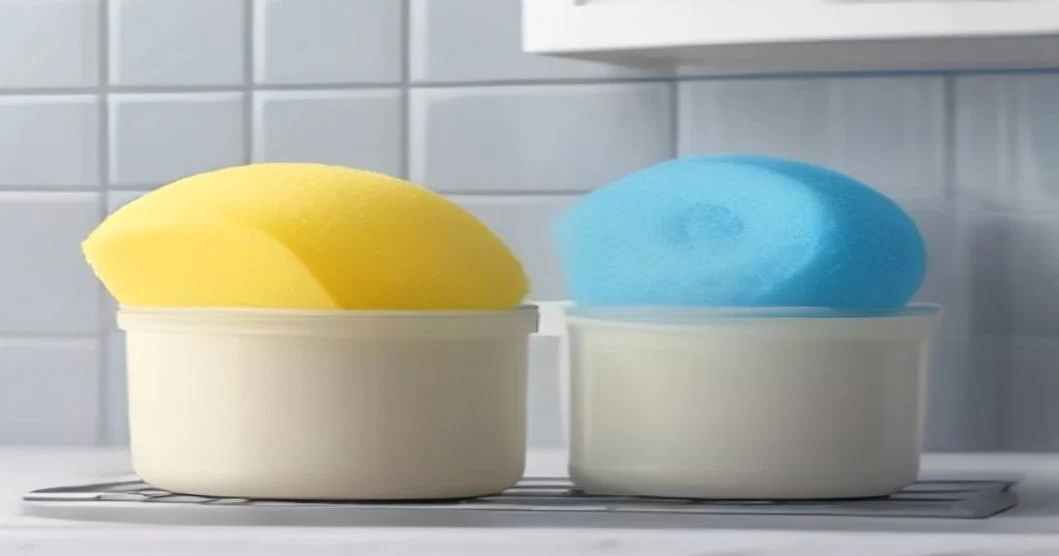
Sanitising helps a bit, but swapping often and drying out helps more.
The bottom line
Kitchen sponges really are one of the germiest things in your home, and their main risk is spreading bacteria from food and hands around the kitchen. But the popular “just microwave it” fix is only half true: sanitising slashes the bacterial count for a few hours, yet the sponge is quickly recolonised, and the studies suggest regular sanitising doesn’t keep it genuinely clean. The evidence-based routine is simple: keep sponges dry, keep them off raw-meat messes, and replace them often, and consider a quick-drying brush for everyday washing up.
Frequently asked questions
Is a kitchen sponge really dirtier than a toilet seat?
By bacterial count, very often yes. Used sponges have been measured with some of the highest bacterial densities of any household item, up to tens of billions of bacteria per cubic centimetre, which typically far exceeds a toilet seat. That said, toilet seats and sponges carry different mixes of bacteria; the sponge’s real risk is that it actively spreads germs onto surfaces, hands and food.
Does microwaving a sponge disinfect it?
Temporarily. A one-minute microwave of a damp sponge kills the large majority of bacteria in lab tests (around 99.9999%), but a used sponge is recolonised within a day or two, and research on real kitchens found regularly sanitised sponges were no cleaner overall, and enriched for some potentially harmful species. Microwaving buys hours, not a lasting clean; replacing is the reliable fix.
How often should you replace a kitchen sponge?
For a sponge in daily use, about once a week is a good rule, and immediately if it smells, looks grubby, or has been used on raw-meat spills. Smell is a reliable sign it’s already heavily colonised. Keeping it dry between uses extends how long it stays acceptable.
Can you clean a sponge in the dishwasher?
Yes, a hot dishwasher cycle that includes a heated drying phase killed about 99.9998% of bacteria in USDA testing, making it one of the most effective sanitising methods. As with microwaving, though, it’s a short-term reduction, so use it between replacements rather than instead of them.
Are dish brushes more hygienic than sponges?
Generally, yes. Because brushes dry out quickly and don’t hold moisture and food the way a porous sponge does, research has found they harbour fewer bacteria, including fewer Salmonella. Swapping to a brush for everyday washing up, and drying it between uses, is a simple way to cut kitchen cross-contamination.
What’s the most hygienic way to wash up?
Use hot, soapy water; keep a separate cloth or kitchen roll for raw-meat areas; let sponges and brushes dry fully between uses; and replace sponges regularly. For anything that touched raw meat, a proper disinfectant or a very hot wash beats relying on the sponge.
Related reading: another kitchen-hygiene belief worth testing, is the five-second rule real?
Related reading: now that you know how grimy a sponge gets, does microwaving actually kill the germs and sanitise it?
References
- Cardinale M. et al. “Microbiome analysis and confocal microscopy of used kitchen sponges reveal massive colonization by Acinetobacter, Moraxella and Chryseobacterium species.” Scientific Reports, 2017. nature.com
- “Kitchen Sponges as Reservoirs of Foodborne Pathogens: Microbial Growth Dynamics, Surface Cross-Contamination, and Hygiene Implications.” Journal of Food Protection, 2026. sciencedirect.com
- “The survival of foodborne pathogens during domestic washing-up and subsequent transfer onto washing-up sponges, kitchen surfaces and food.” PubMed, 2003. pubmed.ncbi.nlm.nih.gov
- Sharma M. et al. “Effective household disinfection methods of kitchen sponges.” Food Control (USDA ARS), 2009. sciencedirect.com
This article summarises published scientific research for general information and isn’t medical or food-safety advice; for food hygiene during illness or with vulnerable people, follow NHS and Food Standards Agency guidance. And on the cloth itself, see whether microfibre or cotton cloths clean better.