The verdict up front: yes, The Pink Stuff mostly lives up to the hype, it’s a genuinely effective, remarkably cheap cleaning paste that shifts baked-on grease, oven grime, stained pans and scuffed surfaces with very little effort. But it is not a magic potion. It works because it’s a mild abrasive: finely-ground quartz suspended in soap and a little bicarbonate of soda. That grit is the secret to its scrubbing power, and also the reason it can permanently scratch glass, shiny finishes, non-stick pans and natural stone. Used in the right places it’s brilliant value; used in the wrong ones it does damage you can’t undo.
Want the full list of jobs it is brilliant at? See our guide to the best uses for The Pink Stuff (and the surfaces to keep it off).
This is the review we wish existed when the paste went viral: an honest, UK-focused look at what The Pink Stuff actually is, what it’s best and worst at, and exactly which surfaces to keep it away from (with the simple bit of science that explains why). We also put it head-to-head against the three rivals people ask about most, Cif Cream, Bar Keeper’s Friend and Elbow Grease, so you know which one to reach for, and when a £1 tub genuinely beats a pricier “specialist” cleaner. Pros, cons, the full product range, what it costs, where to buy it, and a big FAQ are all below.
How we researched this: we’ve drawn on the manufacturer’s own ingredient list, independent expert reviews, and the basic materials science of surface hardness. Sources are linked at the end. This is an independent editorial review, we aren’t paid by the brand.
Disclosure: Cleaners Guide is a participant in the Amazon Associates programme, so if you buy through links on this page we may earn a small commission at no extra cost to you. It never changes our verdict: we recommend The Pink Stuff because it works and it is cheap, and we are just as clear about where it fails and what to keep it away from. Prices and availability change constantly, so always check the current price before buying.
What is The Pink Stuff (and who makes it)?
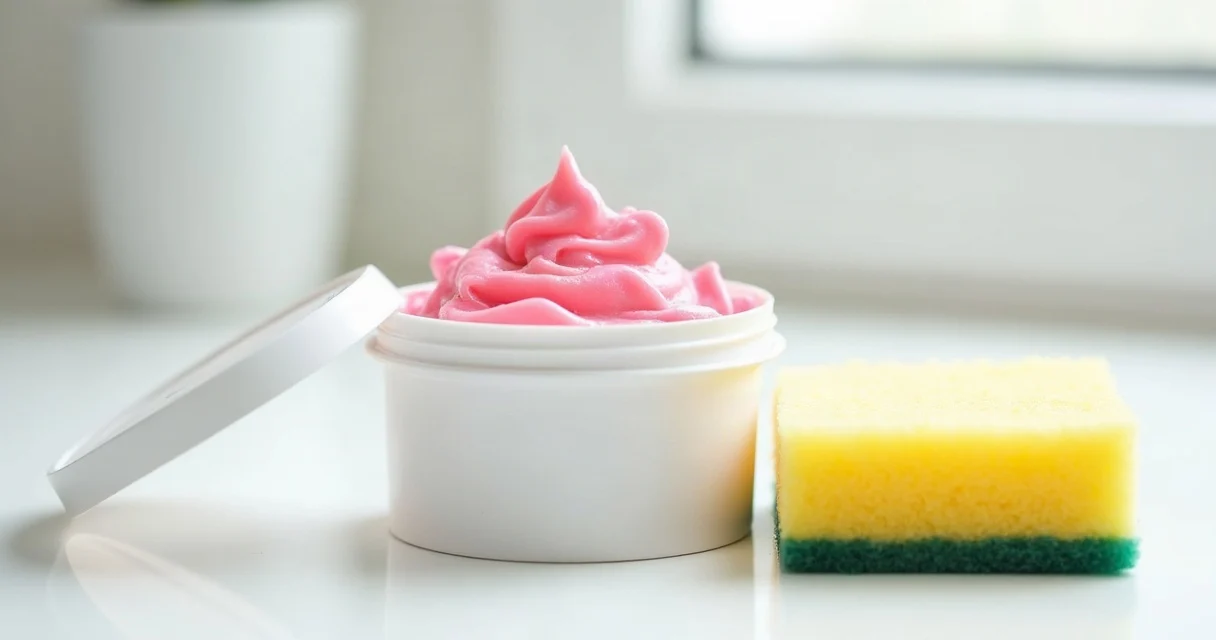
The Pink Stuff is a range of cleaning products made by Star Drops, a British family firm that has been making household cleaners since 1922. The hero product, the bright-pink Miracle Cleaning Paste, had been quietly on shelves for years before it exploded on social media around 2020, when cleaning influencers started using it to transform filthy ovens, pans and patios. It’s now one of the best-known cleaning products in the UK, sold in a tub for around a pound.
Two things get lost in the hype. First, “The Pink Stuff” is a whole range, not one product, the paste, a cream cleaner, a bathroom foam, sprays and toilet cleaners are all quite different (more on that below). Second, the famous paste isn’t a new invention: it’s a classic abrasive scouring paste, the same broad idea as own-brand “cleaning pastes” that have existed for decades. What Star Drops got right was a good formula, a memorable colour and brilliant timing.
What’s actually in it?
According to the manufacturer, the paste’s main ingredients are quartz (finely-ground mineral grit), sodium bicarbonate (bicarb), sodium silicate and soap. In plain terms, it’s a lot of very fine, hard mineral powder held in a soapy, slightly alkaline paste. That combination does two jobs at once:
- Physical abrasion. The quartz particles act like ultra-fine sandpaper, grinding away burnt-on food, grease and stains as you rub. This is where nearly all of its cleaning power comes from.
- Grease-cutting. The soap and mild alkalinity help lift and emulsify oily dirt, so it rinses away rather than just smearing.
The key thing to understand is that The Pink Stuff cleans mechanically, not chemically. It isn’t dissolving stains with a clever reaction, it’s physically scrubbing them off with fine grit. That’s why it’s so good on baked-on messes, and also why it has to be treated with respect on anything scratchable. It’s also worth knowing what it is not: it is a cleaner, not a disinfectant, so it isn’t designed to kill germs (for that, see our guide to what actually disinfects surfaces).
Does The Pink Stuff really work?
On the right surfaces, genuinely yes, and that’s not just marketing. Because it’s a fine abrasive with real grease-cutting help, it excels at jobs where you’d otherwise be scrubbing for ages. The standout uses where it earns its reputation:
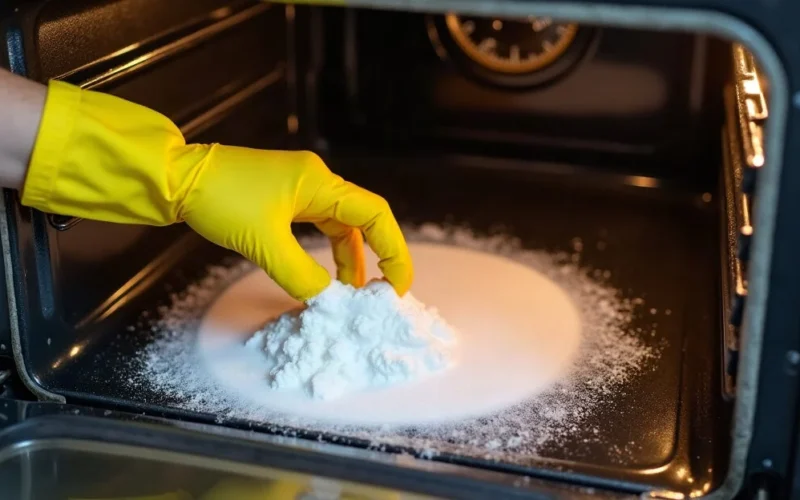
- Oven doors, racks and glass-free oven interiors, baked-on carbon is exactly what it’s made for (pair it with our guide to cleaning oven racks).
- Stained saucepans and the base of stainless-steel pans, lifts burnt-on residue and heat stains (see also how to clean a burnt pan).
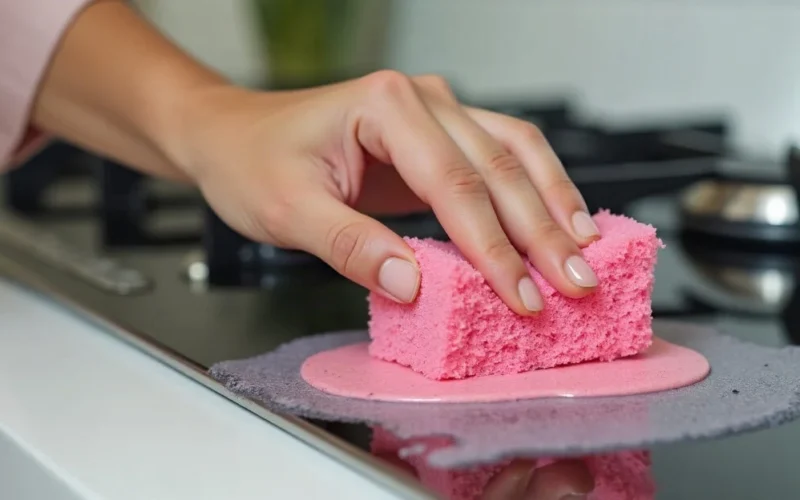
- Stainless-steel hobs, splashbacks and sinks, with a light touch and the grain (careful, see the scratch section below).
- BBQ grills and griddle plates, uPVC window frames and doors, garden furniture and patios.
- Grubby grout, taps (non-plated), tile and ceramic bathroom surfaces.
- Scuff marks on skirting, walls and hard floors.
The honest caveat: it works because it’s a good abrasive, not because it’s chemically special. On rust, heavy limescale or metal tarnish, jobs that need a chemical reaction rather than scrubbing, a different product will beat it, which is exactly what the comparison below shows. And on the wrong surface, that same grit is a liability.
What NOT to use The Pink Stuff on
This is the part most reviews skate over, and it’s the most important. Because the paste cleans with quartz grit, it can scratch anything softer than quartz, and a surprising number of household surfaces are. The chart below plots common surfaces on the Mohs hardness scale against quartz (hardness 7). Everything to the left of that pink line can be scratched if you press too hard.
In practice, keep The Pink Stuff paste away from:
- Glass of any kind, windows, mirrors, shower screens, and especially oven door glass. Quartz is harder than glass and will leave fine scratches or a permanent haze.
- Glass and ceramic hobs, and induction tops, one of the most common regrets. Use a dedicated hob cream instead.
- Non-stick pans and bakeware, it will wear away the coating.
- Acrylic and plastic baths, shower trays and sinks, these are soft and scratch dull very easily.
- Shiny, polished and plated finishes, chrome or gold-plated taps, gloss-painted surfaces, and high-gloss furniture or appliances. Plating is thin and the paste rubs through it.
- Unsealed natural stone, marble, limestone and travertine worktops and tiles.
- Car paintwork and clear-coat, despite the viral “cleans headlights” clips, it can micro-scratch paint.
- TV, laptop and phone screens, never.
The golden rule: always test on a hidden patch first, rub gently, and stop the moment you feel it dragging. On borderline surfaces like stainless steel, work with the grain and use the lightest pressure that still cleans. If in doubt, reach for a gentler cream (see the comparison next).
The Pink Stuff vs Cif, Bar Keeper’s Friend and Elbow Grease
People constantly ask which of these to buy. The single most useful thing to understand is that they split into two camps. The Pink Stuff, Cif Cream and Elbow Grease are all physical abrasives, they clean by scrubbing with fine mineral particles. Bar Keeper’s Friend is different: its active ingredient is oxalic acid, which chemically dissolves rust, limescale and metal tarnish. That one difference decides most “which is best” questions.
| Product | How it cleans | Best for | Weak at / avoid | Rough UK price |
|---|---|---|---|---|
| The Pink Stuff (Paste) | Fine quartz abrasive + soap (physical) | Baked-on grease, ovens, pans, BBQs, patios, best all-round value | Rust & limescale; scratches glass, gloss, non-stick, stone | ~£1 (500g) / ~£2.50 (850g) |
| Cif Cream Cleaner | Ultra-fine “micro-crystal” abrasive (physical) | Gentler everyday scrubbing on hobs, sinks, tiles | Heavy baked-on grime (less punchy); still mildly abrasive | ~£1.50–£2 (500ml) |
| Bar Keeper’s Friend | Oxalic acid + mild abrasive (chemical + physical) | Rust, limescale, hard-water marks, stainless-steel & brass tarnish | Not for stone/enamel; needs rinsing; wear gloves | ~£3.50–£5 (250–500g) |
| Elbow Grease Cream | Micro-crystal cream abrasive (physical) | Budget everyday cream cleaner; very cheap | Heavy jobs; a touch less known/consistent | ~£1 (540g) |
Which should you buy? For sheer grease-shifting value on ovens, pans and outdoor jobs, The Pink Stuff paste is the pick and the cheapest per clean. For gentle daily wiping of hobs and sinks, Cif or Elbow Grease cream are softer and lower-risk. But for rust, limescale or tarnished stainless steel, Bar Keeper’s Friend genuinely outperforms all of them, because it works chemically where the others can only scrub. Many households sensibly keep two: a tub of Pink Stuff for heavy grease, and a tub of Bar Keeper’s Friend for rust and water marks.
How to use The Pink Stuff paste
Technique matters more than people think, the difference between a brilliant result and a scratched surface is mostly in how you apply it.
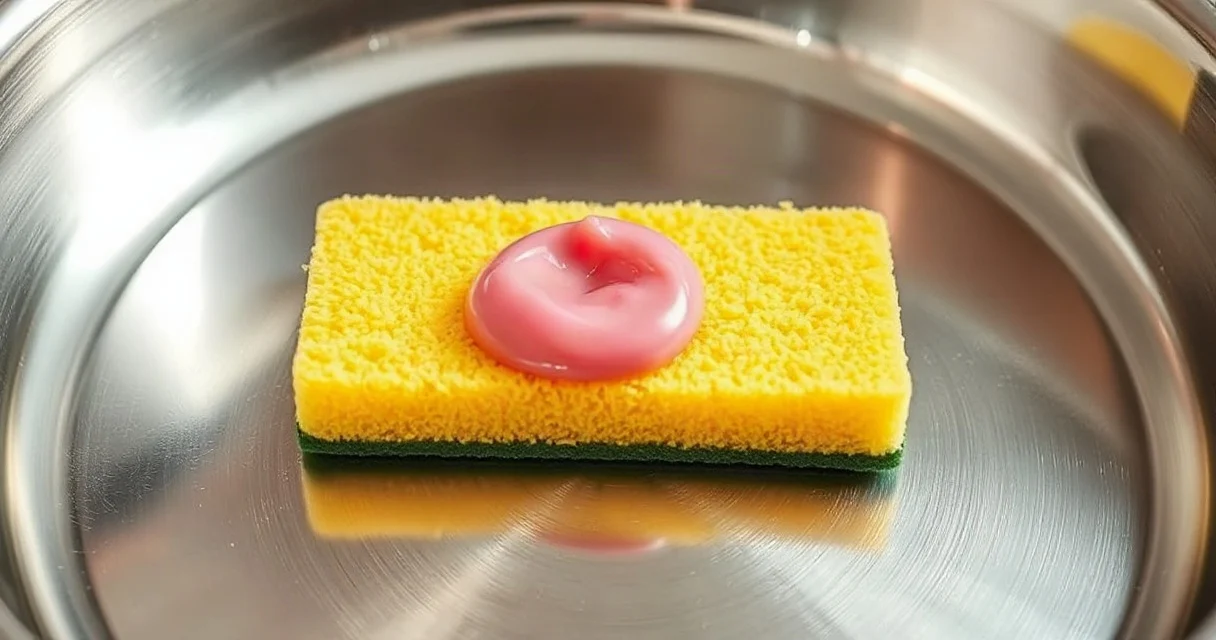
- Check the surface is suitable (see the scratch list above) and do a quick hidden spot-test if you’re unsure.
- Use a damp, not soaking, cloth or sponge. A little water helps the paste glide instead of dragging the grit.
- Take a small amount. A pea-to-teaspoon blob is plenty; more paste doesn’t clean faster, it just wastes product and needs more rinsing.
- Rub gently in small circles (or with the grain on stainless steel), letting the paste do the work. Increase pressure only if you need to, and stop if it feels like it’s scratching.
- Don’t let it dry on the surface. Work in sections so it stays damp.
- Rinse thoroughly with clean water and buff dry. This step is essential, left unrinsed, the paste dries to a chalky pink film. Rinse until the water runs clear.
A few extra tips: wear gloves if you’re doing a big job (it’s drying on the hands), keep it off aluminium for long soaks, and never mix it with other cleaning chemicals, plain water is all it needs. Let hot surfaces cool first, because the label advises against using the paste on warm or hot surfaces. And keep it off anywhere your pets lick, such as food and water bowls, unless you rinse the surface thoroughly afterwards.
The rest of the range: paste isn’t the only “Pink Stuff”
Because everything shares the same pink branding, people assume it’s all interchangeable. It isn’t. The key point: only the paste is the heavy abrasive, the cream and sprays are gentler and safer on more surfaces.
| Product | What it’s for |
|---|---|
| Miracle Cleaning Paste | The famous one. Heavy-duty abrasive for baked-on grease, ovens, pans, patios. Most powerful, most scratch-risk. |
| Miracle Cream Cleaner | A softer, pourable cream for everyday surfaces, closer to Cif. Gentler than the paste. |
| Bathroom Foam Cleaner | Spray-on foam aimed at limescale, soap scum and shower grime. Not abrasive. |
| Multi-Purpose Spray | Everyday all-surface spray for quick wipe-downs. |
| Foaming / Gel Toilet Cleaner | For the toilet bowl, limescale and stains under the rim. |
| Window & Glass Cleaner | A liquid spray that is safe on glass, unlike the paste. |
How much does it cost, and where to buy it?
Value is a huge part of the appeal. In the UK the paste typically costs around £1 for a 500g tub and roughly £2.25–£2.75 for the larger 850g tub (prices vary by shop and over time). A single tub lasts most households months, because you use so little per job, which makes the cost-per-clean genuinely tiny.
You’ll find it almost everywhere: Tesco, Asda, Sainsbury’s, B&M, Home Bargains, Savers, Poundland, The Range, Wilko-successor shops and Amazon, plus the brand’s own website. Because it’s so widely stocked, it’s rarely worth paying a premium, if one shop has it dear, another will have it near a pound.
The paste is cheapest in supermarkets and discount shops, but it is easy to have delivered too. These are Amazon UK searches for the exact products we recommend, prices change so always check before buying.
Pros and cons
The pros:
- Genuinely powerful on baked-on grease, ovens, pans, BBQs and outdoor surfaces.
- Outstanding value, around £1 a tub and a little goes a long way.
- Versatile across many hard surfaces, indoors and out.
- Low-odour and no harsh solvent smell.
- The brand markets it as vegan and cruelty-free.
- Widely available in nearly every UK supermarket and discount shop.
The cons:
- Abrasive, it can permanently scratch glass, gloss, plating, non-stick and stone.
- Needs thorough rinsing or it leaves a chalky pink film.
- Poor on rust and limescale, it can’t dissolve them the way an acid cleaner does.
- Not a disinfectant, it cleans but isn’t designed to kill germs.
- Requires a bit of elbow grease and technique; it’s not a spray-and-walk-away product.
- Easy to overuse, more paste doesn’t mean more cleaning.
The verdict: is The Pink Stuff worth it?
Yes, for the right jobs, it’s one of the best-value cleaning products you can buy, and the viral reputation is largely earned. As a cheap, powerful abrasive for greasy, baked-on and outdoor grime, it’s excellent. Just go in with clear eyes: it’s fine grit in a tub, not a miracle, so keep it off anything shiny, glass, plated, non-stick or stone, rinse it off properly, and reach for Bar Keeper’s Friend when the enemy is rust or limescale. Treat it as one very good tool in the cupboard rather than the only one, and you’ll get the transformations without the regrets.
Myths vs facts
| Myth | The reality |
|---|---|
| “It’s a miracle cleaner that works on everything.” | It’s a very good abrasive paste. Brilliant on grease; wrong for glass, gloss, non-stick and stone. |
| “It’s safe on glass hobs and oven doors.” | No, the quartz grit is harder than glass and can scratch or haze it permanently. |
| “It disinfects and kills germs.” | It’s a cleaner, not a disinfectant. Use a proper disinfectant if killing germs is the goal. |
| “It beats everything, so you don’t need anything else.” | For rust and limescale, an oxalic-acid cleaner (Bar Keeper’s Friend) genuinely works better. |
| “More paste cleans faster.” | No, a small blob on a damp cloth works best and rinses off cleanly. |
Frequently asked questions
Does The Pink Stuff really work?
Yes, on the right surfaces. It’s a fine quartz abrasive with grease-cutting soap, so it excels at baked-on grease, oven grime, stained pans, BBQs and patios. It’s less effective on rust and limescale, which need a chemical cleaner rather than scrubbing.
What is The Pink Stuff made of?
The paste’s main ingredients are quartz (fine mineral grit), sodium bicarbonate, sodium silicate and soap. The quartz does the scrubbing; the soap and mild alkalinity cut grease.
Can you use The Pink Stuff on glass?
No, not the paste. Quartz is harder than glass, so the paste can leave fine scratches or a permanent haze on windows, mirrors, shower screens and oven door glass. Use the brand’s glass spray or a proper glass cleaner instead.
Can you use it on a glass or ceramic hob?
Best avoided. Glass and ceramic hobs scratch easily, and induction tops especially. Use a dedicated hob cream that’s formulated to be safe on that surface.
Can you use The Pink Stuff on stainless steel?
Yes, with care. Use a light touch, work with the grain, and test a hidden area first, as heavy pressure can leave fine scratches. For rust spots or hard-water marks on stainless steel, Bar Keeper’s Friend is the better tool.
Does The Pink Stuff disinfect or kill germs?
No. It’s a cleaner, not a disinfectant, it removes dirt and grease but isn’t designed to kill bacteria or viruses. If you need to disinfect, clean first and then use a proper disinfectant.
The Pink Stuff vs Cif: which is better?
The Pink Stuff paste is punchier and cheaper for heavy, baked-on grime. Cif Cream is gentler and lower-risk for everyday wiping of hobs, sinks and tiles. Many people own both; for tough jobs reach for the paste, for daily jobs the cream.
Is The Pink Stuff better than Bar Keeper’s Friend?
They’re built for different jobs. The Pink Stuff (abrasion) wins on greasy baked-on messes and value. Bar Keeper’s Friend (oxalic acid) wins on rust, limescale and tarnished metal, because it dissolves them chemically. Ideally keep one of each.
Does The Pink Stuff expire or dry out?
It has a long shelf life and doesn’t really “go off”. If the tub dries out, stir in a little water to bring the paste back to a workable consistency. Keep the lid on to slow drying.
Is The Pink Stuff vegan and cruelty-free?
The manufacturer markets The Pink Stuff as vegan and not tested on animals. If that matters to you, check the current packaging or the brand’s website for the up-to-date certification.
Where can I buy The Pink Stuff in the UK?
Almost everywhere: Tesco, Asda, Sainsbury’s, B&M, Home Bargains, Savers, Poundland, The Range and Amazon, as well as the brand’s own site. It’s so widely stocked that it’s rarely worth paying more than about a pound for the 500g tub.
References
- Star Drops / The Pink Stuff, official product and ingredients information, thepinkstuff.com
- Good Housekeeping Institute, “The Pink Stuff review: does the ‘miracle’ cleaner really work?”, goodhousekeeping.com
- Bar Keepers Friend, “Oxalic Acid: the science of BKF” (active ingredient), barkeepersfriend.com
- Unilever, Cif Cream, on its switch to fine “micro-crystal” abrasives, unilever.com
- Mohs scale of mineral hardness (quartz = 7; glass ≈ 5.5), Encyclopaedia Britannica
Last reviewed: August 2026. Independent editorial review, we are not sponsored by Star Drops or The Pink Stuff. Prices are approximate and vary by retailer and over time. Always follow the product label and spot-test first.