A hip flask goes wrong in a handful of predictable ways. The first sip tastes of metal, the cap smells of last winter’s whisky, there is a grey film inside, or the whole thing has gone musty in a drawer. Each of those has a different cause, and the fix is rarely the same.
The quick version: shake it with warm water and a drop of washing-up liquid, use a teaspoon of uncooked rice to scour the inside, rinse until no trace of cleaner remains, and dry it upside down with the cap off. What changes the method is the metal. Pewter is soft and dislikes heat and strong acid, while stainless steel is far more forgiving.
Disclosure: Cleaners Guide is a participant in the Amazon Associates programme, so if you buy through links on this page we may earn a small commission at no extra cost to you. It never changes our recommendations, we suggest products because they work and we point out cheaper options where they do the same job. Prices and availability change, so always check the current price before buying.
What is wrong with your flask?
Match what you can taste, smell or see to the likely cause, then jump to the fix. Most of these come down to residue, trapped moisture or a seal that has aged.
| What you notice | Most likely cause | Where to start |
|---|---|---|
| Metallic taste in the first drink | New flask with manufacturing residue, or a drink left in for days | Wash, rinse and season it (first-use section) |
| Stale, boozy smell even when empty | Dried spirit film on the inner walls | Diluted vinegar shake or a denture tablet soak |
| Musty smell, perhaps a little mould | Stored damp or with the cap screwed down | Clean, then dry upside down for hours and store cap off |
| Dark or sticky staining inside | Old spirit or sugary liqueur dried on | Rice scour, then a bottle brush used gently |
| Drink tastes of cork or rubber | A perished seal or gasket in the cap | Replace the seal, more cleaning will not help |
| Grey, dull or spotty outside | Tarnish, fingerprints or water marks | Polish, with the method matched to the metal |
| Pitting, flaking or a degraded lining inside | Corrosion or an old internal coating | Stop. Do not drink from it |
Pewter or stainless steel? Check this first
Nearly every fix below depends on the metal. The two common materials differ in a few important ways.
| Pewter | Stainless steel | |
|---|---|---|
| Feel and look | Heavier, softer, dull silvery-grey, often ornate or antique | Lighter, harder, bright shiny finish, usually modern |
| Hot water | Warm only. Pewter has a low melting point and can distort with very hot or boiling water | Fine with hot water |
| Acid (vinegar or lemon) | Only briefly with distilled white vinegar, well rinsed. Never leave acid sitting in pewter | Tolerates diluted vinegar well |
| Dishwasher | Never. Heat and detergent damage pewter | Best avoided too, as it dulls the finish and harms engraving |
| Abrasives | Soft, so no scourers. Rice is the safe internal abrasive | More forgiving, but still avoid harsh scourers on the outside |
If you are not sure which you have, treat it as pewter. Warm (not hot) water, mild soap and thorough rinsing are safe on both.
Fix 1: the everyday shake and the first-use clean
This is the easiest fix and it handles most residue. A brand-new flask should always be cleaned before its first use, because manufacturing can leave a metallic taste, polishing residue or a faint oily film inside. A funnel makes filling and rinsing far less fiddly, and a small one is worth having: hip flask funnels come in stainless steel and plastic, and the narrow spout is the part to check against your flask’s opening.
- Rinse with lukewarm water (never hot on pewter) to flush out loose residue.
- Half-fill with warm water and a drop of washing-up liquid, cap it and shake for 20 to 30 seconds, then rinse very thoroughly. Soap taste is as unwelcome as metal.
- Season it (optional but traditional): fill the flask with a small amount of the spirit you will be using, leave it a few hours or overnight, then pour that measure away. This helps clear any lingering metallic taste.
- Dry completely upside down before you fill it for real.
After that first clean and season, future cleans are simpler. Washing up after every outing means you rarely need the stronger fixes below.
Fix 2: reaching the inside when the shake is not enough
The narrow neck means you cannot get a cloth or your fingers in, so the trick is to let something move around inside for you. These options run from gentlest to strongest.
- Warm soapy water shake: the everyday clean described above. Try this first every time.
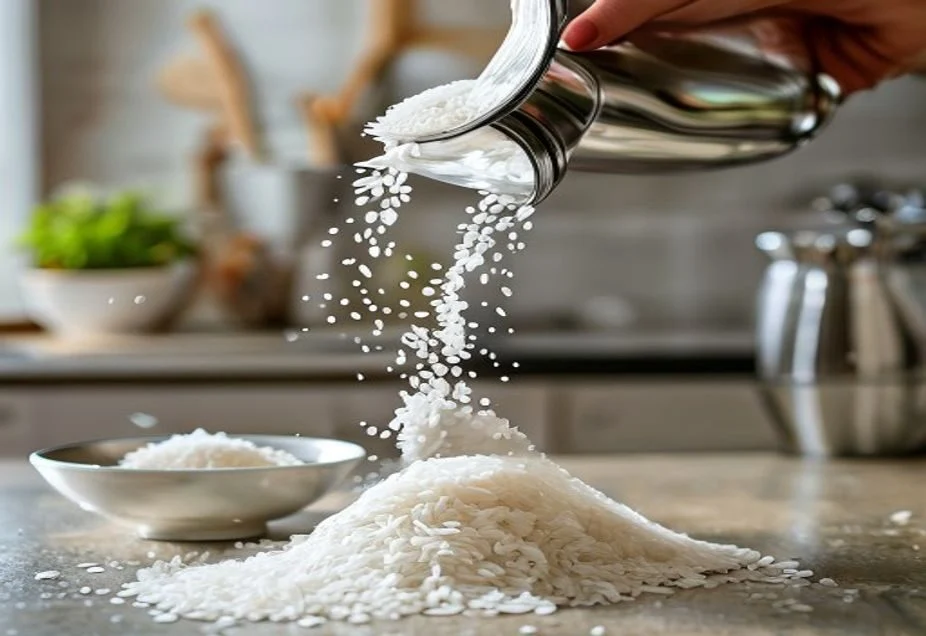
- The rice trick, for stubborn residue: add a teaspoon of dry, uncooked rice with a little warm soapy water or diluted distilled white vinegar, cap and shake hard. The rice acts as a gentle scouring agent on the inner walls, and it is soft enough for pewter. Rinse every grain out afterwards.
- Distilled white vinegar, for smells and staining: roughly half distilled white vinegar and half water, shaken for 20 seconds, lifts stale smells and tastes. Use distilled white vinegar only, keep the contact brief on pewter, and rinse thoroughly, with warm water on pewter and hot on stainless. Our piece on whether vinegar really disinfects explains why it is good for smells but not a substitute for a proper sterilising step.
- Denture tablets: drop one in with warm water, let it fizz for 15 to 30 minutes, then rinse. Gentle and effective for freshening the inside. Plain effervescent denture tablets are the sort to look for, and the same trick is used for cleaning retainers.
- A narrow bottle brush: useful for heavy staining, but use it gently, especially on soft pewter, and check the bristles are not wire. Small bottle brush sets often include a slim brush that fits a flask neck, but measure your opening first.
Whatever you use, rinse until there is no trace of cleaner. Leftover soap, vinegar or tablet residue will taint your next drink. The same inside-cleaning problem comes up with narrow-necked stainless steel water bottles, where the rice and bottle-brush tricks work identically.
Getting rid of a metallic taste or boozy smell
Two of the most common complaints, a metallic taste in the drink and a stale alcohol smell, usually come down to residue and moisture.
- Metallic taste: nearly always a new or under-cleaned flask. Season it (fill with spirit, leave, discard) and do not leave drink sitting in it for days, as prolonged contact draws out more metallic flavour.
- Stale or boozy smell: a distilled white vinegar and water shake, or a denture tablet soak, neutralises it. Follow with a thorough rinse and, crucially, full drying.
- Musty smell: that is trapped moisture and the beginnings of mould from storing it damp. Clean, then dry completely upside down, and store it empty with the cap off.
A flask is for carrying a drink for the day, not storing it for weeks. Empty it, clean it and dry it after each outing, and these smells never get a chance to develop.
If you want a stronger step than vinegar, sterilising tablets of the kind sold for baby bottles are one option, and Milton-style sterilising tablets are the best-known example. They are chlorine-based, so follow the pack directions exactly, check the label says it suits your metal (many manufacturers advise against leaving them in contact with metal for long, and soft pewter is the sort of surface to be most careful with), rinse well, and never combine them with vinegar. The list of cleaning products you should never mix explains why.
Fix 4: pewter and stainless steel, outside and in
Pewter
Pewter flasks, often antique, engraved or inherited, need the gentlest routine. Pewter is a soft alloy with a low melting point, so heat and strong acid are the enemies.
- Inside: warm (never hot) soapy water and a shake, the rice trick for residue, or a brief diluted distilled white vinegar shake for smells, always rinsed thoroughly with warm water.
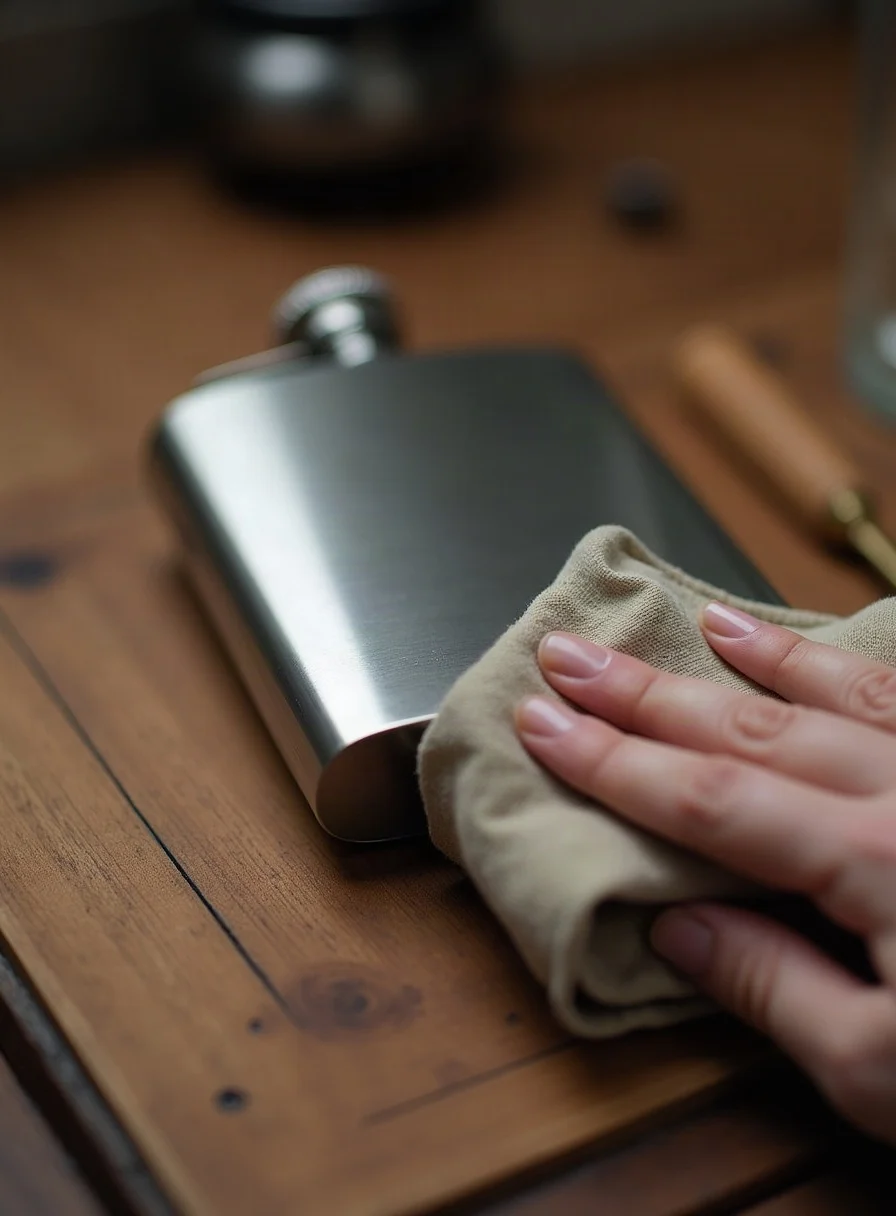
- Outside: wipe with a soft, damp cloth and dry immediately. For dullness, a dedicated pewter polish brings back the soft sheen, but do not over-polish antique pewter, as the aged patina is part of its character and value.
- Never: put pewter in the dishwasher, pour boiling water into it, leave acidic drinks (or acidic cleaners) sitting in it, or scrub it with abrasive pads. Any of these can pit, distort or permanently mark the soft metal.
Pewter shares its softness and care needs with silver. If your flask is silver or silver-plated rather than pewter, our tarnished silver guide covers polishing it safely.
Stainless steel
Stainless is the tougher, low-maintenance option and forgives more. The inside gets the same warm soapy water, rice or vinegar treatment as any flask, but stainless takes hot water happily, so you can finish with a hot rinse to help it dry fast and streak-free. For the outside, a wipe with a microfibre cloth keeps it bright, and fingerprints and water spots buff away with a dry cloth. The full anti-smear routine is in our stainless steel cleaning guide. Stainless will not tarnish like pewter or silver, so it mostly just needs keeping clean and dry.
Fix 5: reviving an old or inherited flask
An old flask that has been sitting in a drawer, or handed down, often has a stale, musty or metallic smell and internal staining from dried-in old spirit. Do not be put off, because most come back to life if you go in stages.
- Start gentle: repeated warm soapy water shakes to loosen the worst.
- Rice plus diluted distilled white vinegar, shaken hard, to scour the inner walls and neutralise the smell. Repeat a few times for a badly neglected flask.
- Denture tablet soak for lingering odour, left to fizz, then rinsed.
- Season it with a little of your chosen spirit (leave, then discard) to reset the taste before you use it.
- Dry fully and check the cork or seal in the cap. Old seals perish, and a flask that leaks or tastes of old cork needs a new seal (widely available) rather than more cleaning.
When to stop and keep it as a display piece
If a very old flask still tastes metallic or smells off after thorough cleaning, or shows internal corrosion, flaking or a degraded lining, it may not be safe to drink from. Some antique flasks have linings that break down, and older pewter can contain lead, so an unmarked antique is better treated as decorative than filled. When in doubt, enjoy it as a display piece rather than risking a tainted or unsafe drink.
Drying and storing: the step that prevents the rest
Drying is the step that makes or breaks flask hygiene, and it is the one most people skip. Because the neck is narrow, water clings inside and cannot evaporate if you store the flask upright with the cap on.
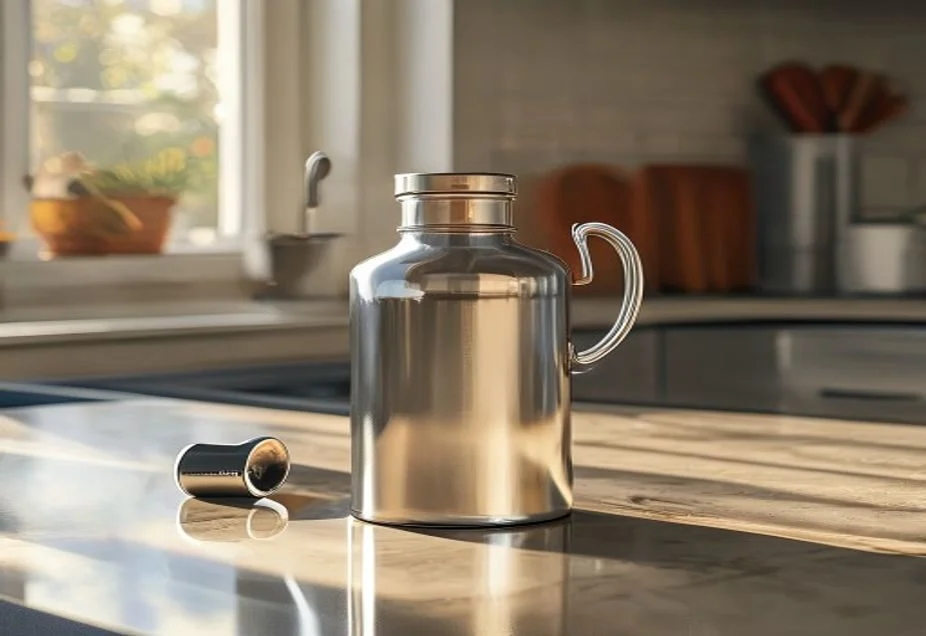
- Air-dry upside down. Stand it inverted in a glass or over a bottle-drying rack so water drains and air circulates. Leave it until it is bone dry inside, which can take several hours.
- Store it empty with the cap off (or loosely on) so any last moisture escapes rather than going musty.
- Keep it somewhere dry, not a damp cupboard.
The other habits that cause most of the problems above are boiling water in a pewter flask, leaving an acidic cleaner sitting inside, using the dishwasher, leaving spirit in for days or weeks, and not rinsing enough. Avoid those and the troubleshooting table at the top rarely applies.
A checklist for the flask drawer
You do not need much. Tick off what you already own and buy only the gaps. The links below are Amazon UK searches, so you can compare sizes and current prices yourself.
- ☐ Washing-up liquid and a jug of warm water. Already in the kitchen, and the starting point for every fix above.
- ☐ Uncooked rice. Plain white rice from the cupboard is all the scouring the inside needs.
- ☐ A small funnel. Look for a spout narrow enough for your flask opening. Browse hip flask funnels.
- ☐ A slim bottle brush. Soft bristles and a bendy handle suit pewter best. Browse bottle brushes.
- ☐ Denture tablets. Plain effervescent tablets are enough for smells and light staining. Browse denture tablets.
- ☐ Sterilising tablets (optional). Chlorine-based ones are stronger. Read the label for metal suitability first, and skip them on pewter unless the maker says otherwise. Browse steriliser tablets.
- ☐ Pewter polish. Only for genuine pewter, used sparingly and kept off engraving. Browse pewter polish.
- ☐ A microfibre cloth. Dry and clean, for stainless fingerprints and water marks. Browse microfibre polishing cloths.
Hip flask questions people ask
Can you clean a hip flask without a bottle brush?
Yes. Most flasks clean perfectly well with a warm soapy water shake and a teaspoon of uncooked rice, which scours the inner walls as it moves. Rinse every grain out afterwards. A brush only becomes worthwhile for long-standing staining, and you should use it gently on soft pewter.
What can you safely put in a hip flask?
Spirits such as whisky, brandy, rum or gin are the usual choice. Fizzy drinks are a poor idea because pressure builds in a sealed container. Cream liqueurs and sugary mixers spoil or leave sticky residue, so they are better avoided or rinsed out the same day.
Can you put a hot drink in a hip flask?
Most hip flasks are not designed for it. They are thin-walled and not insulated, so they will not keep a drink hot, and hot liquid in a sealed flask can build pressure and burn you when opened. On pewter, heat can also distort the metal. Use a vacuum flask for hot drinks.
Why does my hip flask leak?
The usual culprit is a worn or missing seal in the cap, or a cap that has not been screwed down square. Check the gasket or washer for cracks and replace it if needed. Overfilling can also push liquid into the threads, and on hinged caps the hinge itself can loosen with age.
How do you polish the outside of a hip flask?
For stainless steel, a dry microfibre cloth removes fingerprints and water marks, and a damp cloth with a tiny amount of washing-up liquid handles grime. For pewter, use a dedicated pewter polish sparingly, follow the instructions on the pack, and keep it away from engraving where polish can collect.
How can you freshen a flask without vinegar?
Dissolve a teaspoon of bicarbonate of soda in warm water, shake, leave for a few minutes and rinse well. A denture tablet soak also works. Whichever you use, finish by drying the flask upside down with the cap off, because trapped moisture is what keeps smells coming back.
Is it safe to put engraved or personalised flasks in water?
Yes, a gentle hand wash is fine, and it is better for the engraving than the dishwasher. Avoid abrasive scourers or harsh polishes on the engraved area, as they can wear or tarnish the lettering. Dry the flask straight away so water does not sit in the grooves.