The short answer: no. For everyday home and hand cleaning, antibacterial soaps and sprays are not more effective than plain soap and water, and they carry downsides that plain soap doesn’t. This isn’t a fringe opinion: after reviewing the evidence, the US Food and Drug Administration banned 19 antibacterial ingredients (including triclosan) from consumer soaps in 2016, precisely because manufacturers couldn’t show they worked any better than ordinary soap or were safe for long-term daily use. Plain soap already does the job brilliantly, the “antibacterial” label is mostly marketing.
Walk down any cleaning aisle and half the products shout “antibacterial,” “kills 99.9% of germs,” or “antimicrobial protection.” It’s easy to assume they must be the safer, more hygienic choice. But when scientists actually put antibacterial products head-to-head with plain soap and ordinary detergent, the results are surprisingly consistent, and they’re not what the packaging implies. This guide walks through exactly how soap works, what the studies found, why regulators cracked down on antibacterial ingredients, when a genuine disinfectant is worth using, and how to clean hands and surfaces properly. Every claim is linked to its source at the end.
How we researched this: the findings below draw on the FDA’s 2016 rule, a systematic review in Clinical Infectious Diseases, guidance from the CDC and UNESCO, and peer-reviewed research on triclosan. Full references are at the bottom.
Disclosure: Cleaners Guide is a participant in the Amazon Associates programme, so if you buy through links on this page we may earn a small commission at no extra cost to you. It never changes our recommendations, we suggest products because they work and we point out cheaper options where they do the same job. Prices and availability change, so always check the current price before buying.
First, three words people mix up: clean, sanitise, disinfect
Most of the confusion around antibacterial products comes from muddling three different jobs:
- Cleaning physically removes dirt, grease and germs from a surface, usually with soap or detergent and water. It doesn’t necessarily kill anything; it lifts it off and rinses it away.
- Sanitising lowers the number of germs to a level considered safe.
- Disinfecting uses chemicals to kill germs on a surface.
The key insight the marketing glosses over is that removing germs is usually all you need at home, and plain soap removes them extremely well. Killing them (disinfecting) is only necessary in specific higher-risk situations. Antibacterial products are sold as if killing is always better than removing. It isn’t. A germ rinsed down the plughole is just as gone as one that’s been chemically killed, and removal doesn’t breed resistance or leave chemical residue.
How plain soap actually works (and why it’s so good)
Soap is a genuinely elegant piece of chemistry. Its molecules are amphiphilic, one end (the head) loves water, the other end (the tail) hates water and clings to oils, grease and fats [3]. That simple dual nature does three powerful things at once:
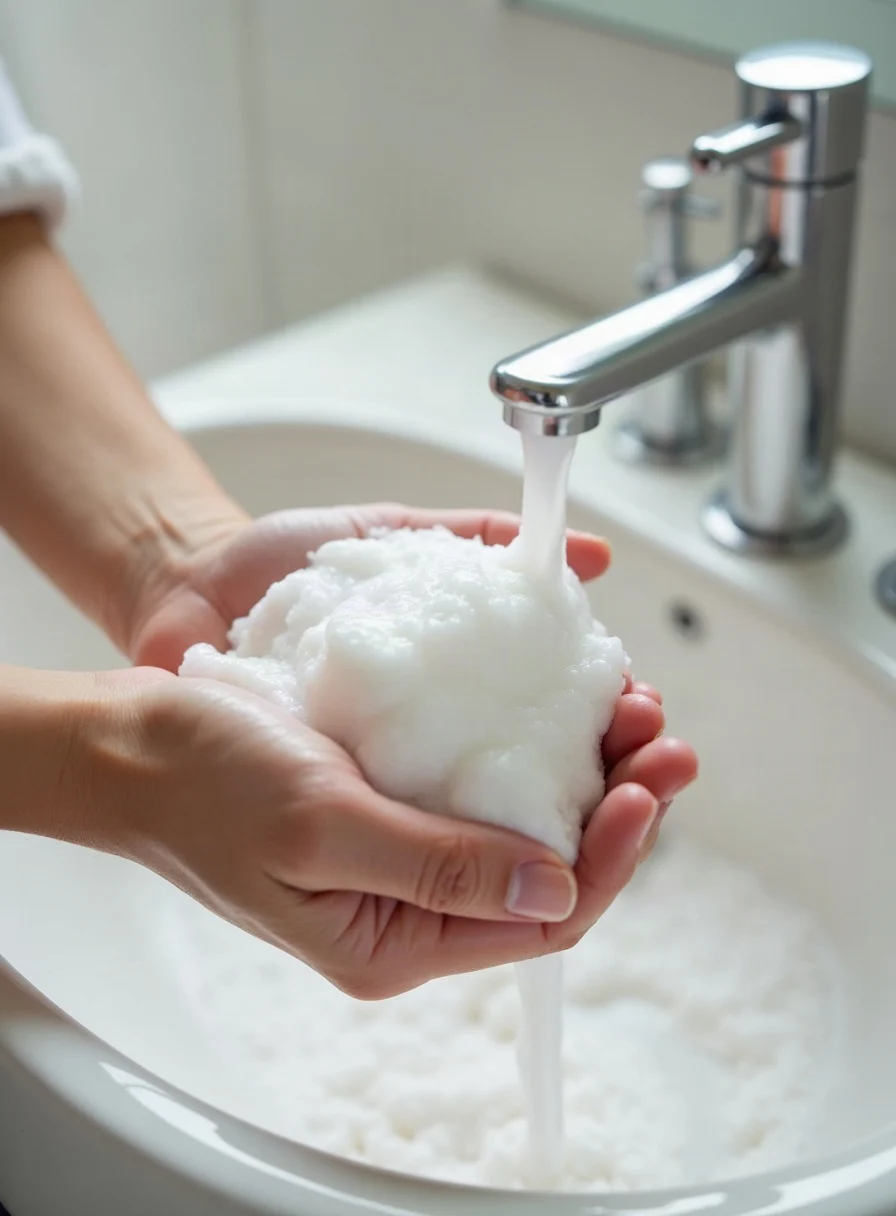
- It rips apart enveloped viruses. Viruses like coronavirus and influenza are wrapped in a fatty (lipid) outer membrane. Soap’s water-hating tails wedge into that membrane and prise it apart, destroying the virus [3].
- It breaks germs’ grip on your skin. The tails loosen the oily film that lets bacteria and grime stick to your hands and surfaces.
- It cages everything and washes it away. Soap molecules cluster into tiny spheres called micelles that trap the dirt, oils and microbial debris inside, so a rinse under the tap carries the whole lot down the drain [3].
In other words, plain soap doesn’t need to poison germs, it dismantles and removes them mechanically, which is remarkably effective against bacteria and viruses alike. This is also why technique matters more than the product: you need to lather for around 20 seconds so the soap has time to do its work over every surface of your hands. Any soap with surfactants will work; the “antibacterial” label adds nothing to this mechanism.
Does antibacterial soap actually work better? What the studies found
This is the crux, and the research is refreshingly clear. The most influential analysis was a 2007 systematic review in Clinical Infectious Diseases by Aiello and colleagues, which pulled together 27 studies comparing antibacterial and plain soap [2]. Its findings:
- Soaps containing triclosan at the concentrations sold to the public (0.1–0.45%) were no more effective than plain soap at preventing infectious-illness symptoms.
- They also removed no more bacteria from the hands than plain soap did.
- There was, however, a plausible mechanism by which triclosan could promote bacterial resistance, a real cost with no matching benefit.
The FDA reached the same conclusion after reviewing the wider evidence, stating plainly that there isn’t sufficient evidence that over-the-counter antibacterial soaps are any better at preventing illness than plain soap and water, and that people who washed with plain soap got sick just as rarely as those using triclosan soap [1]. One important nuance from the science of how triclosan works: it needs a fairly long contact time to have any antibacterial effect at all, far longer than the few seconds most people spend washing their hands. So in normal use, the active ingredient barely gets the chance to act even in theory.
Why regulators banned 19 antibacterial ingredients
In September 2016, the FDA issued a final rule that stopped 19 active ingredients, including triclosan and triclocarban, from being marketed in consumer antiseptic wash products (soaps and body washes used with water) [1]. The logic was simple and worth quoting in spirit: manufacturers had to show these ingredients were both (a) safe for long-term daily use and (b) more effective than plain soap and water at preventing illness. They couldn’t demonstrate either. Some evidence even suggested the ingredients might do more harm than good over time [1].
Two points often get lost. First, the ban covers consumer wash-off soaps and body washes, it did not cover alcohol-based hand sanitisers or wipes, which work differently. Second, the ruling wasn’t saying antibacterial soap is dangerous to use once; it was saying there’s no good reason to use it in place of plain soap, and some reasons not to. When a product offers no proven benefit but carries potential risks, the sensible default is to skip it, which is exactly the FDA’s own consumer advice: “Skip the Antibacterial Soap; Use Plain Soap and Water” [1].
The hidden costs of “antibacterial”
Plain soap simply removes germs. Antibacterial chemicals try to kill them, and that comes with trade-offs that matter at the scale of millions of households.
Antibiotic resistance
Because triclosan attacks bacteria at a target site similar to the one some antibiotics use, there’s a real concern that bacteria surviving triclosan exposure can become cross-resistant to important antibiotics. Laboratory and environmental studies have linked triclosan to multidrug resistance, and note that resistance can rise in microbial communities chronically exposed to it [4]. Given that antibiotic resistance is one of the biggest threats in modern medicine, seeding it through a soap that offers no extra benefit is a poor trade.
Hormone (endocrine) effects
Triclosan is absorbed through skin and has been detected in human urine, blood and breast milk. Research indicates it can act as an endocrine disruptor, interfering with oestrogen, androgen and thyroid-hormone signalling in laboratory and animal studies, with links to reproductive and developmental effects [5]. The human implications are still being studied, but “unproven benefit plus possible hormone disruption” is not a reassuring combination for something you’d use several times a day.
Environmental persistence
Large quantities of triclosan are flushed into wastewater every year. It persists in waterways and biosolid-treated soils, bioaccumulates in fatty tissue, and is toxic to aquatic life at low concentrations [4]. So the costs of antibacterial soaps aren’t only personal, they wash downstream into the wider environment.
What about antibacterial surface sprays?
See surface sprays on Amazon →
Hand soap is one thing; the “antibacterial” kitchen and bathroom sprays are another. Here the honest answer is more nuanced: a genuine disinfectant spray does kill germs on surfaces, and there are times you want that. But for the vast majority of everyday surface cleaning, hot water and ordinary detergent (washing-up liquid or an all-purpose cleaner) is enough, because, as with hands, removing the germs and the grime they live in is the goal.
A sensible two-step approach beats spraying disinfectant everywhere:
- Clean first with detergent to remove dirt and the bulk of the microbes. Disinfectants work poorly on a dirty surface anyway, grease and food residue shield the germs.
- Disinfect only the high-risk spots that need it, chopping boards and worktops after raw meat, surfaces during illness, the bathroom when someone’s been unwell, and give the product the contact time on the label (often several minutes wet) or it won’t actually disinfect.
Routinely dousing every surface in antibacterial spray gives little extra protection over good cleaning, costs more, and contributes to the same resistance and residue concerns. Target disinfection where the risk is real. For material-specific advice, see our guide to cleaning kitchen worktops safely.
Hand sanitiser vs soap and water: which wins?
Alcohol-based hand sanitiser is a genuinely useful tool, but it’s not a straight upgrade on soap, and it’s a different thing again from antibacterial soap. Here’s how they compare according to public-health guidance [6]:
- When there’s no sink, an alcohol-based sanitiser (at least 60% alcohol) is convenient, effective against many germs, and often gentler on hands than repeated washing.
- When hands are visibly dirty or greasy, soap and water wins, sanitiser works poorly through dirt and grease.
- Against norovirus (the winter-vomiting bug), soap and water is far better. Alcohol gel doesn’t reliably inactivate norovirus, whereas soap physically breaks the virus apart and washes it away.
- Against C. difficile spores, alcohol gel doesn’t work, soap and water is needed to remove the spores.
So the hierarchy for hands is: plain soap and water is the everyday gold standard; alcohol sanitiser is the excellent backup when you can’t get to a sink; and antibacterial soap sits below both, no better than plain soap, with added downsides.
What the official guidance says
You don’t have to take one study’s word for it, the major health bodies broadly agree:
- FDA: skip antibacterial soap; plain soap and water is the recommended choice for consumers [1].
- CDC: washing with plain soap and water is one of the most effective ways to prevent illness; for norovirus and C. difficile, soap and water is specifically preferred over sanitiser [6].
- The consistent message: good hand-washing technique with ordinary soap, for around 20 seconds, protects you as well as any “antibacterial” product, and better than sanitiser in several important cases.
How to actually wash and clean properly
Because technique beats product, this is where your effort should go.
Hands
- Wet hands with clean water and apply any soap.
- Lather and scrub for at least 20 seconds, backs of hands, between fingers, under nails, thumbs.
- Rinse well under running water.
- Dry thoroughly with a clean towel, wet hands pick up and transfer far more germs than dry ones.
Surfaces
- Clean with hot water and detergent to remove dirt and most germs, this alone is enough for everyday surfaces.
- Disinfect only the high-risk points (post-raw-meat, during illness), and leave the product wet for the full contact time on the label.
- Use a clean cloth, a dirty cloth or sponge just redistributes bacteria (see our piece on how germy kitchen sponges get).
Myths vs facts
| Myth | What the evidence says |
|---|---|
| “Antibacterial soap protects my family better.” | No, it’s no better than plain soap at reducing illness or hand bacteria [1][2]. |
| “Killing germs beats just washing them off.” | Removal is just as good for everyday hygiene, and doesn’t breed resistance. |
| “Hand sanitiser is always better than soap.” | No, soap wins on dirty hands, norovirus and C. difficile [6]. |
| “I should disinfect every surface, every day.” | Cleaning with detergent is enough for most surfaces; target disinfection where risk is real. |
| “Antibacterial products are obviously safe.” | Triclosan raised resistance, hormone and environmental concerns, hence the 2016 ban [1][4][5]. |
When antibacterial or disinfectant products are worth it
None of this means disinfectants are useless, they have real, appropriate uses. Genuine disinfection makes sense when:
- Someone in the home is ill, especially with a diarrhoea-and-vomiting bug, and you’re cleaning bathrooms, door handles and other touch points.
- You’ve prepared raw meat, poultry or eggs and need to decontaminate the board and worktop afterwards.
- Someone is immunocompromised, such as during chemotherapy, where a doctor may advise stricter hygiene.
- In healthcare settings, where infection control follows professional protocols that differ from home cleaning.
The point isn’t to avoid disinfectants entirely, it’s to use them deliberately, where the risk justifies them, rather than defaulting to “antibacterial everything” out of habit or marketing. For hands, plain soap remains the right choice even in these situations; the disinfectant is for surfaces.
Plain soap and a little skin care beats antibacterial for daily use.
The bottom line
Plain soap is one of the most effective and underrated tools in your home. It removes and destroys bacteria and viruses through simple, brilliant chemistry, and the research, along with the FDA’s 2016 ban, shows that antibacterial soaps add no proven benefit over it while carrying real downsides in resistance, hormone effects and environmental harm. For hands, use plain soap and a proper 20-second wash, with alcohol sanitiser as a backup away from a sink. For surfaces, clean with detergent and disinfect only the spots that genuinely need it. Save your money on the “antibacterial” label, the plain stuff already works.
Frequently asked questions
Is antibacterial soap better than regular soap?
No. A systematic review of 27 studies and the FDA’s own assessment both found antibacterial soap is no more effective than plain soap at preventing illness or reducing bacteria on the hands. The FDA banned 19 antibacterial soap ingredients in 2016 for this reason. Plain soap and a proper wash is all you need.
Does plain soap kill germs or just wash them away?
Both. Soap’s surfactant molecules physically lift germs and dirt off your skin and trap them in micelles that rinse away, and they also tear apart the fatty envelope of viruses like flu and coronavirus, destroying them. It doesn’t need an added “antibacterial” chemical to do this, the removal-plus-destruction effect is inherent to how soap works.
Why was triclosan banned from soap?
In 2016 the FDA ruled that manufacturers hadn’t shown triclosan (and 18 other antibacterial ingredients) were more effective than plain soap or safe for long-term daily use. Separately, research links triclosan to antibiotic-resistance concerns, endocrine (hormone) disruption in lab studies, and environmental persistence, so it was removed from consumer wash products.
Is hand sanitiser as good as washing your hands?
Not quite, though it’s a great backup. Alcohol-based sanitiser (60%+) is effective and convenient when there’s no sink, but soap and water is better when hands are visibly dirty and is much more effective against norovirus and C. difficile, which alcohol doesn’t reliably kill. Wash with soap when you can; sanitise when you can’t.
Do I need antibacterial spray to clean my kitchen?
For most everyday cleaning, no, hot water and ordinary detergent removes dirt and the bulk of germs. Reserve a disinfectant for higher-risk moments, like after preparing raw meat or during illness, and give it the full contact time on the label. Cleaning first with detergent actually makes any disinfectant work better.
Does antibacterial soap cause antibiotic resistance?
It’s a credible concern. Triclosan targets bacteria in a way similar to some antibiotics, and studies have linked it to cross-resistance and multidrug resistance in bacteria, as well as rising resistance in environments chronically exposed to it. Since it offers no benefit over plain soap, that risk comes with no upside.
Is antibacterial soap bad for you?
Occasional use is unlikely to harm you directly, but the ingredients raised enough safety questions, particularly triclosan’s hormone-disrupting activity in animal studies and its environmental persistence, that regulators removed them from consumer soaps. Given there’s no proven benefit, plain soap is the simpler, safer default.
What’s the difference between cleaning, sanitising and disinfecting?
Cleaning removes dirt and germs (usually with soap or detergent and water); sanitising reduces germs to a safe level; disinfecting uses chemicals to kill germs on a surface. For most of the home, cleaning is enough. Disinfecting is for specific higher-risk situations, and works best on an already-clean surface.
Does the type of soap matter for handwashing?
Barely, bar or liquid, cheap or expensive, scented or plain, any soap with surfactants works, because it’s the mechanical action plus the surfactant chemistry that does the job. What matters far more is washing for long enough (about 20 seconds), covering all surfaces of the hands, and drying thoroughly.
Is “kills 99.9% of germs” true?
It’s a lab claim under specific test conditions, not a promise about your hands or worktop in real use. Even where it’s technically accurate, it doesn’t mean the product protects you better than plain soap and good technique, which is exactly what the studies comparing them found.
Related reading: does vinegar actually disinfect? and what temperature actually kills germs in your laundry?
Related reading: and when there is no sink at all, does hand sanitiser work as well as soap and water?
References
- U.S. Food & Drug Administration. “Skip the Antibacterial Soap; Use Plain Soap and Water” and the 2016 Final Rule on consumer antiseptic washes. fda.gov
- Aiello A.E. et al. “Consumer Antibacterial Soaps: Effective or Just Risky?” Clinical Infectious Diseases, 2007. academic.oup.com
- UNESCO. “How Soap Kills COVID-19 on Hands” (soap mechanism / surfactant action). unesco.org
- “The impact of triclosan on the spread of antibiotic resistance in the environment.” Frontiers in Microbiology (PMC), 2015. ncbi.nlm.nih.gov
- “Reproductive endocrine-disrupting effects of triclosan: present evidence and potential mechanisms.” PubMed, 2015. pubmed.ncbi.nlm.nih.gov
- U.S. Centers for Disease Control and Prevention. Hand hygiene guidance and norovirus prevention (soap vs sanitiser). cdc.gov
This article summarises published research and public-health guidance for general information. It isn’t medical advice; for infection control at home during illness, follow NHS guidance. Prefer natural options? See whether essential oils actually clean and disinfect (and the pet-safety warning).