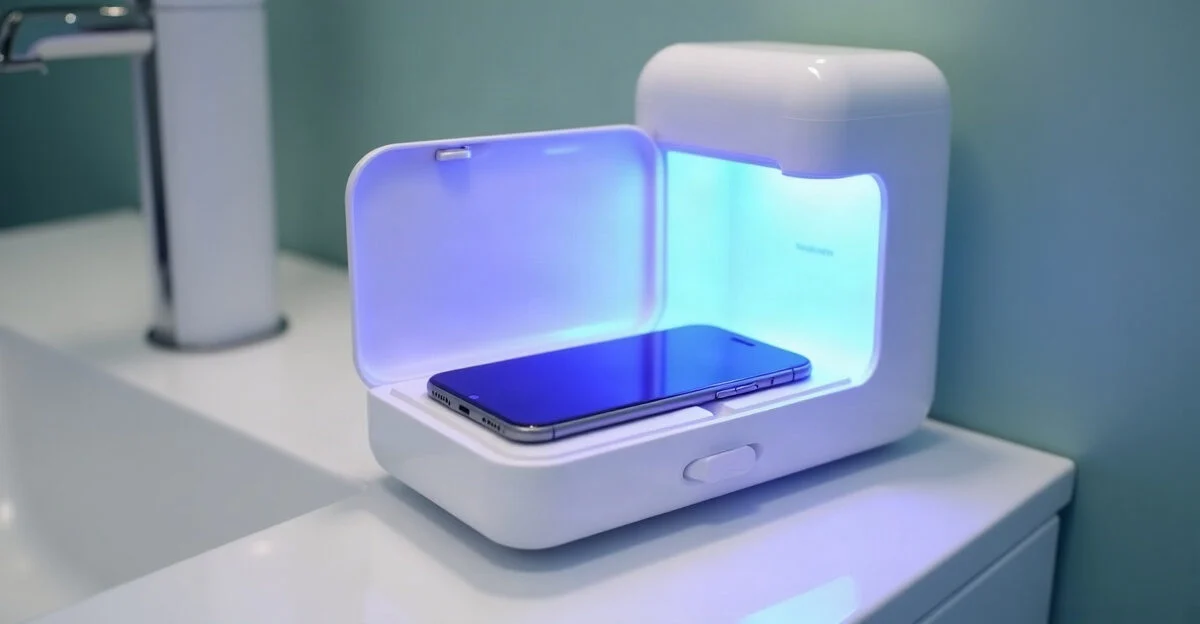
Your phone has been on the café table, the bus seat and the edge of the bathroom sink, and it has been in your hand through all of it. Then an advert for a small glowing box promises to zap the germs in minutes. It is a tempting idea: put the phone in, close the lid, walk away.
So does it work? Mostly yes, with conditions. A properly built UV-C box can cut the germs on the surfaces its light reaches, but it will not clean, it misses shadowed spots, and poorly made gadgets can do very little. For many people a 70% alcohol wipe is a cheaper, proven alternative, and some use both.
What UV-C does to a germ
Ultraviolet light comes in three bands. UV-A and UV-B are the ones involved in tanning and sunburn, and they do little to microbes. The germ-killing band is UV-C, roughly 200 to 280 nanometres, with around 254nm the classic disinfecting wavelength. It has been used for decades to treat water, air and hospital equipment, and independent product testing by consumer-tech reviewers has found that good consumer UV-C boxes reduce the bacteria on a phone.
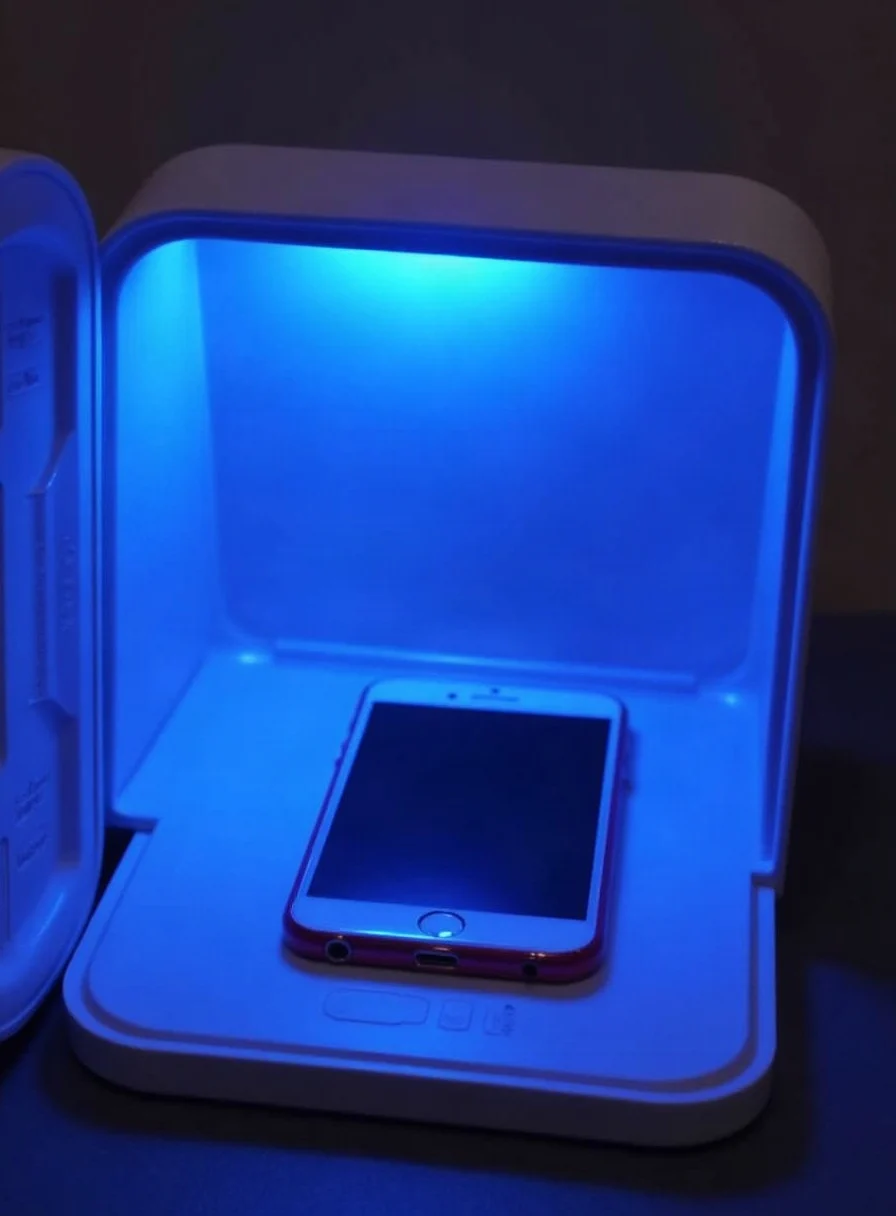
When UV-C hits a bacterium or virus, it is absorbed by the microbe’s DNA or RNA and physically damages it, so the microbe can no longer replicate. A germ that cannot reproduce cannot go on to infect you. Crucially, the effect depends on dose, which is intensity multiplied by time. A weak light or a short exposure delivers too little energy to do the job.
Four things that decide whether a box is worth having
A UV box that genuinely disinfects and one that just glows differ in four ways. Get all four right and it works well. Miss one and it barely helps.
- Wavelength. It has to emit true UV-C (around 254nm). Some cheap "UV" lights are actually UV-A and do almost nothing to germs.
- Dose and time. The light needs enough intensity for long enough. A two-second flash will not cut it. A proper cycle runs for several minutes.
- Line of sight. UV-C disinfects only the surfaces its light directly touches. Anything in shadow, down a crevice or under a button is not reached.
- Coverage. An enclosed box with reflective walls and lamps on more than one side treats the whole phone. A single-sided wand leaves the underside untouched.
Because most boxes do not publish test data, the best you can do as a buyer is look for a stated UV-C wavelength, a timed cycle and an automatic cut-off when the lid opens. If a listing only says "UV light" with no wavelength, treat the claim with suspicion.
What even a good box cannot do
- It cannot reach shadows. The ports, the gap under a raised camera and the seam of a case all sit in shadow and stay contaminated.
- It does not clean. UV kills germs but leaves visible grime, fingerprints and oils exactly where they were.
- A case or debris blocks it. UV cannot pass through a phone case or a layer of grease, so both shield the germs underneath.
- Weak devices underdeliver. An underpowered lamp or the wrong wavelength can give a false sense of security while achieving very little.
This is why UV works best as a complement to wiping, not a replacement for it. For background on how grubby a phone gets in the first place, see our piece on whether your phone is dirtier than a toilet seat.
UV box or alcohol wipe?
| UV-C box | 70% alcohol wipe | |
|---|---|---|
| Kills germs | Yes, on exposed surfaces | Yes, on wiped surfaces |
| Removes dirt and oils | No | Yes |
| Touch free | Yes | No |
| Reaches crevices | No (shadowed) | Yes, if you wipe them |
| Cost | Higher, one-off device | Very low, ongoing |
| Best for | Whole-device, hands-off, and small items like keys | Quick, cheap, daily cleaning |
A wipe is the practical default, because it cleans and disinfects in one go. Phone makers such as Apple say 70 percent isopropyl alcohol wipes are fine on the hard, non-porous surfaces of their phones, but advise keeping moisture out of openings, avoiding bleach and not submerging the phone, so check your own phone’s care page. For how to get real disinfection from wipes, see the disinfectant-wipe contact-time trap.
Using a UV box so that it actually helps
- Wipe visible dirt and oils off the phone first with a microfibre cloth. UV cannot get through grime. Clean any screen protector the same way, and see our guide to cleaning a screen safely for what to avoid.
- Take the phone out of its case so the light reaches the whole surface.
- Lay it flat in a single layer, not stacked with other items, so nothing casts a shadow.
- Run the full cycle. If the box only lights one side, turn the phone over and run it again.
- Hand-clean the spots the light misses, such as the charging port, using the phone maker’s guidance.
How often depends on how you use the phone. Once a day is plenty for most people, and sooner after a visit to somewhere busy or after someone in the house has been ill. More important than any schedule is washing your hands before you pick the phone up, since clean hands keep the phone cleaner in the first place. A box does nothing for the phone case, which should come off and be washed according to its material.
⚠️ Warning: UV-C is effective because it damages living cells, and that includes yours. Direct UV-C can burn skin and irritate eyes, even with short exposure. Never look at a UV-C light or expose your skin to it. Choose an enclosed box that only runs with the lid shut, keep any open wand away from skin, eyes, children and pets, and never use one on your hands. Some lamps can also produce ozone, so look for an ozone-free model and use the box in a ventilated room.
If it does not seem to be doing much
It is hard to tell, since UV leaves no visible trace. A few checks help you work out whether the fault is the box or the way it is used.
- The phone is still visibly grubby. That is normal. UV does not remove dirt, so wipe it first.
- It is a short cycle or one lamp. Run it again with the phone turned over, or consider a larger enclosed model.
- The listing never states a wavelength. It may not be UV-C at all. This is the most common reason a cheap gadget disappoints.
- The lid is cracked or does not seal. Stop using it. Light escaping is a safety risk.
Small items such as earbuds, keys and cards can go in the same box, provided they fit flat and the maker says it is suitable. UV does not reach the inside of earbud meshes, so wipe those by hand too.
What to buy, in plain terms
As an Amazon Associate we earn from qualifying purchases. These links go to Amazon UK searches, so you can compare yourself.
For everyday cleaning, 70% alcohol wipes are the best-value option. Look for the alcohol strength on the pack, use them on the hard surfaces only and let the phone air-dry. If you want the hands-off option, a UV-C sanitiser box is worth considering for a family that shares devices or likes to treat keys and earbuds too. Choose an enclosed box with a stated UV-C wavelength, a timed cycle and a lid switch, and avoid anything that is only an open wand. Finally, a pack of microfibre cloths lifts the oils that UV leaves behind. Keep them clean and use a soft, lint-free one on the screen.
Claims about UV sanitisers, checked
| Claim | The reality |
|---|---|
| UV sanitisers do not work | They do, when they emit true UV-C at an adequate dose. Independent testing has found that good boxes reduce phone bacteria. |
| A UV wand sanitises a whole room in seconds | No. Dose and line of sight matter. A quick wave delivers far too little UV to most surfaces. |
| UV cleans your phone | It disinfects exposed surfaces but leaves dirt, oils and fingerprints behind. Wipe first. |
| UV-C is harmless | No. It damages skin and eyes. Use enclosed boxes that switch off when opened, and never look at the light. |
Four quick questions
- Is there a downside to UV sterilisers? Yes. They miss shadowed areas, do not remove dirt, depend on dose and wavelength, and can harm skin and eyes if misused. Some also produce ozone. They are a convenient extra, not a complete answer.
- Can UV-C damage my phone? Normal use in a sanitising box should not harm a phone. UV-C can, over a very long time, slightly affect some plastics and adhesives, but the short cycles these devices use are not a problem for everyday phones.
- Does a particular brand work, such as the UVlizer? We cannot vouch for individual products. Judge any of them on the stated UV-C wavelength, a timed cycle, an enclosed design with a lid cut-off and sensible safety information, not on advertising claims.
- Can I sanitise other things in the box? Often yes for small hard items that lie flat, such as keys, cards and earbuds, if the maker lists them. Do not use it for food, pets or anything the manual excludes, and remember it only disinfects what it lights.